Rachel Stern2018-12-03T16:06:56-05:00October 12th, 2018|Exhibitions, Past Exhibitions|
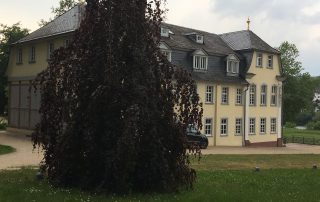
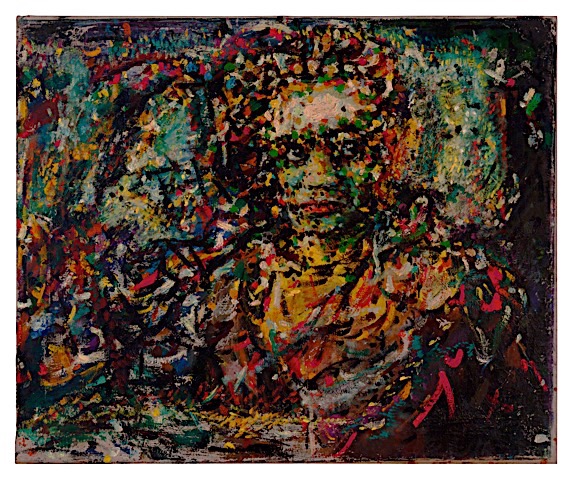
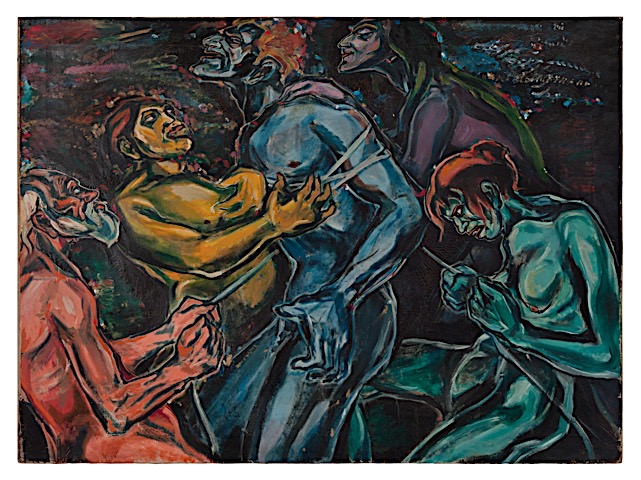
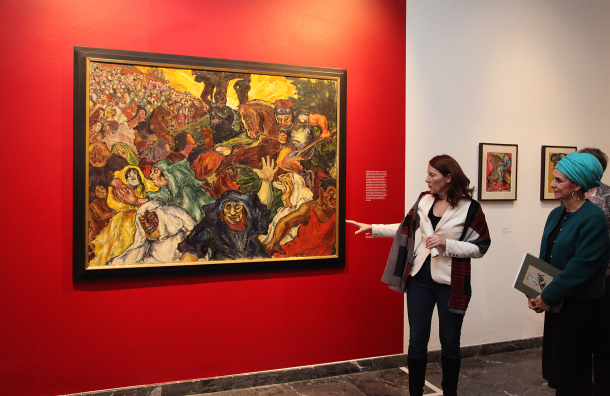
Last German venue! (link) At the Kallmann-Museum, a representative group of powerful paintings and drawings spans Ascher's whole oeuvre from first academic studies to monumental Expressionist figure compositions to late landscapes. Fritz Ascher's poems, written while hiding from Nazi persecution, can be discovered as "unpainted paintings" in relation to his artwork. With this exhibition, the Kallmann-Museum continues its examination of artists who became victims of the National Socialist art policy. Photos by Gerald Förtsch, Rasmus Kleine and Rachel Stern. A comprehensive German/English catalogue with essays by Jörn Barfod, Eckhart Gillen, Wiebke Hölzer, Ingrid Mössinger, Ori Z. Soltes and Rachel Stern accompanies the exhibition. (catalogue link) The Fritz Ascher retrospective was on view at the Felix-Nussbaum-Haus in Osnabrück (September 25, [...]
Rachel Stern2019-02-05T12:43:50-05:00October 12th, 2018|Exhibitions, Past Exhibitions|
The exhibition "Umkämpfte Wege der Moderne. Wilhelm Schmid und die Novembergruppe" is dedicated to the controversial epoch of 1918-1933 and the radical changes during the following period. (link) Some of the artistic pioneers took the 1918/1919 revolution as an opportunity to unite as the "November Group", probably the most prominent political artistic group of the Weimar Republic. These self-proclaimed "revolutionaries of the mind" set out on new paths of artistic expression with their motives, colors and forms, rejecting the old imperial conventions in form and content. The members of the group not only caused a sensation with their revolutionary demand to participate in the new state in all art-related issues. For in the exhibitions - primarily at the Great Berlin [...]
Rachel Stern2018-11-26T05:40:08-05:00September 4th, 2018|Newsletter|
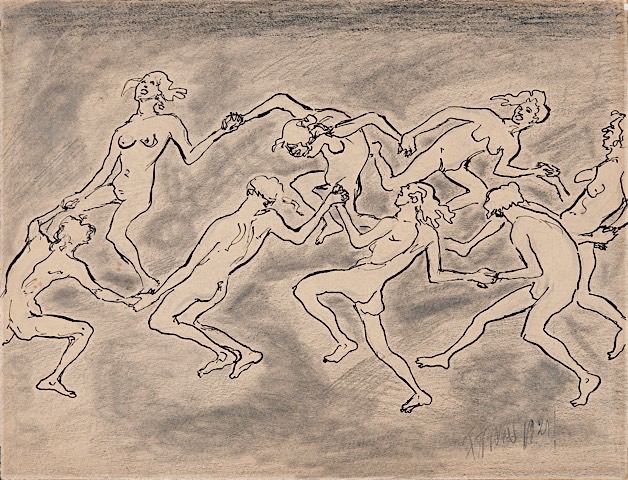
Dear Friends, I know, this summer I seem obsessed with Fritz Ascher’s I know, this summer I seem obsessed with Fritz Ascher’s Dancers from 1921. But there is one more thought about the drawing that I want to share. Fritz Ascher, Dancers, 1921. Private collection. Photo Malcolm Varon ©2018 Bianca Stock Fritz Ascher, Dancers, 1921. Private collection. Photo Malcolm Varon ©2018 Bianca Stock When the drawing was created,“Freikörperkultur” (FKK) or “free body culture” had become popular in Germany. Founded in 1898 in Essen, Germany, the nudist culture was about celebrating the body unencumbered by clothes, in nature and sunlight. Many of the naturists came from the Wandervogel movement, the pre-eminent German youth movement, founded to escape the repressive and [...]
Rachel Stern2018-12-04T12:17:07-05:00July 4th, 2018|Newsletter|
Dear Friends,I am so very excited today to share new insights into Fritz Ascher’s work. Fritz Ascher’s Dancers from 1921 is a drawing that has dazzled and fascinated me since I saw it first. In the Fritz Ascher exhibition catalogue, I described the eight female and male dancers as “dancing in a circle in naked ecstasy,” “mythical figures in timeless space” (p. 220). Looking at Ascher’s drawing, Henri Matisse’s Dance from 1910 comes to mind, where “the rhythm of the bodies swaying in dance becomes the sole theme of a painting for the first time.” Commonly recognized as a key point of Matisse's career and in the development of modern painting, it was painted for the Russian businessman and art [...]
Rachel Stern2018-12-01T21:41:16-05:00May 28th, 2018|Newsletter|
Dear Friends, The G.D.P.R., Europe’s New Data Law, is upon us. Please check our Terms of Service/Terms of Usage and our Privacy Policy. If you give us permission to continue sending you these bimonthly newsletters, you do not have to do anything. If you do not want to receive these emails, please send us an email or opt out below. I just returned from Germany, from the May 13 opening of the Fritz Ascher retrospective at Museum Schlösschen im Hofgarten in Wertheim on the Main river, a historic building with an amazing collection of artwork of the Neue Secession. Here, Ascher’s work can be seen in connection with works by his teachers Max Liebermann, Lovis Corinth, Ludwig Dettmann and Curt [...]
Rachel Stern2018-12-03T16:06:56-05:00May 23rd, 2018|Exhibitions, Past Exhibitions|
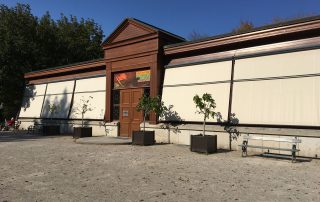
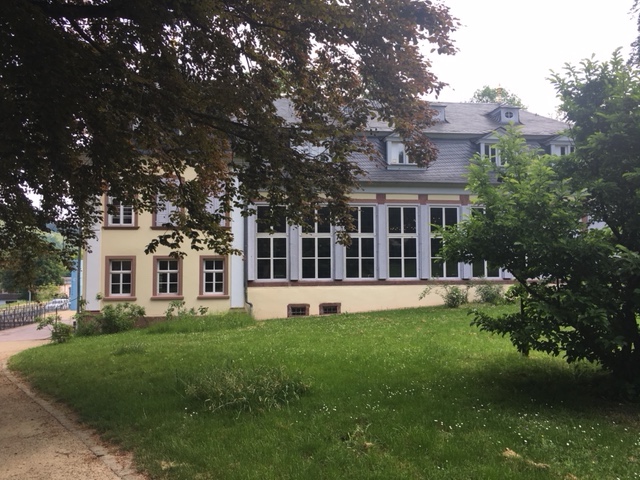
The worldwide first Fritz Ascher Retrospective is on view at Museum Schlösschen im Hofgarten in Wertheim/Main until September 9, 2018. Here, a representative group of powerful paintings and drawings spans Ascher's whole oeuvre from first academic studies to monumental Expressionist figure compositions to late landscapes. Fritz Ascher's poems, written while hiding from Nazi persecution, can be discovered as "unpainted paintings" in relation to his artwork. In Wertheim, Ascher’s work can be seen in the context of his supporter Max Liebermann and his teachers Lovis Corinth, Ludwig Dettmann and Curt Agthe, thanks to the Schlösschen’s exquisite collection of Berlin Secession art. (website link) SWR Aktuell reported. (website link) Photos by Elmar Kellner and David Stern. A comprehensive German/English catalogue with [...]
Rachel Stern2018-12-04T11:47:15-05:00March 23rd, 2018|Newsletter|
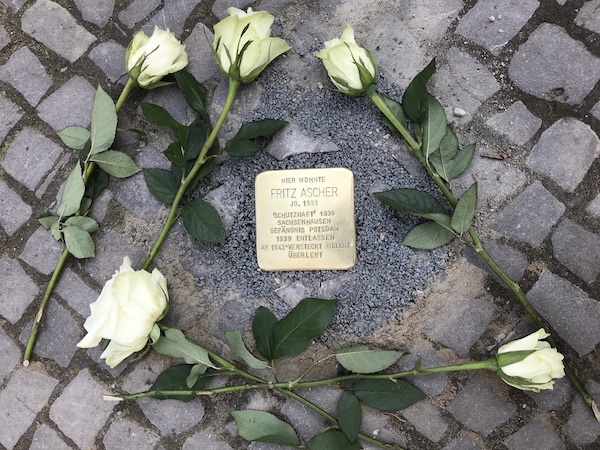
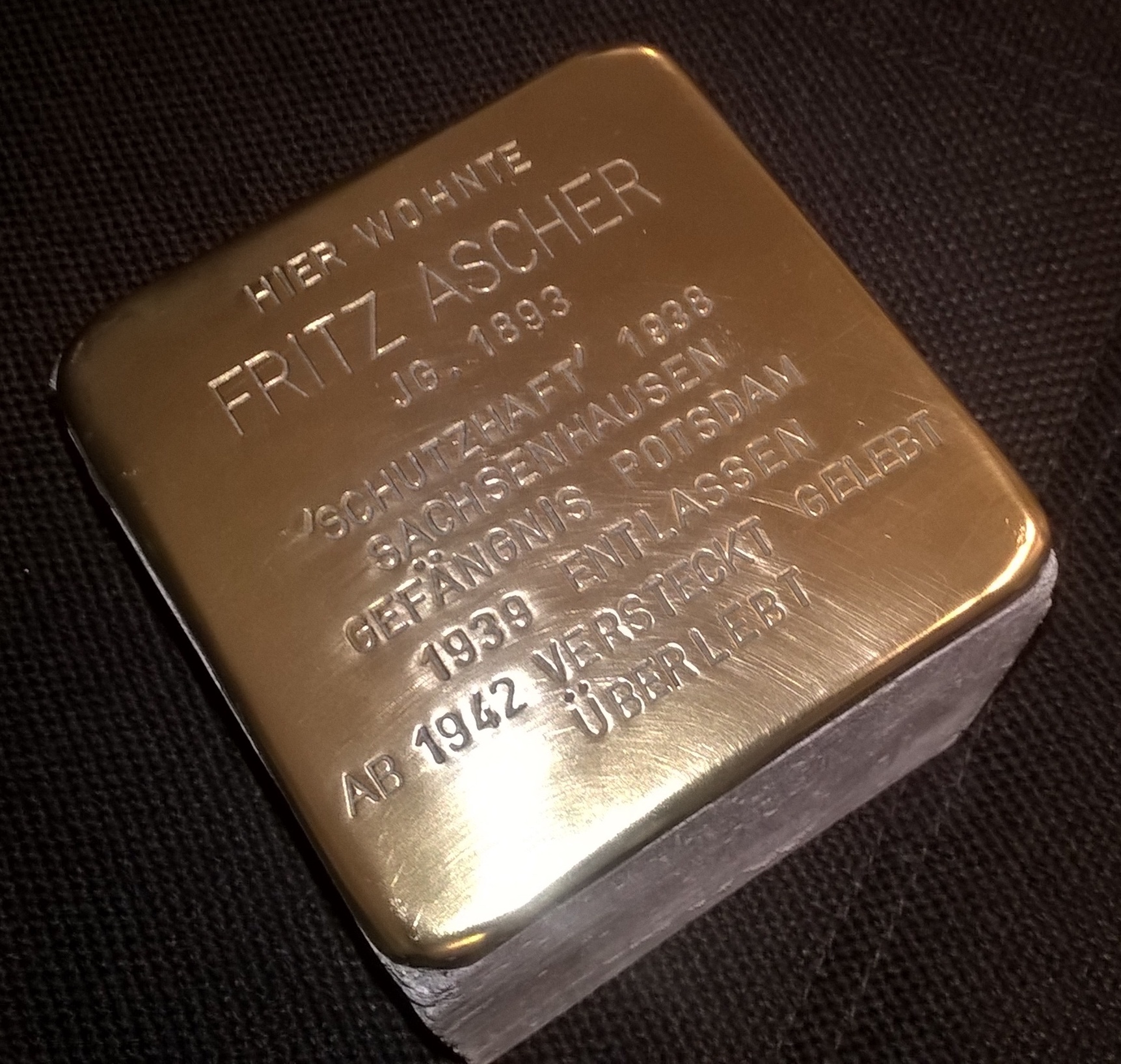
Dear Friends, I was touched by how many neighbors and friends from near and far came out into the chilly but sunny winter weather on February 21 to celebrate Fritz Ascher and recognize his persecution by the National Socialists by laying a “Stolperstein” (stumbling stone) at Niklasstraße 21/23 in Berlin-Zehlendorf, where his family lived from 1909. Thank you to the anonymous donor for making this event possible, to Dirk Jordan (AG Stolpersteine), Michael Rohrmann (Projekt Stolpersteine) and Wolfgang Ellerbrock for organizing it, to Cornelie von Bismarck for creating a beautiful context, and to Sabine Witt from Museum Charlottenburg-Wilmersdorf in Berlin and Jutta Götzmann from Potsdam Museum for supporting it. A special thank you to the students from Potsdam for reciting [...]
Rachel Stern2018-12-04T11:50:09-05:00February 8th, 2018|Newsletter|
Dear Friends, Fritz Ascher is getting a “Stolperstein” (stumbling stone)! Please join us for the ceremony on Wednesday, February 21 at 11:00am at Niklasstr. 21/23 in Berlin-Zehlendorf Stolpersteine (stumbling stones) is a project of the artist Gunter Demnig. The project commemorates people who were persecuted by the Nazis between 1933 and 1945. Stolpersteine are concrete blocks measuring 10x10cm which are laid into the pavement in front of the last voluntarily chosen places of residence of the victims of the Nazis. Their names and fate are engraved into a brass plate on the top of each Stolperstein. In Berlin, thousands Stolpersteine were installed since 1996. Today, Stolpersteine can be found in 1099 German cities and in 20 European countries. (link) We [...]
Rachel Stern2018-12-04T11:57:56-05:00December 27th, 2017|Select Press Coverage|
Fritz-Ascher-Retrospektive „Leben ist Glühn“ Die Wiederentdeckung des Expressionisten Fritz Ascher: eine Doppelausstellung in der Villa Oppenheim und im Potsdam Museum. by Elke Linda Buchholz Einen so vollständig vergessenen Künstler zurückzuholen in die Aufmerksamkeit, braucht Kraft, Geduld und kreative Energie. Vor 30 Jahren stieß die deutsch-amerikanische Kuratorin Rachel Stern bei einem Sammler auf Arbeiten von Fritz Ascher. Sie hatte noch nie von ihm gehört. Jetzt ist sie als quasi weltweit einzige Expertin für den 1893 geborenen Maler wieder zurück in der Stadt, wo auch er einst gelebt und gearbeitet hat. Hier bei Max Liebermann holte der junge Wilde sich als 16-Jähriger nach abgebrochener Schule die höheren Weihen einer Empfehlung an die Königsberger Kunstakademie und startete zwischen Secessionisten und Expressionisten seine Karriere. [...]
Rachel Stern2018-12-04T12:05:52-05:00December 26th, 2017|Select Press Coverage|
Der vergessene Expressionist Das Potsdam-Museum zeigt Werke des von den Nazis verfolgten Malers Fritz Ascher by Mathias Richter Sie gehören zur sogenannten verlorenen Generation. Künstler wie Gertrude Sandmann, Magda Langenstrass-Uhlig oder Eric Isenburger. Sie hatten Anfang der 30er Jahre grosse Ambitionen und wahrscheinlich eine grosse Karriere vor sich. Doch mit dem Machtantritt von Adolf Hitler erhielten sie Berufsverbot, wurden verfolgt, ihre Werke als "entartete Kunst" verfemt. Wer die Nazi-Zeit überlebte war vergessen und stand vor dem Nichts. Einer der Angehörigen dieser verlorenen Generation ist Fritz Ascher. Das Potsdam-Museum widmet dem radikalen Berliner Expressionisten in Kooperation mit der Villa Oppenheim in Berlin-Charlottenburg von Sonntag an eine Sonderausstellung. 80 Gemälde und Grafiken sind in den beiden Museen zu sehen, davon etwa 50 [...]
Rachel Stern2018-12-04T12:07:01-05:00December 25th, 2017|Select Press Coverage|
Ein Zerrissener Das Potsdam Museum entdeckt Fritz Ascher, der sich in Potsdam vor den Nazis versteckte by Lena Schneider Wer war Fritz Ascher? Das Potsdam Museum hat diesem Unbekannten eine Sonderausstellung gewidmet. „Leben ist glühn“ heißt sie. Ein Bild, das hier hängt, kann man als bestürzende Antwort auf die Frage lesen. „Bajazzo“ heißt es, nach dem italienischen Bruder des Harlekin. Zu sehen ist eine schemenhafte Gestalt, in gelbem Kostüm. Im weiß geschminkten Gesicht ist so etwas wie ein trostloser Schatten des Clownsgenres auszumachen: schwarze Augen, die rot überzogen Mundwinkel krümmen sich nach unten. Das ganze Bild ist wie zerschossen von Farbpunkten. Die Antwort darauf, wer Fritz Ascher, geboren 1893 als Kind jüdischer Eltern, war, findet sich im Entstehungsdatum des Bildes: [...]
Rachel Stern2018-12-13T19:05:14-05:00December 22nd, 2017|Exhibitions, Past Exhibitions|
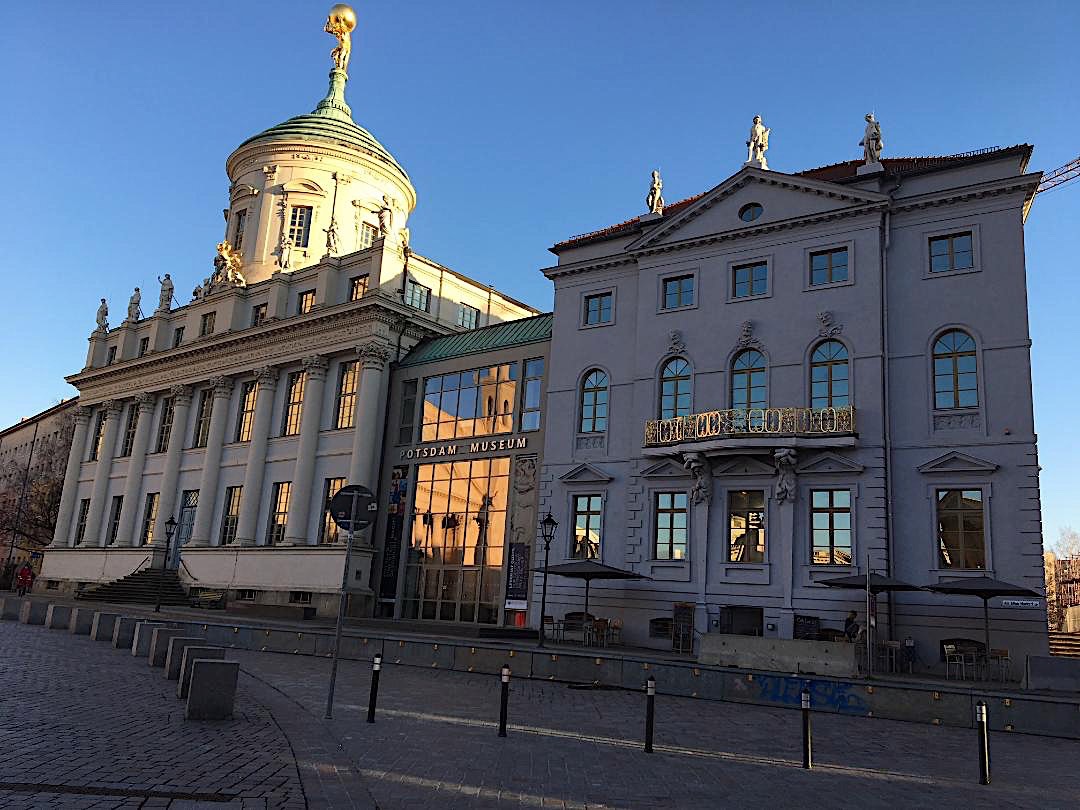
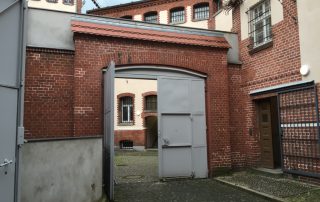
Stiftung Gedenkstätte Lindenstrasse in Potsdam examines for the first time the history of the Potsdam police prison, the prison where Fritz Ascher spent almost 5 months in 1939. When the prison building in what is today Henning-von-Tresckow-Strasse was torn down in 2002, Potsdam historian Hannes Wittenberg was able to save two original artefacts, both today in the collection of the Potsdam Museum: an original prison door and a model of the prison building built by prisoners in the 1980s for fire protection exercises. Both objects are on display in the exhibition, together with original photographs and documents of the prison building. Fritz Ascher is one of the former prisoners, whose biography is being told. (website link) Questions being asked in [...]