Rachel Stern2018-12-21T06:21:52-05:00October 26th, 2017|Selected Publications|
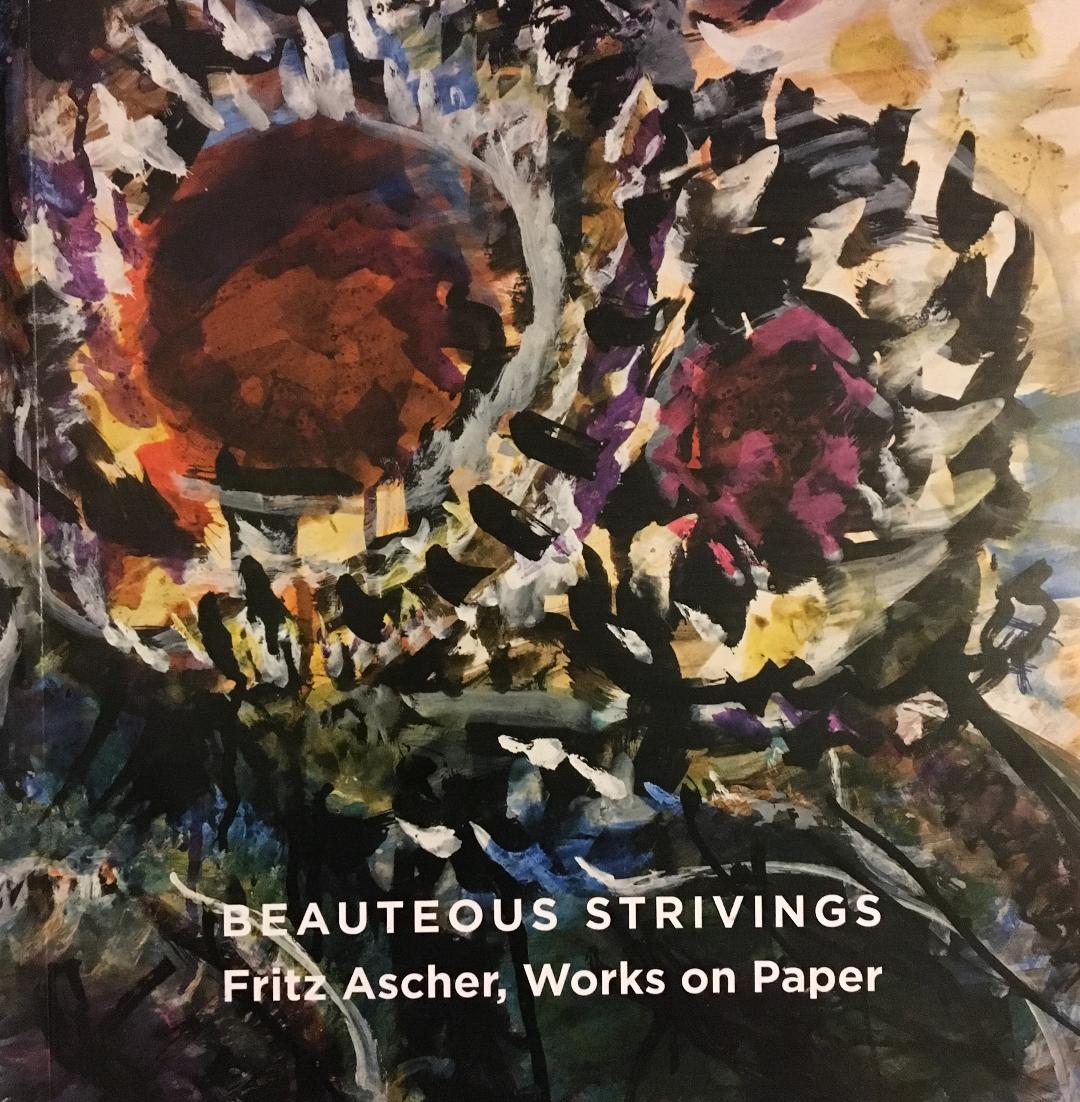
Karen Wilkin, Beauteous Strivings: Fritz Ascher, Works on Paper. Introduction Rachel Stern. Exhibition catalogue. New York, New York Studio School. New York: Fritz Ascher Society and New York Studio School 2017 Content 3 Introduction Rachel Stern 7 Discovering Fritz Ascher Karen Wilkin 20 Life by Life / Leben um Leben 22 Exhibition Checklist 24 Acknowledgements Download PDF
Rachel Stern2018-12-04T12:26:37-05:00September 17th, 2017|Select Press Coverage|
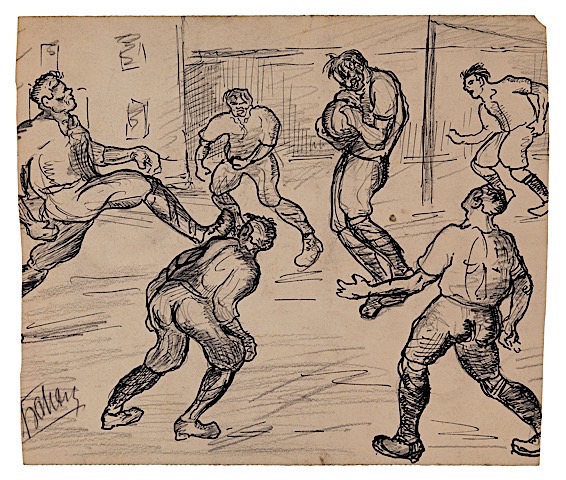
Der Gezeichnete Sven Goldmann Gefördert von Max Liebermann, geschätzt wie Grosz, Dix und Heartfield – doch es bedurfte des 125. Hertha-Geburtstages, um dem Maler Fritz Ascher neue Aufmerksamkeit zu verschaffen. Schwarze Tusche und Grafit auf Papier: „Fußball konnte er also auch malen.“ Verena Veldes Augen huschen über den Ausstellungskatalog, „Leben ist Glühn“, Abbildung 37 auf Seite 202. Eine Zeichnung mit sechs kräftigen Burschen in knielangen Hosen. Einer kommt von links mit kräftigem Spreizschritt herangestürmt, zu spät, der Ball befindet sich schon in den Händen des Torhüters, der drückt ihn zugleich zärtlich und energisch an sich. Konzentriertes Schweigen am anderen Ende des Tisches. So sah Fußball vor 100 Jahren aus – gar nicht so viel anders als heute. „Gefällt mir“, sagt [...]
Rachel Stern2018-12-04T12:27:33-05:00September 17th, 2017|Select Press Coverage|
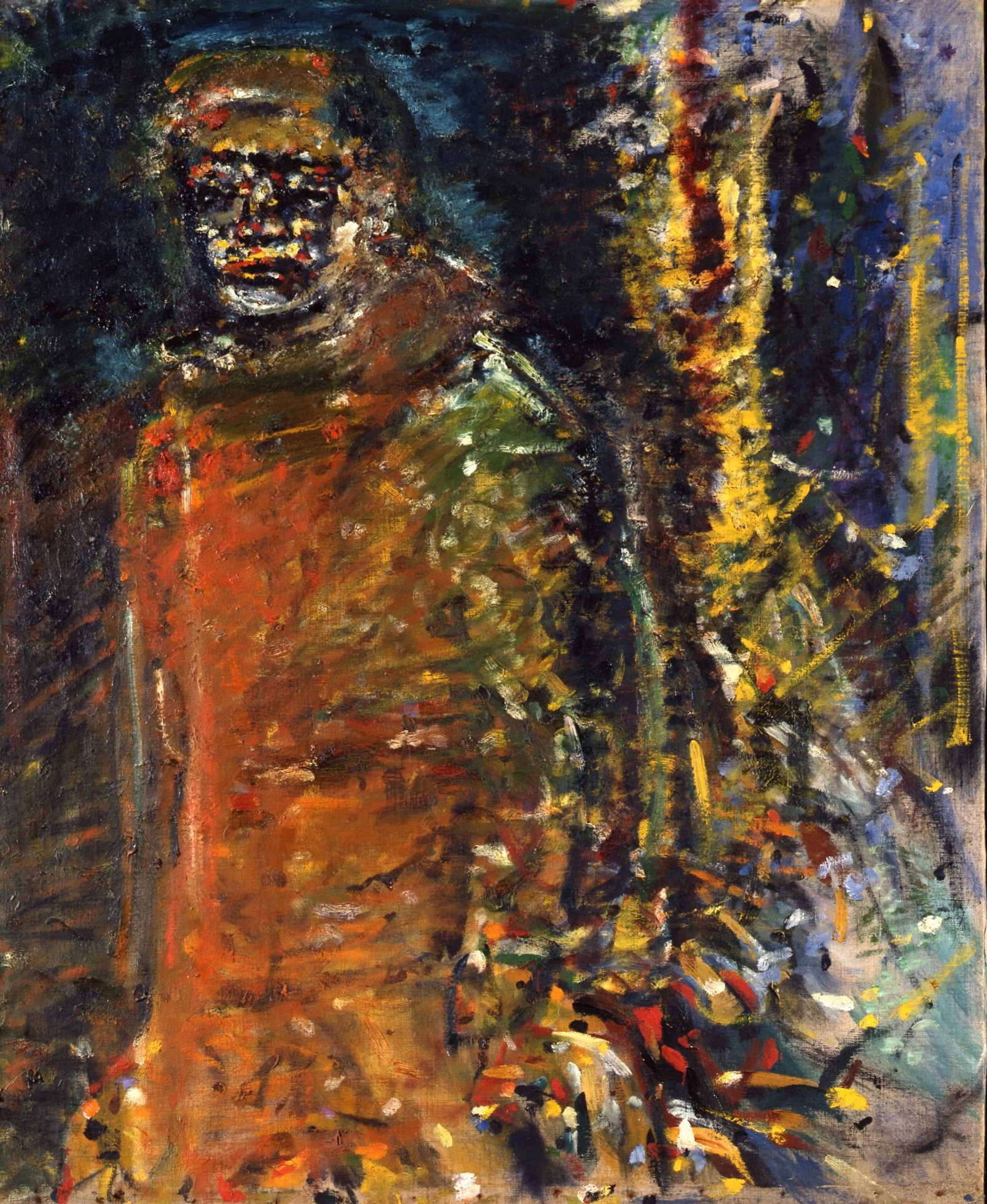
Kunststück Wiebke Hölzer Die Masse stürmte um ihn her. / Starr, stumm, in sich blieb er versunken.« So beginnt das von dem Berliner Künstler Fritz Ascher verfasste Gedicht »Bajazzo«. Die Zeilen umschreiben treffend das Sichtbare auf seinem gleichnamigen Ölgemälde: Starr und wie in einem Sturm aus farbigen Pinselstrichen schreitet der Bajazzo, also die italienische Clownsfigur, nach links gewandt von einer abstrakt gehaltenen Umgebung ins Dunkel. Als erste Körperform nimmt der Betrachter den Kopf wahr, während der Rest des Körpers mit dem Hintergrund verschmilzt. Zwar reduziert Ascher die Mimik der Figur, aber gestaltet sie gleichzeitig ausdrucksstark - der Mund vermittelt das Gefühl von Traurigkeit und die Augen in Form schwarzer Höhlen symbolisieren als Spiegel der Seele das leere, einsame Innere. Die [...]
Rachel Stern2018-12-21T06:00:22-05:00September 17th, 2017|Selected Publications|
Wiebke Hölzer. Fritz Ascher. Biographisch-Bibliographisches Kirchenlexikon (BBKL), vol. 38, Nordhausen: Verlag Traugott Bautz GmbH. pp. 66-71 Download PDF Geboren am 17.10.1893 in Berlin, gestorben am 26.03.1970 in Berlin; expressionistischer Maler und Grafiker, Dichter. Er wuchs als Sohn der jüdisch assimilierten Eltern Hugo Ascher (27.7.1859-18.08.1922) und Minna Luise Ascher, geb. Schneider (17.01.1867-17.10.1938) zusammen mit seinen zwei jüngeren Schwestern Charlotte (08.10.1894-06.12.1978) und Margarete (11.06.1897-15.01.1973) auf. 1899 trat Hugo Ascher mit seinen Kindern aus dem Judentum aus und ließ Fritz 1901 evangelisch taufen. Sein Vater war durch die Entwicklung von künstlichem Zahnschmelz zu Wohlstand gekommen und konnte somit Wohnungen in der Friedrichstraße und der Jägerstraße und später den Bau einer Villa in der Niklasstraße in Zehlendorf finanzieren. 1909 besuchte Ascher — durch das [...]
Rachel Stern2018-12-04T12:33:00-05:00September 1st, 2017|Newsletter|
Dear Friends, It was fun to attend the opening of “Hauptstadtfussball” at the Ephraim Palais in Berlin, celebrating the 125th anniversary of the Berlin soccer club Herta BSC and its local rivals. I learned so many things about soccer in Berlin, and about Herta BSC in this creative, well researched exhibition. And you can see Fritz Ascher’s “Soccer Players” from c. 1916! It will be on view until January 8, 2018. link Thank you to Sven Goldmann for bringing Fritz Ascher alive in his full page piece in the German newspaper Der Tagesspiegel! link Here in New York, the preparations for “‘Beauteous Strivings.’ Fritz Ascher - Works on Paper” at the New York Studio School are in full swing. The New [...]
Rachel Stern2018-12-04T12:33:53-05:00July 10th, 2017|Newsletter|
Dear Friends, Time for the outdoors! What could be timelier than an exhibition about soccer. On July 26th, the Ephraim Palais in Berlin is opening “Hauptstadtfussball,” celebrating the 125th anniversary of the Berlin soccer club Herta BSC and its local rivals. In this exhibition, you can find Fritz Ascher’s “Soccer Players” from c. 1916! It will be on view until January 8, 2018: link Since the last newsletter, Wiebke Hölzer published two essays about Fritz Ascher, one in the Biographisch-Bibliografisches Kirchenlexikon (BBKL, vol. 38, Nordhausen 2017), and one called "Kunststück" examining his “Bajazzo” from 1924 in Weltkunst No. 129 from May 2017 (pp. 120-121). And our most accomplished lawyer, the author Nicholas O'Donnell, a veteran attorney and litigation partner at the [...]
Rachel Stern2018-12-04T12:34:52-05:00July 10th, 2017|Newsletter|
Dear Friends, Maybe today’s storm is finally bringing warm weather? Fritz Ascher wrote a poem about the strong winds that spring brings: SPRING WIND As power romps around in space; blustering, boiling, blustering. As it tugs at the clouds, - it rustles forest and fields. As willingly everything submits to this wild child. The field weighs Its life force - ; Winds, - Spring’s windlass! (Poems Vol. 1, undated, p. 42) Siegmund Rotstein, Rachel Stern and Dr. Ingrid Moessinger at the opening of the Fritz Ascher exhibition at the Kunstsammlungen Chemnitz - MUSEUM GUNZENHAUSER on March 4, 2017. At the Kunstsammlungen Chemnitz - MUSEUM GUNZENHAUSER, the Fritz Ascher Retrospective is still on view until June 18. It is the first [...]
Rachel Stern2018-12-03T16:06:56-05:00June 30th, 2017|Exhibitions, Past Exhibitions|
For the first time in the United States, this exhibition presents works on paper by the German Expressionist Fritz Ascher (1893-1970). In these landscapes, made after 1945, the artist radically departed from the figural compositions he created during the Weimar years. At the same time, he built on his Expressionist visual language of vigorous brushstrokes and expressive colors. Born 1893 in Berlin, Ascher showed talent early. At the age of 16, he studied with Max Liebermann, who recommended him to the Königsberg Art Academy. Soon after, he studied with Lovis Corinth in Berlin. In contact with such artists as Emil Nolde and Edvard Munch, Ascher developed an expressionist pictorial language and created powerful figural compositions. After 1933, the Jewish-born Ascher [...]
Rachel Stern2018-12-03T16:06:57-05:00June 30th, 2017|Exhibitions, Past Exhibitions|
July 25th, 2017 is the 125th birthday of the Berlin soccer club Hertha BSC. This birthday is celebrated with a special exhibition at the museum Ephraim-Palais, which enables visitors to experience captivating chapters of Berlin sports- and city history. Today Herta is Number One among Berlin soccer clubs, followed by East Berlin's Union Berlin. But those who know the scene know that there are more than 400 soccer clubs in Berlin, with more that 150,000 members, as well as numerous soccer fields and pubs for fans. Fritz Ascher's drawing "Soccer Players" from c. 1916 is part of this exhibition. The artist portraits a dramatic scene: surrounded by four players the forward attacks from the left. His leg is still up [...]
Rachel Stern2018-12-04T12:35:37-05:00May 15th, 2017|Newsletter|
Dear Friends, I am very excited to invite you to the opening of the Fritz Ascher exhibition at the Kunstsammlungen Chemnitz MUSEUM GUNZENHAUSER on March 4, 2017 at 7:30pm. For the first time ever, Fritz Ascher’s “Golem” from the collection of the Jewish Museum Berlin will here be reunited with other works he created between 1913 and 1933. The Kunstsammlungen Chemnitz is home to an important collection of German Expressionism, dominated by artwork of the locally founded Expressionist group Brücke and especially Karl Schmidt-Rottluff, who grew up in Chemnitz, along with Ernst Ludwig Kirchner and Erich Heckel. The Museum Gunzenhauser is home to the vast Expressionist art collection of Alfred Gunzenhauser, with the worldwide largest collection of works by Otto [...]
Rachel Stern2021-02-24T07:06:52-05:00March 3rd, 2017|Select Press Coverage|
EXPRESSIONISTISCHE KUNST IM MUSEUM GUNZENHAUSER Chemnitz – Zur Eröffnung der 26. Tage der jüdischen Kultur in Chemnitz wird am Samstag eine Sonderausstellung zum deutschen Künstler Fritz Ascher präsentiert. Die Kunstsammlungen Chemnitz zeigen im Museum Gunzenhauser rund 40 Gemälde und Grafiken des 1893 in Berlin geborenen Expressionisten, der bisher nur wenigen Kunstkennern ein Begriff ist. Die in New York lebende Kuratorin, Rachel Stern, hat erstmals eine Einzelausstellung zu Fritz Ascher organisiert, die nun in Chemnitz Station macht. Als Kind von evangelisch getauften, assimilierten Juden fand der Künstler zu einer kraftvollen Bildsprache, die seine Spiritualität – aber auch seine innere Zerrissenheit widerspiegelt. Während der Zeit des Nationalsozialismus war Fritz Ascher zeitweise im Gefängnis und im KZ Sachsenhausen inhaftiert, konnte bis Kriegsende jedoch [...]
Rachel Stern2018-12-04T12:36:20-05:00February 28th, 2017|Newsletter|
Dear Friends, Thank you for supporting us with your interest in our work, reading our newsletters and publications and/or visiting our exhibitions, and - last not least - supporting our work financially. 2016 was the first year that our work started showing, with the participation in the exhibition Verfahren. "Wiedergutmachung" im geteilten Berlin / »Making Amends« Compensation and Restitution Cases in Divided Berlin at Aktives Museum Berlin (October 9, 2015 - January 14, 2016) and Landgericht Berlin/Amtsgericht Mitte, Berlin (September 29 - November 18, 2016) and the long anticipated first ever retrospective with its comprehensive catalogue (link) "Leben ist Glühn" Der Expressionist Fritz Ascher / “To Live is to Blaze with Passion" The Expressionist Fritz Ascher at the Felix-Nussbaum-Haus Osnabrück [...]