Dear friends,
First of all: THANK YOU!
A heartfelt thank you to those of you who responded so generously to help us continue and expand our work, and a heartfelt thank you to the anonymous sponsor who matched the donations. With your support, we will continue to bring to you buried art treasures and the stories of their creators in historical context.
And now we are heading for the 250th birthday of the United States of America! Founded on the basis of an idea, we celebrate the double helix of American DNA: the Jeffersonian embrace of the enlightenment and Adam’s emphasis not only on reason, but also on religion and tradition. We celebrate America as a work in progress founded by geniuses with extraordinary ideals – ideals of which America has often fallen short but ideals which America at its best strives to uphold.
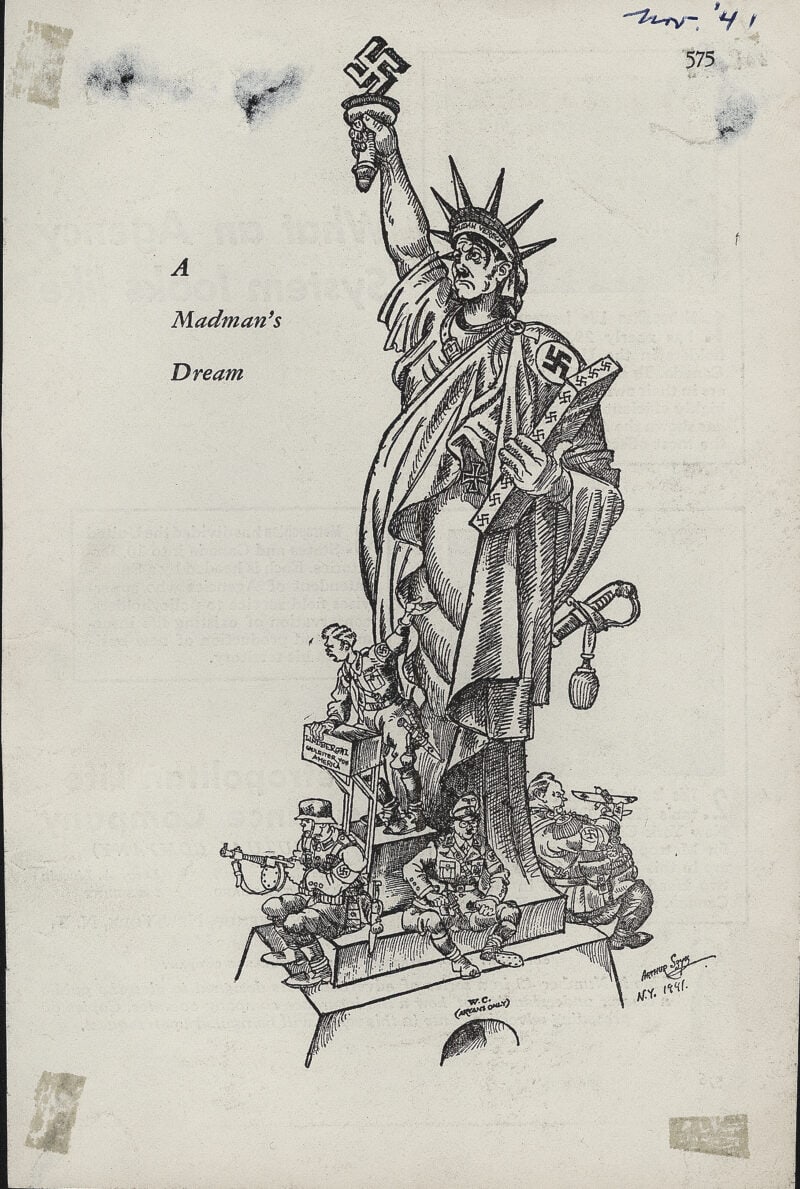
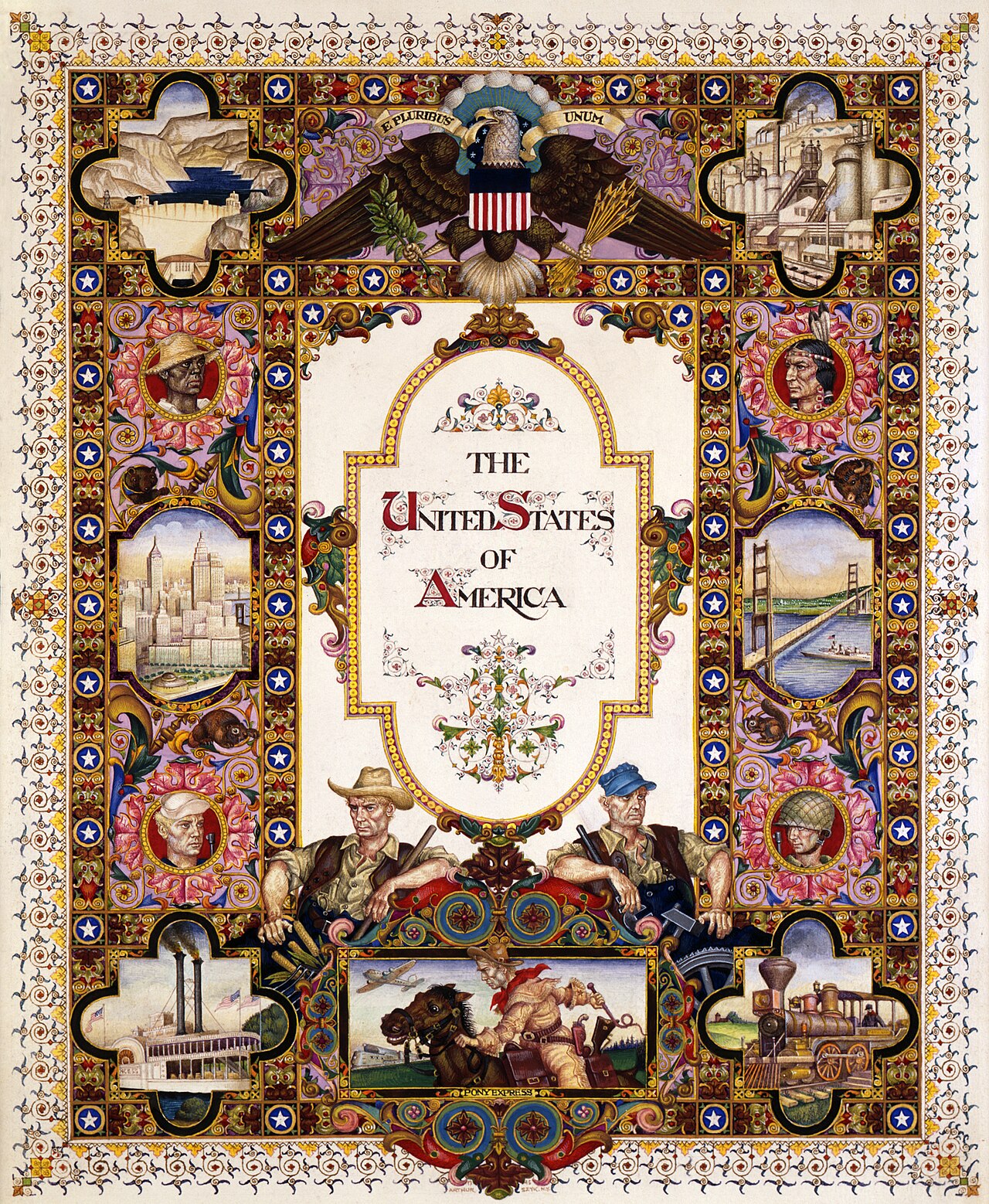
In 1945, Polish-born artist Arthur Szyk (1894-1951) who immigrated to America via Canada in 1940, illustrated The United States of America in his Visual History of Nations.
So much to unpack! Please share your observations and thoughts with us.
Irvin Ungar observes that “In contrast to Szyk’s typical portraiture in the Visual History series, there are no faces of famous scientists, artists, or politicians. He draws exclusively upon the everyday man. At the center bottom of the image sit a farmer and an industrial worker, growing America’s food and the American industrial economy. To the left and right of the central area are four other American faces. At the top is a black American, perhaps a farmer, and a Native American wearing a feathered headband typical of the Abenaki Indian tribe of the Northeast. Each man represents a larger group of individuals who have long struggled to achieve freedom and equal rights in the United States. Below them are an archetypal sailor and soldier, who represent the earliest U.S. armed forces, steadfastly preserving the American dream of freedom.”
This month’s upcoming events have very little if nothing to do with America, even though the country provided refuge and became home to so many artists we discuss.
Instead, we focus on brand new research about women photographers of the Bauhaus:
WEDNESDAY, July 15, 12:00PM ET online
The Extraordinary Life of Edith Tudor Hart –
Émigré, Photographer and Secret Agent
Book Talk by Daria Santini, London (UK)
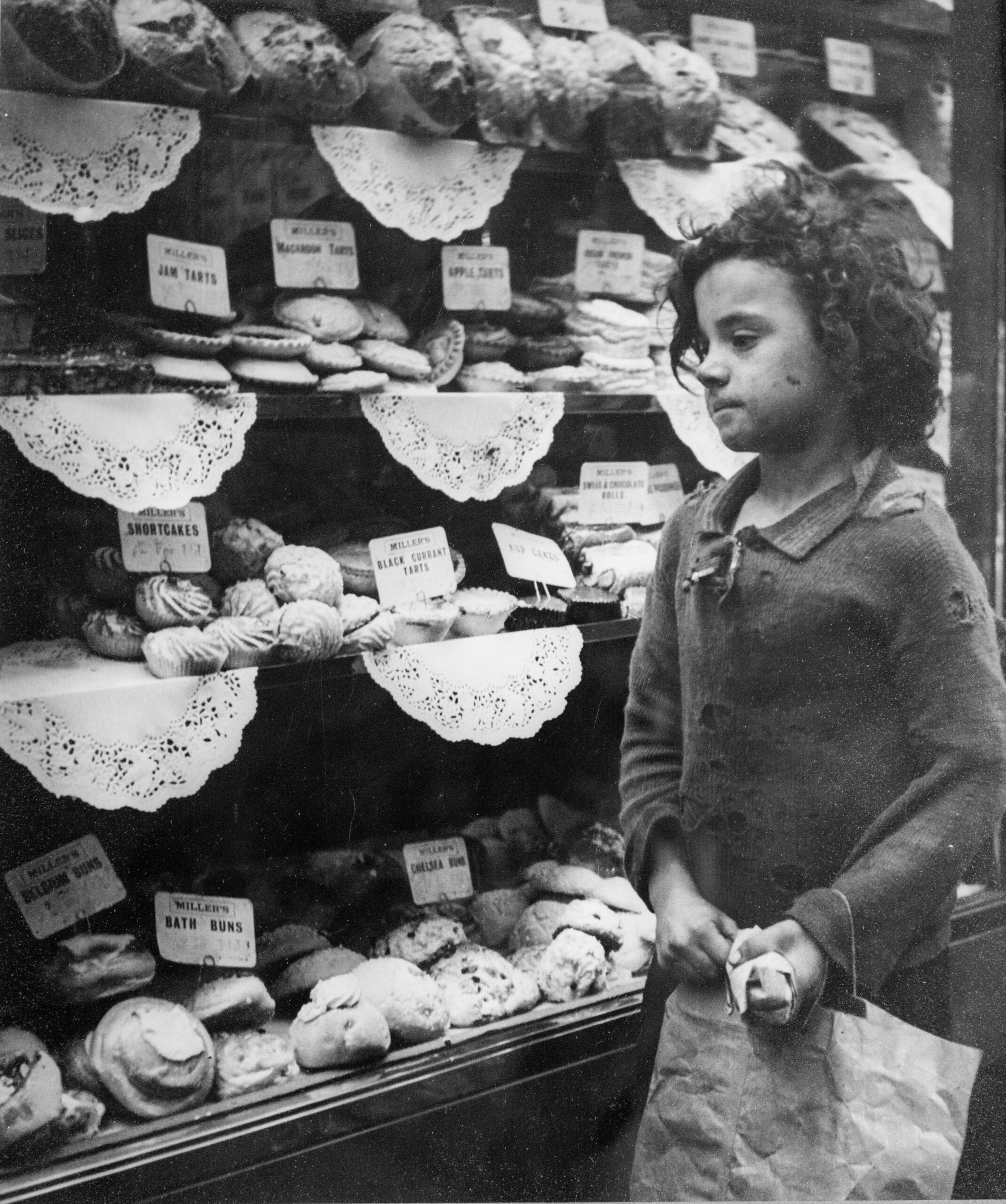
Edith Tudor Hart, London, ca 1935.
In her book talk, London-based literary scholar, biographer and cultural historian Daria Santini will present her new biography of the Austrian-British photographer and Soviet agent Edith Tudor Hart (1908–1973). At the centre of a wide and vibrant circle of predominantly Central European artists, architects, designers, scientists, intellectuals and political activists in 1930s and 1940s London, Tudor Hart combined a successful career as a photographer with a clandestine role as a communist agent. This remarkable dual identity forms the basis of a compelling and dramatic life story.
This event is part of the online series Flight or Fight. stories of artists under repression.
And more about women photographers:
WEDNESDAY, July 22, 12:00PM ET online
Visibility Practices:
Women Photographers of the Bauhaus
Presentation by Carla Maria Huttenloher, Berlin (Germany)
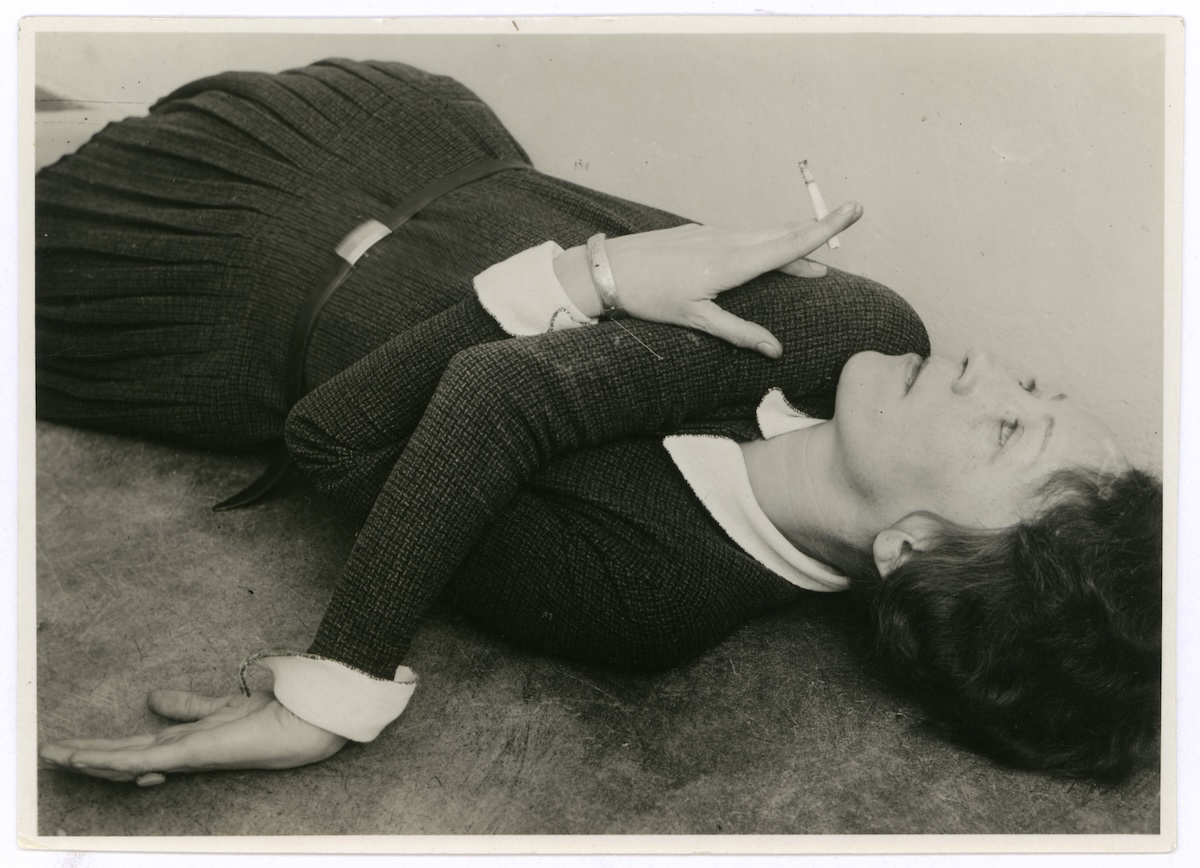
Grit Kallin-Fischer, Self-portrait with cigarette, ca 1928. Courtesy Bauhaus-Archiv Berlin
This presentation by Berlin scholar of art and imagery Carla Maria Huttenloher will bring women’s photographic agency to the forefront of the Bauhaus story, uncovering the rich and long-underexplored links between their lives and their powerful bodies of work
Women have contributed to photography since its earliest days, yet their vital roles have long been sidelined in art-historical narratives. The Bauhaus during the Weimar Republic offers a compelling case in point. Here, the independent, modern New Woman—embodying greater personal freedom, professional visibility, and social confidence—converged powerfully with the experimental spirit of the New Vision. Together, these forces transformed photography into an exciting medium for self-representation and active participation in modern life. Inspired by László Moholy-Nagy and the Bauhaus focus on innovation, many women created groundbreaking photographic work, both within the school and in professional fields such as publishing, advertising, and documentary photography. After 1933, however, the political climate forced many into exile, displacement, or ended their careers abruptly.
This event is part of the online series Flight or Fight. stories of artists under repression.
RECENT RECORDING
We invite you to watch, re-watch and pass on the recording of our JUNE event.
CURRENT EXHIBITIONS
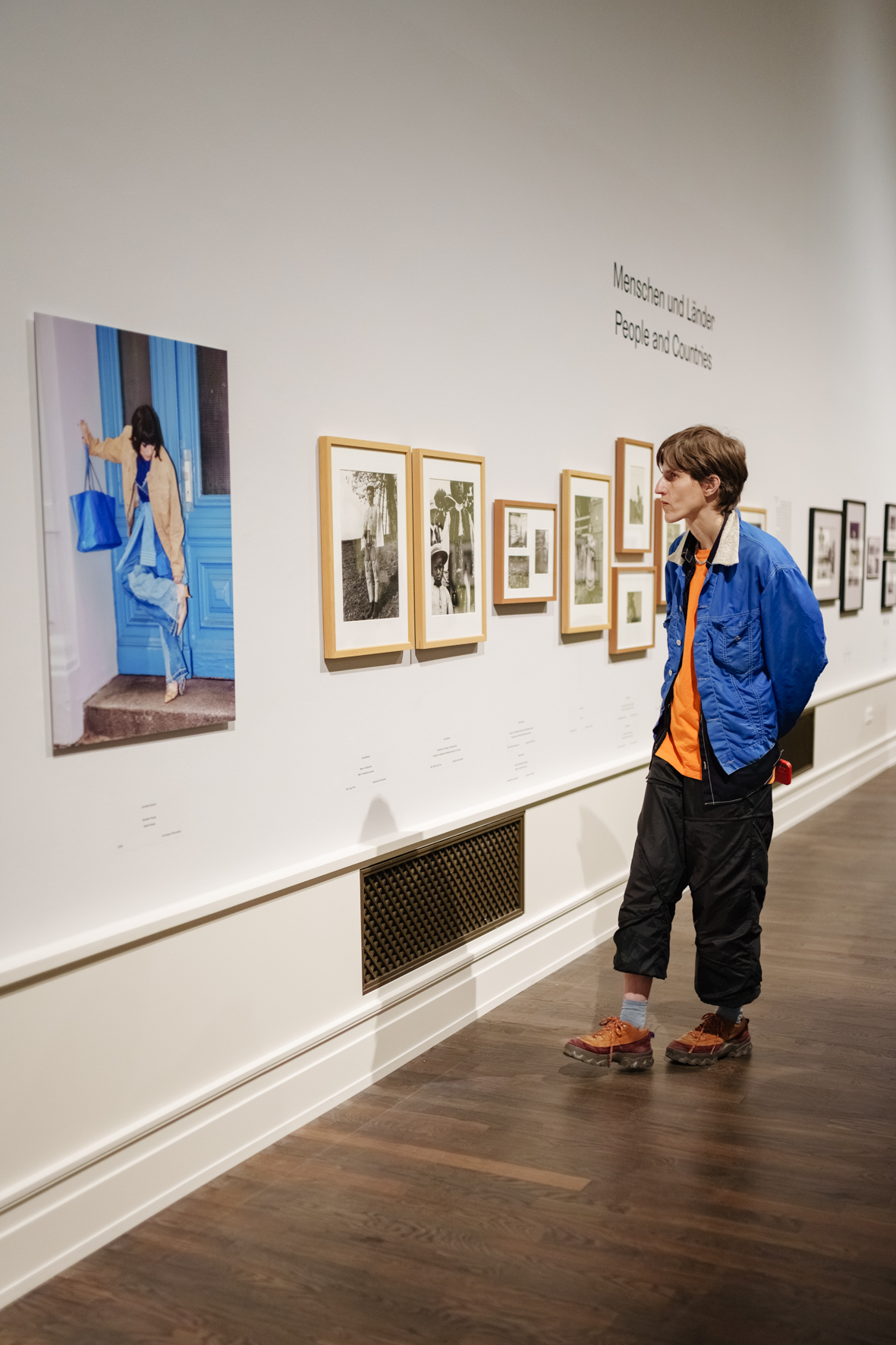
This is the exhibition in Berlin that our virtual talk on July 22nd relates to:
New Woman, New Vision. Women Photographers of the Bauhaus is on view until October 4, 2026 at Museum für Fotografie in Berlin (Germany)
Outstanding women photographers have been around since the invention of photography in the early 19th century. They experimented with photographic and artistic techniques and probed the boundaries of the new medium. So too did the women photographers of the Bauhaus. They observed the world around them through the camera lens and often captured subjects from novel and unconventional perspectives. The spectrum of their artistic production ranges from figurative portraits and architectural photography to abstract photographic experimentation.
Closing this month in New York:
Art of Freedom: The Life & Work of Arthur Szyk is on view until July 26 at the Museum of Jewish Heritage in NYC.
A showcase of Arthur Szyk’s decades-spanning artistic career connects his biblical-themed illuminations, illustrations of the heroes of democracy, scathing anti-Nazi cartoons, and artistic expressions of his Zionism into a dynamic exploration of the meaning of “freedom.”
At the core of his work lies a steadfast belief in the power of visual expression to confront atrocity, mobilize righteousness, and promote freedom in all its forms (religious, national, cultural, and political), not just for Jews but for all humanity.