Dear Friends,
This month, the FIFA Soccer World Cup kicks off, and this year it is hosted in North America, with games – among them the final – being played “just across the bridge” in New Jersey.
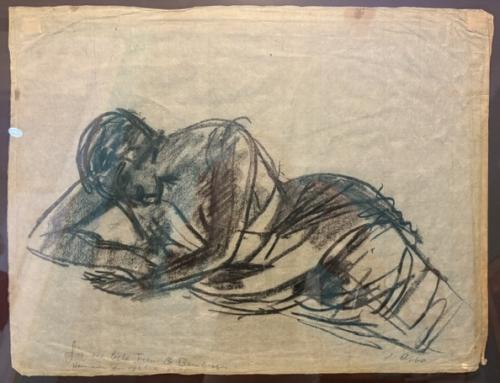
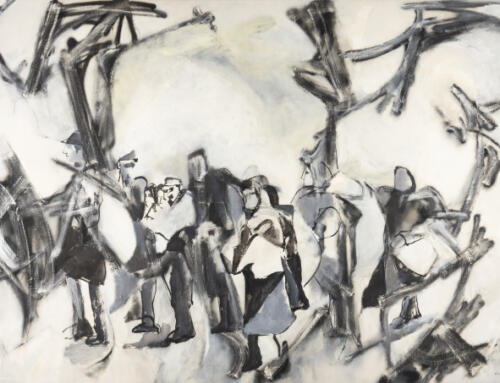
What does that have to do with us? Well, in 1916, the artist Fritz Ascher drew soccer players into one of his sketchbooks – most probably from direct observation. He captured a dramatic moment, when a player holds a shot on goal. He catches the ball with his hands, which identifies him as the opponent’s goal keeper – regular players are not allowed to touch the ball with their hands.
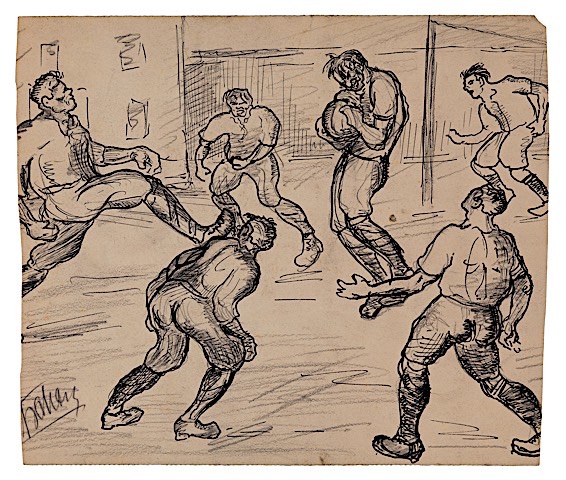
Fritz Ascher, Soccer Players, ca. 1916. Black ink and graphite on paper, 10.6 x 12.5 in. Private collection
But it is allowed, in fact much encouraged, to contribute to our spring fundraising campaign: Between June 15 and June 20, a generous donor has agreed to match every donation you make to the Fritz Ascher Society.
As we are getting closer to the campaign, we will share the story behind the dates we chose.
Persecution and escape, loss of home and family, resilience and survival, and creating a new home and family in the United States are the theme of our next online event:
Wednesday, June 24, 12:00pm ET online
THE RESTLESS HUNGARIAN
Film Screening and Conversation with Director Tom Weidlinger
Between June 17 and 25 you can view The Restless Hungarian on your home device. A link will be provided to all who register.
On June 24, join film director Tom Weidlinger in conversation with Rachel Stern about The Restless Hungarian, a documentary film about his father Paul Weidlinger, one of the most important structural engineers of the twentieth century.
The Restless Hungarian traces the life of pioneering structural engineer Paul Weidlinger against the sweeping backdrop of the Hungarian Jewish diaspora, modernism, and the Cold War. While highlighting his groundbreaking work and innovative concept of the “Joy of Space,” the film reveals the contrast between his professional achievements and a private life shaped by loss and unresolved trauma. Through a deeply personal investigation, the filmmaker—his son—uncovers hidden family history, confronting painful truths to ultimately reach a more compassionate understanding of his father.
Tom Weidlinger is a veteran writer and filmmaker with over 35 years of experience creating documentaries focused on social justice, including six public television films supported by the Lillian Lincoln Foundation, notably Jim Thorpe, The World’s Greatest Athlete. In the 1990s, he received a major ITVS grant to produce Making Peace, a four-hour series on grassroots efforts to address violence, accompanied by an innovative online activism campaign. Earlier in his career, he documented post-communist Czechoslovakia in After the Velvet Revolution and, after founding Moira Productions in 1987, produced archival documentaries for PBS’s The American Experience, including The Great San Francisco Earthquake.
This event is part of the online series “Flight or Fight. stories of artists under repression.”
World Refugee Day was established to honor the strength and courage of refugees worldwide and to commemorate the 1951 Convention relating to the status of refugees. This year, we are partnering with World Jewish Relief and World Jewish Relief USA for an important conversation exploring how refugees move beyond immediate safety toward dignity, employment, and the rebuilding of their lives:
WEDNESDAY, June 17, 2:00PM ET online
Rebuilding Lives: From Refuge to Opportunity
A World Refugee Day Conversation

This timely and hopeful discussion rooted in practical action and Jewish values features distinguished panelists:
Beth Oppenheim, Chief Executive Officer, HIAS
Rabbi Menachem Creditor, Rabbi-in-Residence, UJA-Federation of New York
Janice Lopatkin, Programme Director, World Jewish Relief UK
Participants connected to World Jewish Relief’s STEP program
The event is hosted by David Weisberg, Executive Director, World Jewish Relief USA.
RECORDINGS OF MAY EVENTS
Our first event was about early Jewish immigration to the United States:
The artist Eugen Spiro was prominent in Weimar Republic Germany. For two years, Anne Uhrlandt researched what happened to him, his art and his art collection:
FEATURED EXHIBITIONS
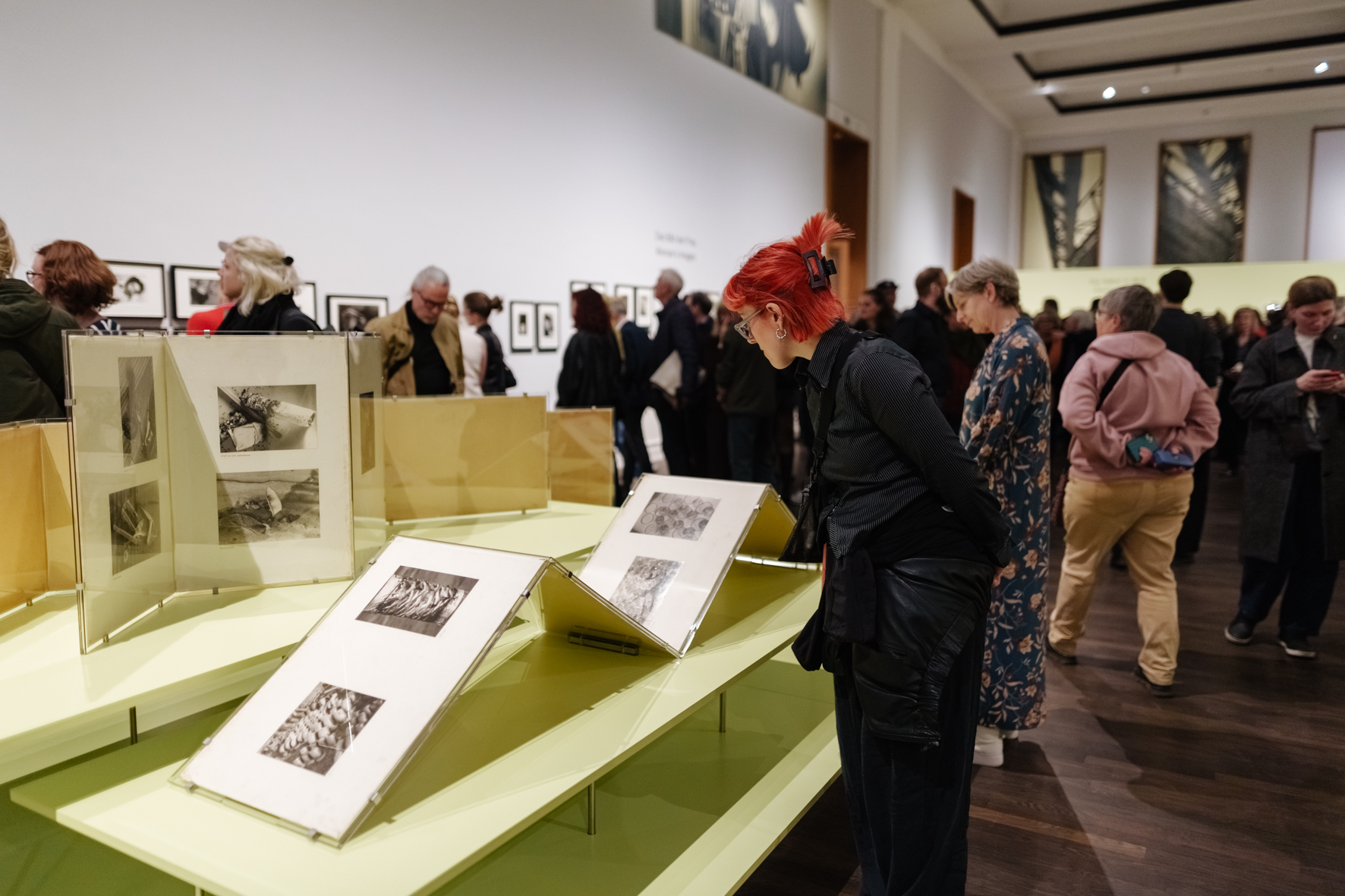
A powerful exhibition about women photographers at the Bauhaus is currently on view in Berlin:
New Woman, New Vision. Women Photographers of the Bauhaus is on view until October 4, 2026 at Museum für Fotografie in Berlin (Germany)
Outstanding women photographers have been around since the invention of photography in the early 19th century. They experimented with photographic and artistic techniques and probed the boundaries of the new medium. So too did the women photographers of the Bauhaus. They observed the world around them through the camera lens and often captured subjects from novel and unconventional perspectives. The spectrum of their artistic production ranges from figurative portraits and architectural photography to abstract photographic experimentation.
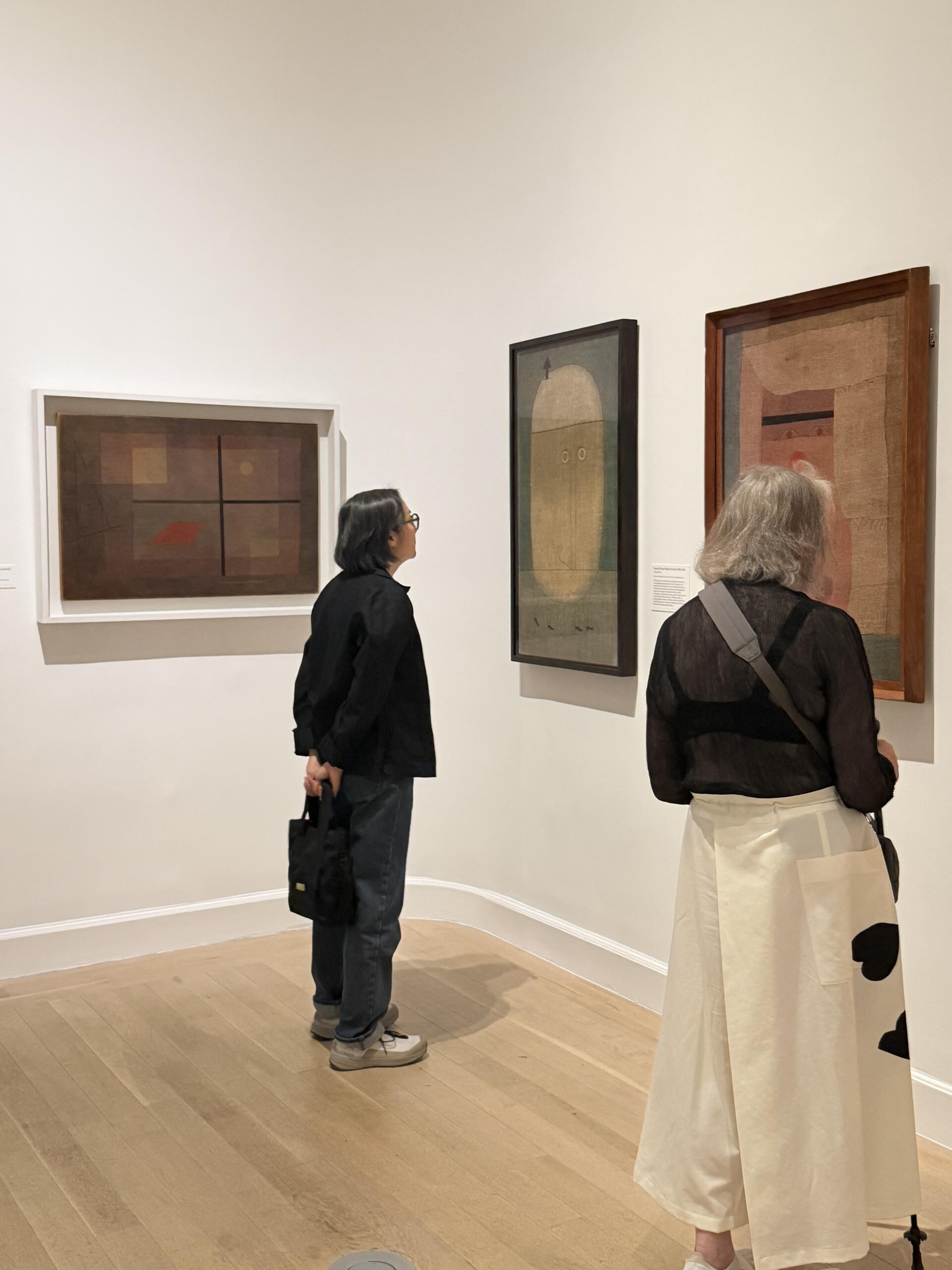
The National Socialists deemed Paul Klee’s art subversive and degenerate. His lesser known late work is currently exhibited in New York:
Paul Klee: Other Possible Worlds is on view until July 26 at the Jewish Museum in New York.
After a decade at the Bauhaus, Paul Klee moved to the Düsseldorf Academy in 1931 to focus on painting. However, the rising Nazi regime branded his art degenerate, labeled him a “Galician Jew,” and dismissed him. Forced into exile in Switzerland, Klee abandoned his bright style as he faced fascism and, by 1935, a fatal autoimmune disease called scleroderma. This exhibition explores Klee’s late work, a period less known and studied in the United States than in Europe.