Fritz Ascher Society

Jun 2, 2026

FRITZ ASCHER SOCIETY Newsletter June 2026

2026-06-09T07:08:31-04:00June 2nd, 2026|Newsletter|Comments Off on FRITZ ASCHER SOCIETY Newsletter June 2026

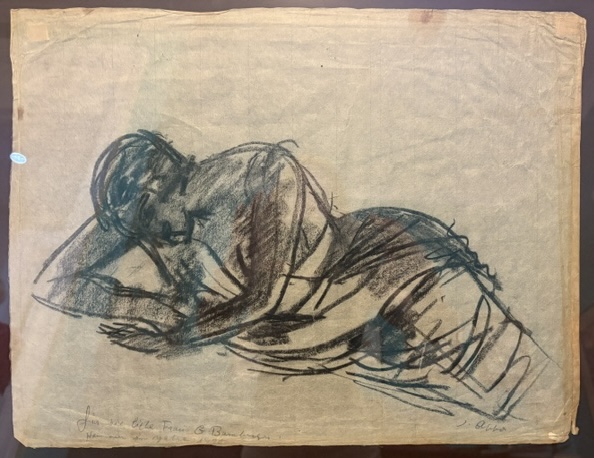
Dear Friends, This month, the FIFA Soccer World Cup kicks off, and this year it is hosted in North America, with games - among them the final - being played "just across the bridge" in New Jersey. What does that have to do with us? Well, in 1916, the artist Fritz Ascher drew soccer players into one of his sketchbooks - most probably from direct observation. He captured a dramatic moment, when a player holds a shot on goal. He catches the ball with his hands, which identifies him as the opponent's goal keeper - regular players are not allowed to touch the ball with their hands. Fritz Ascher, Soccer Players, ca. 1916. Black ink [...]

May 24, 2026

Visibility Practices: Women Photographers of the Bauhaus
Presentation by Carla Maria Huttenloher, Berlin (Germany)

2026-05-24T20:47:10-04:00May 24th, 2026|, |Comments Off on Visibility Practices: Women Photographers of the Bauhaus
Presentation by Carla Maria Huttenloher, Berlin (Germany)

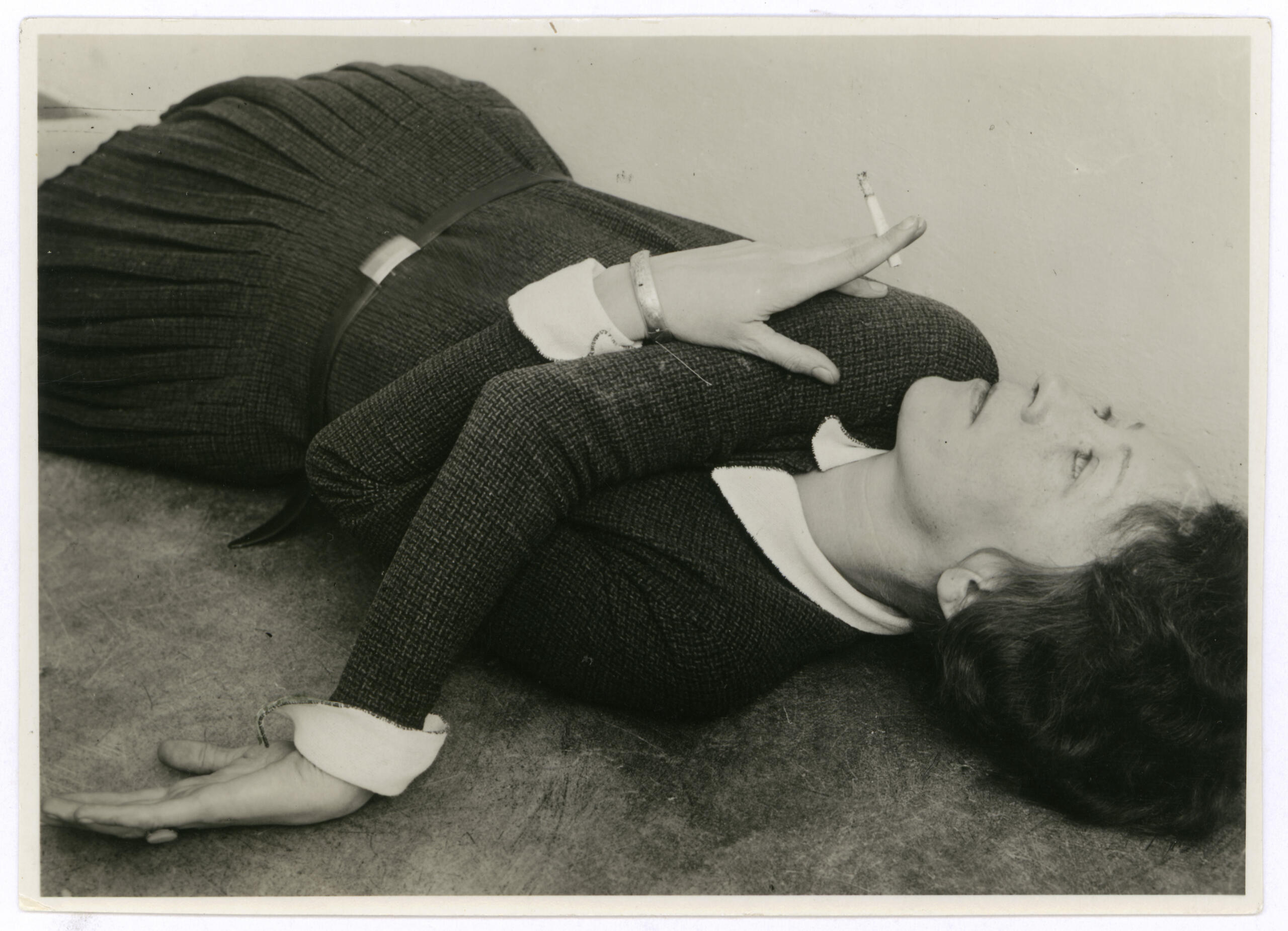
In this presentation, Carla Maria Huttenloher will bring women’s photographic agency to the forefront of the Bauhaus story, uncovering the rich and long-underexplored links between their lives and their powerful bodies of work. Image above: Grit Kallin-Fischer, Self-portrait with cigarette, around 1928. Courtesy Bauhaus-Archiv Berlin . REGISTER HERE Women have worked behind the camera since photography’s beginnings, but their contributions have been sidelined in art‑historical narratives. The Bauhaus offers a clear case: during the Weimar Republic women engaged with and shaped photographic modernism in multiple ways, yet their work is insufficiently acknowledged to date. In the 1920s and early 1930s, the social figure of the New Woman — ideologically linked to greater [...]

Apr 27, 2026

Stolen Jewish Legacies:
The Fate of Eugen Spiro and His Looted Collection
Presentation by Anne Uhrlandt, Munich (Germany)

2026-05-21T07:16:30-04:00April 27th, 2026|, , |Comments Off on Stolen Jewish Legacies:
The Fate of Eugen Spiro and His Looted Collection
Presentation by Anne Uhrlandt, Munich (Germany)

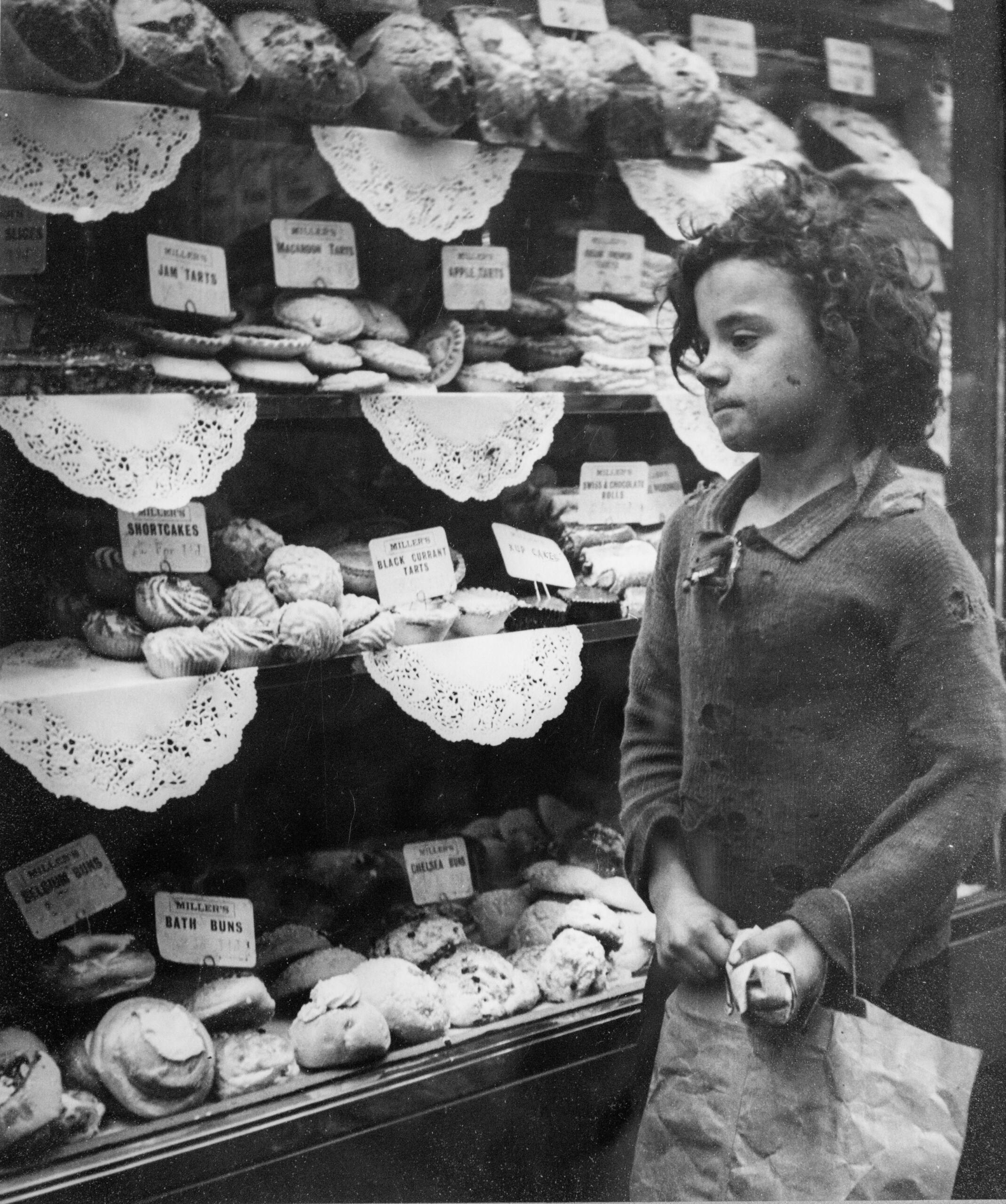
In this online lecture Anne Uhrlandt will present the forgotten story of once prominent German Jewish artist and collector Eugen Spiro (April 18, 1874, Wrocław - September 26, 1972, New York City). During her two-year research project, Uhrlandt reconstructed the artist’s biography and the fate of his looted collection by bringing together evidence and sources from numerous international archives. Two case studies about specific stolen objects highlight the dramatic events following both s the Nazi government ‘s expulsion of Spiro from his profession, robbing him of his sources of income, and the theft of his art collection, which included both his own works of art and works of art by other artists. The case studies demonstrate the potential of [...]

Apr 22, 2026

Early Drawings and Cartoons by Jewish Immigrant Artists, ca. 1900-1920
Presentation by Matthew Baigell, Rutgers University Professor Emeritus

2026-05-06T14:12:25-04:00April 22nd, 2026|, , |Comments Off on Early Drawings and Cartoons by Jewish Immigrant Artists, ca. 1900-1920
Presentation by Matthew Baigell, Rutgers University Professor Emeritus

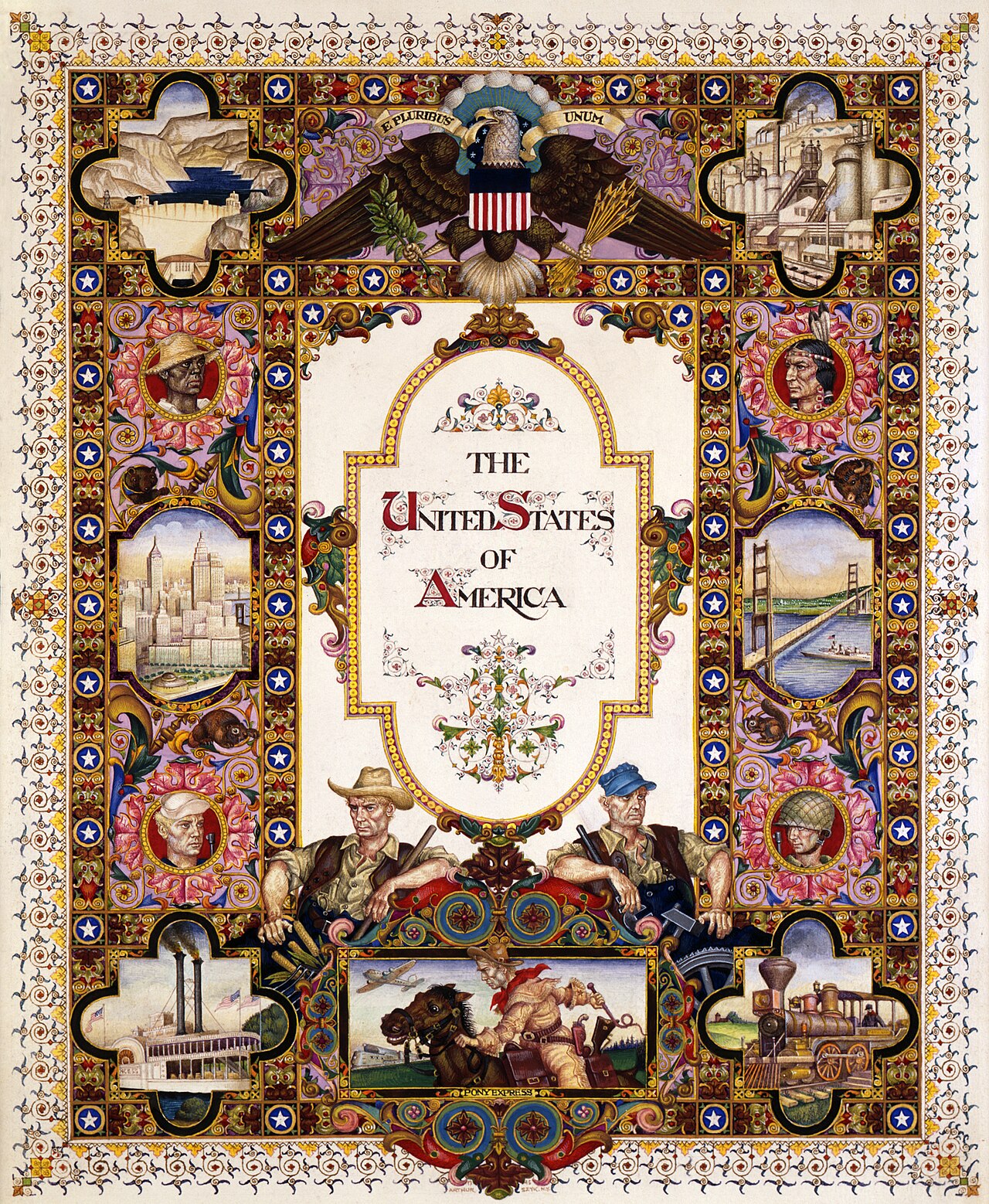
In this talk, Rutgers University professor emeritus Matthew Baigell discusses early Jewish immigrant artists and cartoonists. As millions of Jews immigrated to the United States from Eastern Europe starting in the 1870s, they brought with them not only their religious heritage but also a definitive idea of the place and value of art and aesthetics in society. Around 1900 they established a Jewish art stream separate from mainstream American art that continues to the present day. To a greater or lesser degree over the decades, artists have continually emphasized community values, politics, and religious heritage. Image above: Shelter Us Under the Shadow of Thy Wings, Hebrew Publishing 1909 Matthew Baigell is professor emeritus in art history at Rutgers University. [...]

Apr 16, 2026

THE RESTLESS HUNGARIAN
Film Screening and Conversation with Director Tom Weidlinger

2026-06-09T07:09:20-04:00April 16th, 2026|, |Comments Off on THE RESTLESS HUNGARIAN
Film Screening and Conversation with Director Tom Weidlinger

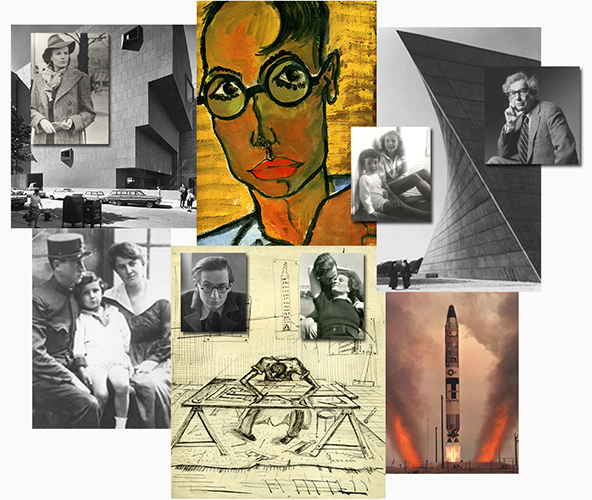
The Restless Hungarian (2021) is a personal narrative set against the backdrop of the Hungarian Jewish diaspora, the rise of Modernism, and the Cold War. The film centers on Paul Weidlinger, one of the most important structural engineers of the twentieth century who created the strength behind iconic skyscrapers, churches, museums, embassies, and monumental sculptures by Picasso, Noguchi, and Dubuffet. Early in his career, he broke from mainstream modernism with his concept of the “Joy of Space”. Behind his professional success, however, was a deeply troubled private life marked by loss, denial, and family tragedy. As the filmmaker—his son—begins to explore Paul’s past, the story shifts into a deeply personal journey across continents, uncovering hidden Jewish roots and the family’s [...]

Mar 9, 2026

Jewish Emigré Artists, from Albers to Hesse
Presentations by Ori Z. Soltes
Online Roundtable by the 92nd Street Y in three parts

2026-03-09T14:05:31-04:00March 9th, 2026|, |Comments Off on Jewish Emigré Artists, from Albers to Hesse
Presentations by Ori Z. Soltes
Online Roundtable by the 92nd Street Y in three parts

This class with acclaimed professor Ori Z. Soltes will consider the lives of eight major Jewish artists of the 20th century, and will discuss their experiences migrating under duress just before, during, or after the Holocaust. From Fritz Ascher to Anni Albers to Eva Hesse, we’ll learn about how these great artists fled, adapted, and survived through the 20th century and went on to create powerful works of art that we still recognize today. REGISTER HERE Session 1: March 13 Immigration and Art from One Generation to Another We'll begin with brief discussions of Ben Shahn and Raphael Soyer, then focus primarily on Fritz Ascher and Rudi Lesser, before concluding with Michael Iofin and David Stern. [...]

Mar 1, 2026

For the Love of Labor.
The Life of Pauline Newman
Book talk by Cathryn J. Prince

2026-04-15T13:27:08-04:00March 1st, 2026|, , |Comments Off on For the Love of Labor.
The Life of Pauline Newman
Book talk by Cathryn J. Prince

In this book talk, author Cathryn J. Prince follows Pauline Newman’s life from a youth split between Lithuania and New York City sweatshops to her work as an advisor to New Deal–era labor secretary Frances Perkins. From her start as one of the youngest activists in US history, Pauline Newman helped shape the International Ladies' Garment Workers’ Union (ILGWU) into a dominant force in industrial America. Cathryn J. Prince tells the story of a self-educated Jewish immigrant who dedicated herself to a legion of causes and lifelong battles against sexism and classism. Newman’s long hours at the Triangle Shirtwaist Factory informed her entrée into labor activism. In the following years, she tirelessly advocated for workers, [...]

Feb 13, 2026

Who Will Draw Our History?
Women’s Graphic Narratives of the Holocaust, 1944-1949
Presentation by Rachel Perry, PhD

2026-03-05T07:21:05-05:00February 13th, 2026|, , |Comments Off on Who Will Draw Our History?
Women’s Graphic Narratives of the Holocaust, 1944-1949
Presentation by Rachel Perry, PhD

In this talk, art historian and curator Rachel Perry discusses ten graphic narratives of their experiences of Nazi persecution created by women immediately after liberation. Lacking photographs of what they witnessed and endured, these "first responders" used visual storytelling to counter perpetrator and liberator sources and represent maternal loss, sexual violence, forced labor, and bodily trauma—experiences rarely recorded in canonical Holocaust testimony. Drawing on archives across Europe, Israel, and the United States, this talk recovers marginalized stories that predate Art Spiegelman's Maus by decades. Featured Artists: Lea Grundig (1906-1977), Luba Krugman Gurdus (1914-2011), Mária Turán Hacker (1886-1967), Edit Bán Kiss (1905-1966), Regina Lichter-Liron (1920-1995), Ella Liebermann-Shiber (1927-1998), Ágnes Lukács (1920-2016), Zsuza Merényi (1925-1990), [...]

Feb 3, 2026

FRITZ ASCHER SOCIETY Newsletter FEBRUARY 2026

2026-02-04T06:26:33-05:00February 3rd, 2026|Newsletter|Comments Off on FRITZ ASCHER SOCIETY Newsletter FEBRUARY 2026

Dear Friends, As the snow doesn't seem to melt here in New York, we slowly move towards the Jewish holiday of Purim. So in our next talk, we will focus on the German-born Israeli artist Jacob Pins who depicted clowns repeatedly. We will explore how he portrayed the clown, a figure between tragedy and comedy, between self-identification and stage, within his larger oeuvre, within the Israeli society and beyond: Wednesday, February 11, 12:00pm ET online Jacob Pins (1917-2005): The Art of Laughter and Tears Presentation by Ori Z Soltes, PhD Georgetown University, Washington (DC) REGISTER HERE Jacob Pins, Dance of Death, 1957. Color woodcut, 995 x 597 mm. Forum Jacob Pins, [...]

Jan 26, 2026

Jacob Pins (1917-2005): The Art of Laughter and Tears
Presentation by Ori Z. Soltes, Washington (DC)

2026-02-11T15:54:02-05:00January 26th, 2026|, , |Comments Off on Jacob Pins (1917-2005): The Art of Laughter and Tears
Presentation by Ori Z. Soltes, Washington (DC)

In this image-rich talk, Ori Z. Soltes explores the pioneering Israeli printmaker Jacob Pins (1917-2005) and the unique place that he holds in the history of Israeli and modern Jewish art. Born into a Jewish family in Höxter, Germany, he immigrated to Palestine in 1936. He studied under German émigré Jacob Steinhardt (1941-45) and became a noted exponent of the woodcut as well as a noted collector. From 1956 to 1977, Pins also taught at Israel's leading art schools, most notably Bezalel School of Arts and Design in Jerusalem. Image above: Jacob Pins, Dance of Death, 1957. Color woodcut, 995 x 597 mm. Forum Jacob Pins, Höxter. Jacob Pins (January 1917 – [...]

Jan 18, 2026

Costume as Character:
Celebrating the Legacy of Ruth Morley
Center for Jewish History
15 West 16th Street, New York, NY

2026-03-20T16:22:11-04:00January 18th, 2026|, , |Comments Off on Costume as Character:
Celebrating the Legacy of Ruth Morley
Center for Jewish History
15 West 16th Street, New York, NY

Costume designer Ruth Morley was behind the iconic looks of several characters now considered legendary in cinema history. A Kindertransport child refugee from Vienna, in the 1950s she studied under German-American painter Hans Hofmann and went on to design costumes for opera and ballet before moving into theater, film and television. Her work can be seen in such iconic films as The Hustler (1961), The Miracle Worker (1962, Academy Award nomination), Taxi Driver (1976), Annie Hall (1977), Kramer vs Kramer (1979), One from the Heart (1981), The Chosen (1981), Tootsie (1982, BAFTA nomination) and Ghost (1990). In the 1980’s she began teaching and mentoring costume design graduate students at Brandeis and NYU. Join panelists Deborah Nadoolman Landis (Costume Designer and Distinguished Professor at UCLA’s School of Theater, Film and Television, Founding [...]

Jan 9, 2026

The Third Generation.
‘So are these the footsteps of my grandmother or my own?’
Presentation by Sabine Apostolo, Vienna (Austria)

2026-03-27T07:03:29-04:00January 9th, 2026|, , |Comments Off on The Third Generation.
‘So are these the footsteps of my grandmother or my own?’
Presentation by Sabine Apostolo, Vienna (Austria)

Curator Sabine Apostolo gives a virtual tour through the internationally traveling exhibition “The Third Generation. The Holocaust in Family Memory”, which was developed by the Jewish Museum Vienna. Image above: Die Dritte Generation Titel, Zitat: Cécile Wajsbrot, Mémorial, Göttingen 2023, 87 © JMW / Drahtzieher Design & Kommunikation Eighty years after the Holocaust, the last eyewitnesses are dying. Their stories, but also their trauma, have been passed on to their children and grandchildren. While the Second Generation grew up as direct observers of their parents’ psychological and physical damage, the Third Generation can look with greater distance at the family histories, in which memories and silence, family myths and secrets, and overwhelming or missing family [...]