Rachel Stern2025-04-29T12:29:58-04:00April 29th, 2025|Selected Publications|
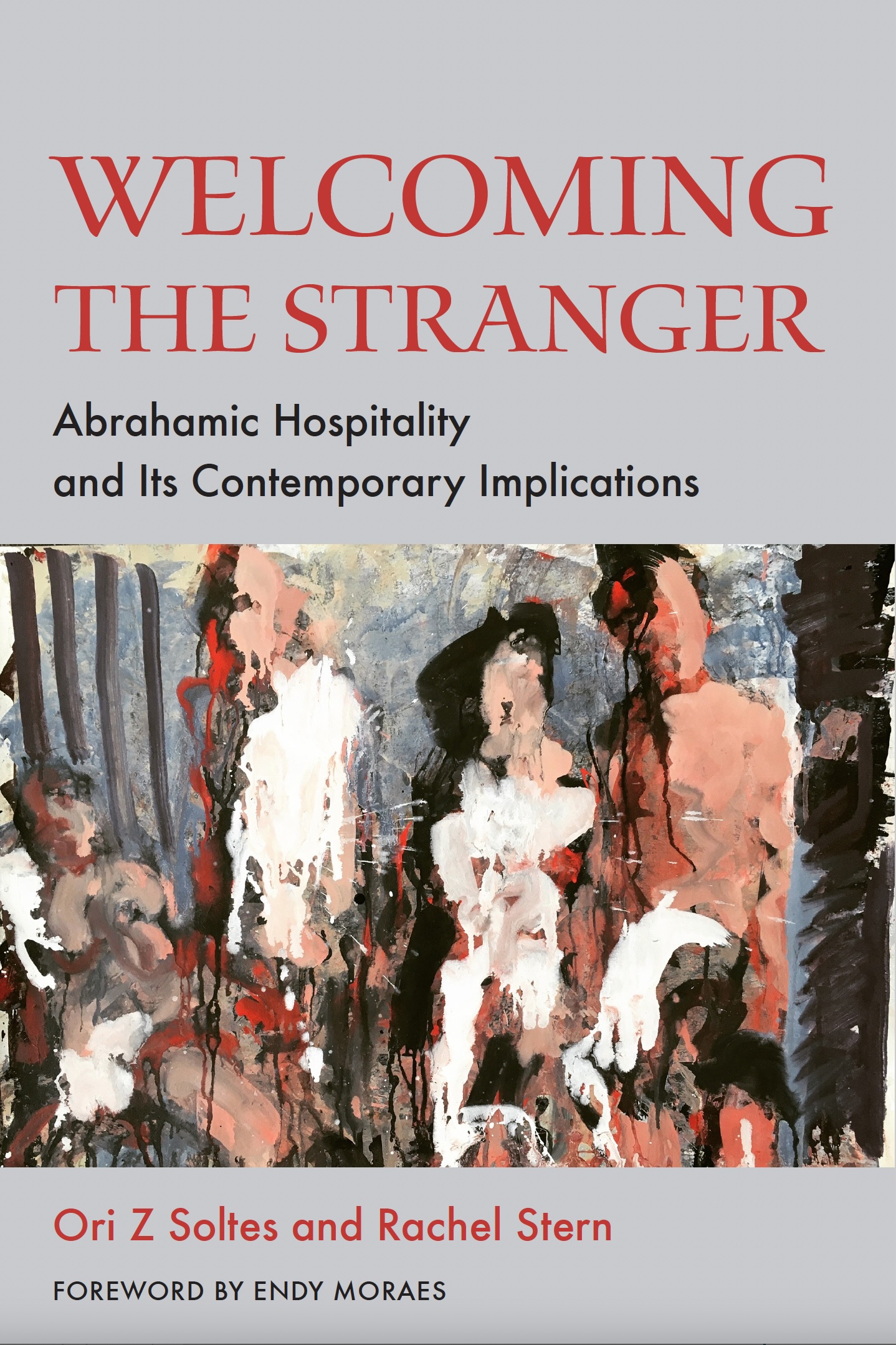
Beginning with the story of Abraham’s hospitality to the three strangers described in Genesis 18, this volume explores both the theological evolution in and beyond the Abrahamic traditions of the principle of “welcoming the stranger,” and its on-the-ground application from India to Germany in the past to America in the present. One of the signal moments in the narrative of the biblical Abraham is his insistent and enthusiastic reception of three strangers. That moment is a beginning point of inspiration for all three Abrahamic traditions as they evolve and develop the details of their respective teachings. On the one hand, welcoming the stranger by remembering “that you were strangers in the land of Egypt” is enjoined upon the ancient [...]
Rachel Stern2025-04-29T10:30:15-04:00April 29th, 2025|Newsletter|
Dear Friends, May is the month during which we celebrate the fifth anniversary of our virtual event series "Flight or Fight. stories of artists under repression." You can now find about 150 artist videos on our YouTube channel @fritzaschersociety! Throughout this month, we ask you to donate to the Fritz Ascher Society to enable us to continue this important virtual program, which brings artists to a global audience, who are not widely known because they were persecuted or murdered by the German Nazis. We need to raise $10,000.00 to ensure the continuation of this program. And I am happy to announce that every donation made this month will be matched dollar-for-dollar until we reach that amount, so please: [...]
Rachel Stern2025-04-29T10:31:47-04:00April 2nd, 2025|Newsletter|
Dear Friends, Spring is here, with the energy of renewal and growth and blossoming trees, plants and flowers. Holidays abound, and we honor Yom HaShoah, Holocaust Remembrance Day. We have organized fabulous virtual events for you, but first I have a story with a happy ending for you, at least for the art: Pretty exactly a year ago, the reporter and writer Julie Zigoris told the story of artwork that was found on a park bench in San Francisco’s Crane Cove Park in 2022. City employees had rescued the art and found the majority of the artworks to be by the Jewish painter Ary Arcadie Lochakov (1892-1941), a member of the famed School of Paris group that includes [...]
Rachel Stern2025-04-29T10:32:39-04:00March 7th, 2025|Newsletter|
Dear Friends, During these breathtakingly turbulent times, we prepared very diverse online programs for you: we start this month by looking back at US history by discussing immigrant American artist Ben Shahn, then focus on the state of Nazi era art restitution by presenting the much disputed collection of the Jewish art dealer Alfred Flechtheim, and conclude the month with a panel discussion of curator Ori Z Soltes, poet Rabbi Ronnie Cahana, and photographer Kitra Cahana about our Portland (OR) exhibition Survival and Intimations of Immortality: The Art of Alice Lok Cahana, Rabbi Ronnie Cahana, and Kitra Cahana, which is on view until May 25. First we present the American artist, Social Realist painter, and child refugee from Tzarist-governed [...]
Rachel Stern2025-02-12T07:45:33-05:00February 12th, 2025|Newsletter|
Dear Friends, February is a busy month with many interesting events in our orbit, starting with two film screenings at the JCC Manhattan, continuing with a virtual conversation with author Melvin Bukiet and a presentation of Fritz Ascher's art, and two exhibitions, of which one is closing in early March in Germany, and one just opened in Portland, Oregon. Please join us at the JCC Manhattan for two important film screenings: Tuesday, February 4, 7:00PM ET The Return from the Other Planet, 2023 Screening followed by Q+A with director Assaf Lapid Marlene Meyerson JCC Manhattan, New York 20% off tickets with code fritz2025 Tuesday, February 11, [...]
Rachel Stern2025-03-02T04:34:45-05:00January 20th, 2025|Events, Lectures, Past Events|
Rachel Stern will present insights into the art and life of the German-Jewish artist Fritz Ascher and the mission of The Fritz Ascher Society for Persecuted, Ostracized and Banned Art. Introduced by Richard Quinlan, Director of the Center for Holocaust and Genocide Education at Saint Elizabeth University in Morristown (NJ). Image above: Fritz Ascher, Male Portrait in Red, c. 1915. Private collection © Bianca Stock Fritz Ascher (1893-1970), a painter, graphic artist, and poet, was recommended to the art academy in Königsberg by the renown German painter Max Liebermann at the age of 16. From 1913 onwards, he gained recognition as a painter in Berlin. Ascher was a keen observer of his era; the [...]
Rachel Stern2025-02-12T14:47:01-05:00January 2nd, 2025|Events, Lectures, Past Events|
Hermann Goering’s art dealer, Bruno Lohse, prospered by selling stolen art for decades after WWII, while Jewish families struggled to regain their paintings and memories. Captured and interrogated by the Monuments Men after the war, he served a brief prison sentence. After his release, he dealt profitably in stolen art for sixty years after the war, selling to collectors, galleries, and major museums. Highlighting stories of Holocaust survivors working to reclaim their families' lost artworks, Plunderer reveals the failures of post-war justice and the continuing complicity of governments and the art trade. Screening followed by Q+A with producer John Friedman. In partnership with The Fritz Ascher Society for Persecuted, Ostracized and Banned Art. Director: Hugo Macgregor Year: 2024 Runtime: [...]
Rachel Stern2025-01-09T13:35:50-05:00December 24th, 2024|Newsletter|
Dear Friends, We wish you Happy Holidays with Mayer Kirshenblatt's painting Hanukkah, in which he remembers celebrating the holiday with his family in Opatów (Apt) in the 1920s. "This is Hanukkah at home with my father, mother, and brothers. We lit the candles and sang Maoz tsur (Rock of Ages). I painted a few notes to indicate that we were singing. It was a special day for us because we were let out of school early. Father gave me Hanukkah gelt, a few pennies for a present, in honor of the holiday. Mother cooked latkes, potato pancakes, which are very delicious. She grated raw potatoes, added eggs, and flour and fried the pancakes in shmalts, [...]
Rachel Stern2024-12-09T17:13:32-05:00December 9th, 2024|Events, Lectures|
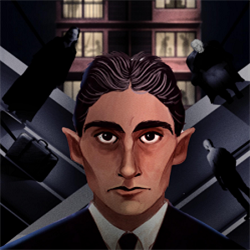
Screening followed by Q+A with director Eliran Peled, writer Daphne Merkin, and author Benjamin Balint. Film and screening offered in partnership with the New York Jewish Week. Co-sponsored by Fritz Ascher Society for Persecuted, Ostracized and Banned Art. Upon his death in 1924, the great Czech-Austrian novelist Franz Kafka left behind a rich collection of unpublished manuscripts, with instructions to his friend Max Brod to burn them all. Thanks to Brod’s failure to fulfill Kafka’s wishes, the world has come to know one of the great writers of the 20th century. Now, 100 years after his death, the film “Kafka’s Last Trial” tells the story of this altruistic betrayal and the multi-generational effort to preserve Kafka’s literary legacy. Based on [...]
Rachel Stern2024-12-18T05:55:27-05:00December 4th, 2024|Events, Lectures, Past Events|
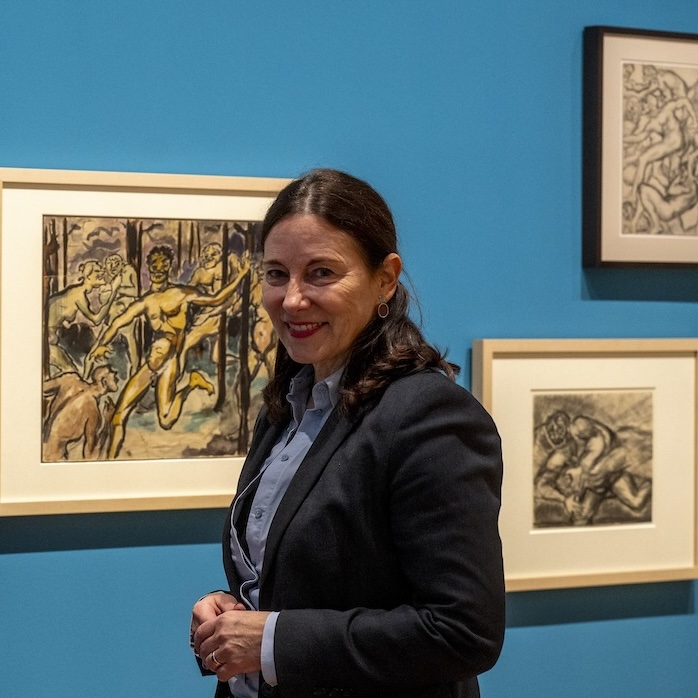
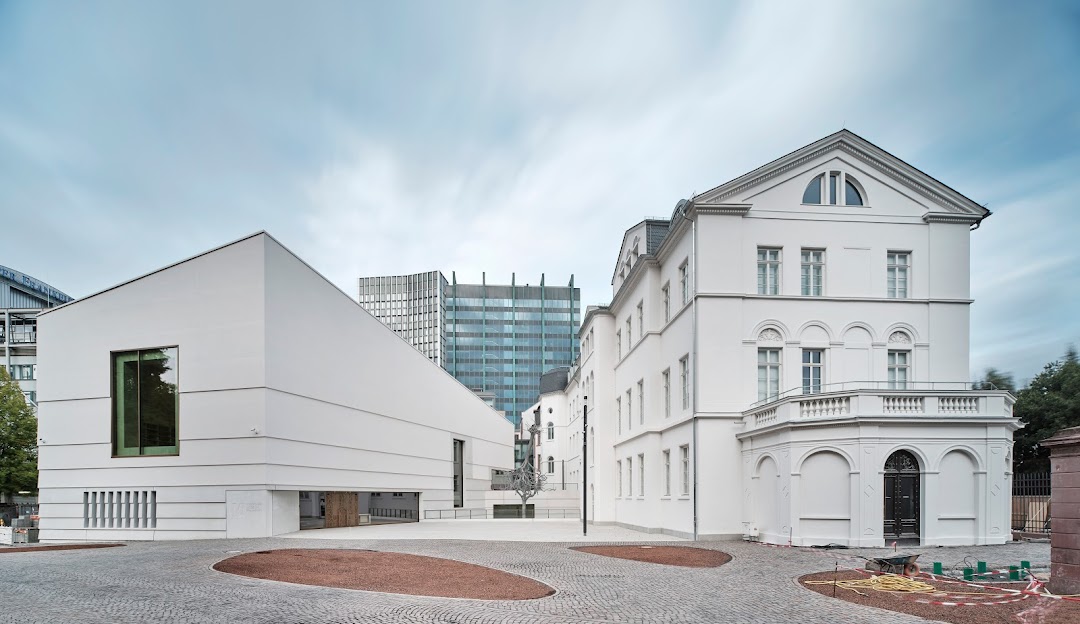
Jutta Götzmann, exhibition curator of "Love and Betrayal," presents the artist Fritz Ascher (1893-1970) during a tour. In addition to early charcoal, graphite and ink drawings, colorful gouaches are fascinating. Poems that are considered his "unpainted pictures" and were created in secret during the National Socialist era complement the exhibition. BUY TICKETS HERE The Fritz Ascher Society is a not-for-profit 501(c)3 organization. Your donation is fully tax deductible. YOUR SUPPORT MAKES OUR WORK POSSIBLE. THANK YOU. DONATE HERE
Rachel Stern2024-12-18T14:18:11-05:00November 24th, 2024|Events, Lectures, Past Events|
In this book talk, Michael Lambek follows the intertwined history of Mies van der Rohe’s iconic Villa Tugendhat and the family who inhabited it from 1930-1938. Part memoir, part social history, the book traces the family from its origins in a Jewish ghetto to the present day, focussing on the author’s maternal grandmother, Grete Tugendhat who commissioned and championed the house, which is now a World Heritage Site in Brno, Czechia. Image above: Ludwig Mies van der Rohe, Villa Tugendhat, Brno (Czechia), photo David Zidlicky The Villa Tugendhat, designed by Mies van der Rohe in 1929, is an icon of architectural modernism in Brno, Czechia. It was also a family home. [...]
Rachel Stern2024-11-24T14:39:31-05:00October 28th, 2024|Events, Lectures, Past Events|
Der Maler, Grafiker und Dichter Fritz Ascher (1893-1970) wurde bereits als 16-Jähriger von Max Liebermann an die Akademie in Königsberg empfohlen. Ab 1913 gehörte er zu den gefragten Malern in Berlin. Er war ein genauer Beobachter seiner Zeit; die Urkatastrophe des Ersten Weltkriegs und die revolutionären Unruhen in Berlin führten ihn zu christlichen und mystischen Themen, die er radikal neu interpretierte. Nach 1933 erhielt Ascher als Jude Berufsverbot. Während der Pogrome am 9./10. November 1938 wurde er verhaftet und im Konzentrationslager Sachsenhausen und im Potsdamer Gestapo-Gefängnis interniert. Die Schoa überlebte er ab 1942 versteckt in einem Keller in Berlin-Grunewald. Während dieser einsamen Jahre verfasste er Gedichte. Als Künstler fand Ascher nach 1945 seinen ganz eigenen Stil. Angeregt vom nahe [...]