Dear friends and colleagues,
This November, we are bringing you a wide range of in-person and online events, and hope you’ll participate in all of them.
Let’s start with our upcoming online events:
Tomorrow, on October 28th at 12:00pm EST, we will discover the art and life of Jewish painter Armin Stern (1883-1944) in Armin Stern. Journeys and Escapes, which is presently on view at the Jewish Museum in Frankfurt.
Live-streaming from the UN, we’ll commemorate the November Pogrom 1938 on November 4th at 11:30am EDT with a discussion about Understanding Past Realities of the Holocaust. Photography versus Art, featuring experts Christoph Kreutzmüller from Berlin and Rachel Perry from Boston and Haifa.
Franz Kafka is well known as a writer, but on November 18th, at 12:00pm EDT, Andreas Kilcher from Zurich (Switzerland) will speak about Kafka’s last Unknown: The Story and Character of his Drawings.
And then we organized two exciting in-person events for you:
Tickets are now available for a cocktail reception benefiting the Fritz Ascher Society on Monday, November 23rd at 5:30pm EDT on Central Park South here in New York! Join us for art, conversation and connection and support our work.
On December 3rd, 9:30am EDT, we invite you to join us for a special early tour of the exhibition There Are No Words: Si Lewen’s Parade with curator Maria Castro at The Metropolitan Museum of Art, before the museum opens to the public. After the tour, we’ll gather for coffee and tea and continue the conversation. Registration closes on November 15.
Read on and you’ll find links to the recordings of our most recent virtual events and four exhibitions we recommend this month – most of them in New York.
Warmest greetings,
Rachel Stern
Executive Director
UPCOMING VIRTUAL EVENTS:
Please beware the time zones tomorrow – in Germany the clocks were just changed:
TOMORROW
WEDNESDAY, October 28, online
12:00PM EDT / 5:00PM CET
Armin Stern. Journeys and Escapes
Presentation by Erik Riedel, Frankfurt a.M. (Germany)
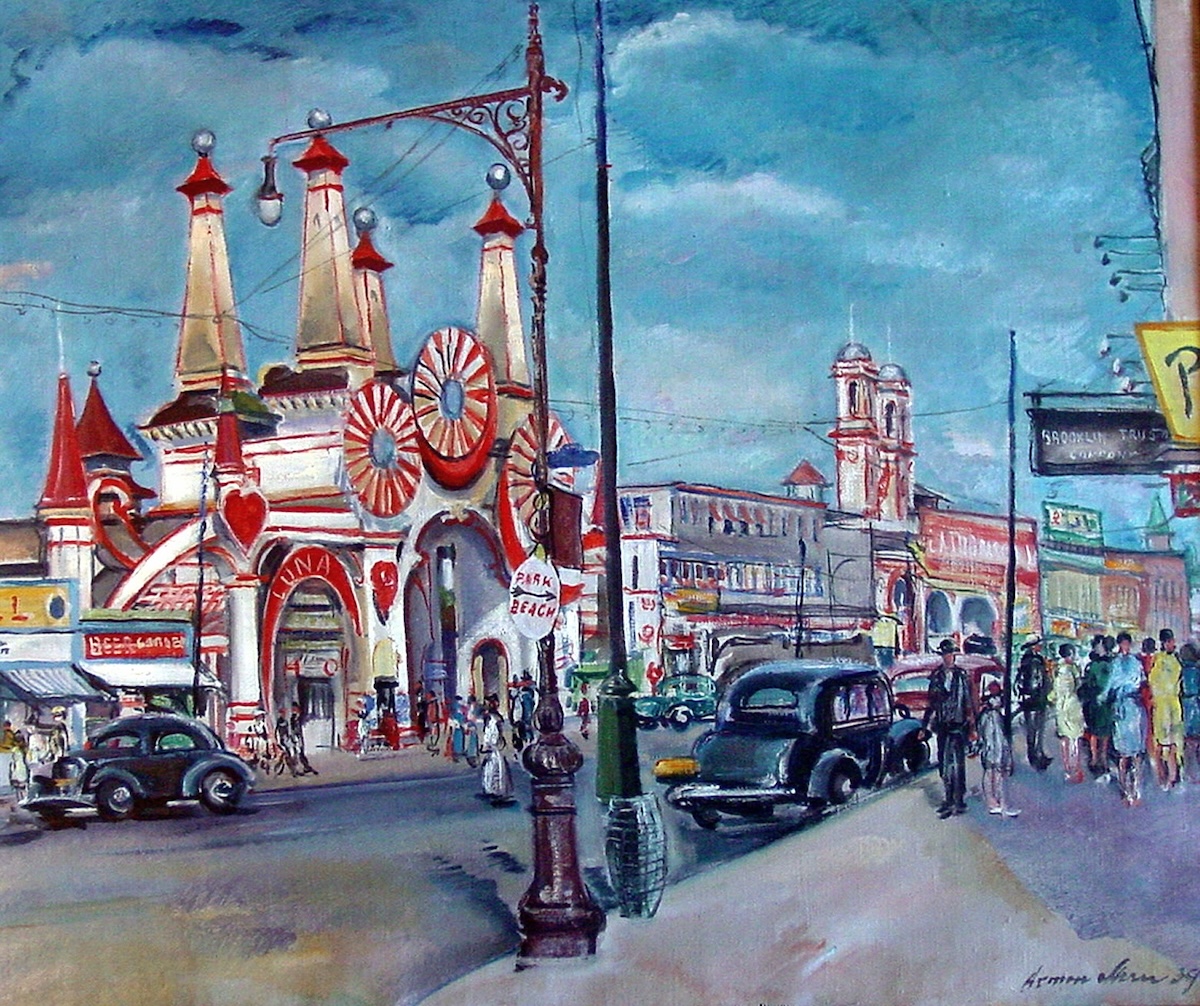
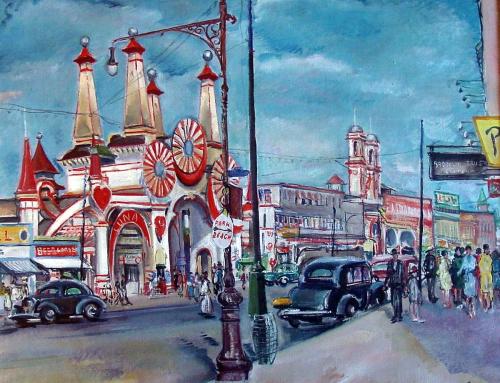
Armin Stern, Luna Park on Coney Island, 1939. Oil on canvas. Donated by the descendants of Armin Stern. Jewish Museum Frankfurt
The artist Armin Stern (1883–1944), born near Pressburg (now Bratislava), moved to Frankfurt in 1900 to study painting. Despite numerous travels and periods of study in Paris, Brittany, the Netherlands, and Ticino, Frankfurt remained the center of his life. After being excluded from an exhibition at the Frankfurt Kunstverein in 1933 because he was a “non-Aryan artist,” he relocated with his family to Bratislava, which had by then become part of Czechoslovakia.
As the situation there also grew increasingly perilous, Stern initially sought to emigrate to the British Mandate of Palestine. By his own account, the painter had become a Zionist while still a schoolboy; during an extended stay in Eretz Israel in 1933–34, he had already gained intimate knowledge of the country while simultaneously looking for a place to settle with his family. In 1938, he obtained an entry visa for the USA; he settled in New York and participated in several exhibitions. After five years of exile in the United States, Armin Stern died of heart failure in July 1944, just days before he was due to be naturalized.
Erik Riedel is head of exhibitions at the Jewish Museum Frankfurt and curator of the museum’s Ludwig Meidner Archive.
This event is part of the online series Flight or Fight. stories of artists under repression.
This year, we commemorate the November Pogrom of 1938 with a livestream from the UN:
WEDNESDAY, November 4, 11:30PM EST online
Understanding Past Realities of the Holocaust.
Photography versus Art
Speakers:
Dr. Christoph Kreutzmüller, Berlin, Germany
Dr. Rachel Perry, University of Haifa and Gratz College
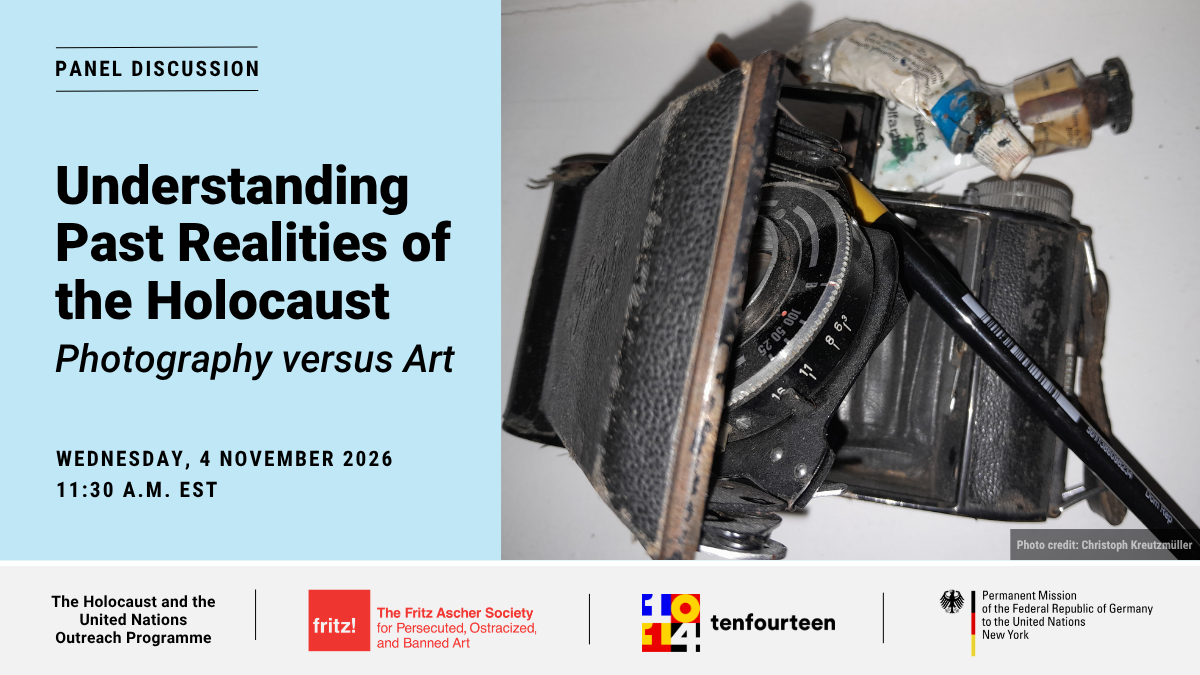
To mark the November Pogrom of 1938 (euphemistically called “Kristallnacht”), a discussion, “Understanding Past Realities of the Holocaust: Photography versus Art” will take place on 4 November 2026. Historians Dr Christoph Kreutzmüller and Dr Rachel Perry examine how photography and art depicted the Nazi state-orchestrated campaign of terror perpetrated against Jewish men, women and children across Germany, Austria and the Sudetenland from 9 to 10 November 1938 (the November Pogrom). The historians ask what photography and art reveal about the lived realities of the victims of the Pogrom, the interactions surrounding the violence and the broader society in which the violence was perpetrated.
The event will be live-streamed and recorded. Questions can be submitted through this form.
The discussion is organized by the Holocaust and the United Nations Outreach Programme together with the Fritz Ascher Society for Persecuted, Ostracized and Banned Art, and the Permanent Mission of Germany to the United Nations.
Only recently, Franz Kafka’s drawings were discovered:
WEDNESDAY, November 18, 12:00AM EDT online
Kafka’s last Unknown:
The Story and Character of his Drawings
Presentation by Prof. Dr. Andreas Kilcher, Zurich (Switzerland)
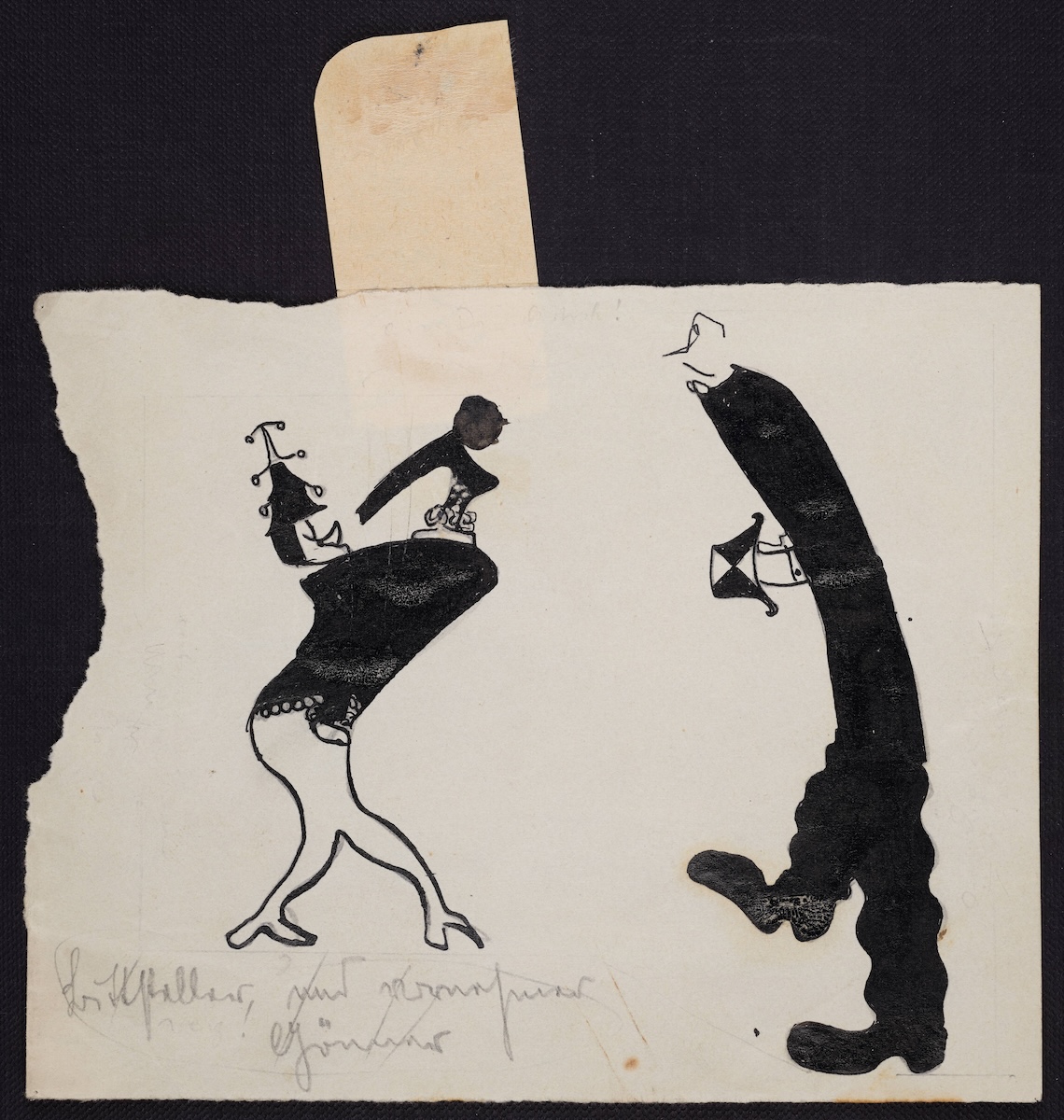
Franz Kafka, A Beggar and a Generous Elegant Man, 1906. Photograph: Ardon Bar-Hama. Max Brod Archive. The National Library of Israel
Locked away for decades following also a history of persecution, the drawings of the iconic 20th-century writer Franz Kafka remained one of the final unknowns of his work. In 2021, the literary scholar Andreas Kilcher brought them to light.
It was a sensational discovery: hundreds of drawings by Franz Kafka that had been kept under lock and key for decades were made accessible. Although Kafka is renowned for his written work, his drawings are evidence of what his literary executor, Max Brod, termed his ‘double talent’. Irresistible and full of fascinating figures, shifting from the realistic to the fantastic, the grotesque, the uncanny, and the carnivalesque, they illuminate a previously unknown side of the quintessential modernist author. Four new and fascinating stories can be told in relation to Kafka’s drawings: the story of their transmission, the story of Kafka’s engagement with the visual arts, the story of Kafka as a draftsman, and the story of his drawing practice in the context of his writing, which implies a complex aesthetic question: How are these drawings to be understood in their own right, yet at the same time as connected to his writing?
Andreas Kilcher is Professor of Literature and Cultural Studies at the Swiss Federal Institute of Technology (ETH) Zurich.
This event is part of the online series “Flight or Fight. stories of artists under repression.”
Please join us for art, conversation and connection and support our work while having fun:
MONDAY, November 23
5:30PM EDT
Cocktail Reception
at the home of Gary Zimmerman,
Central Park South, New York, NY
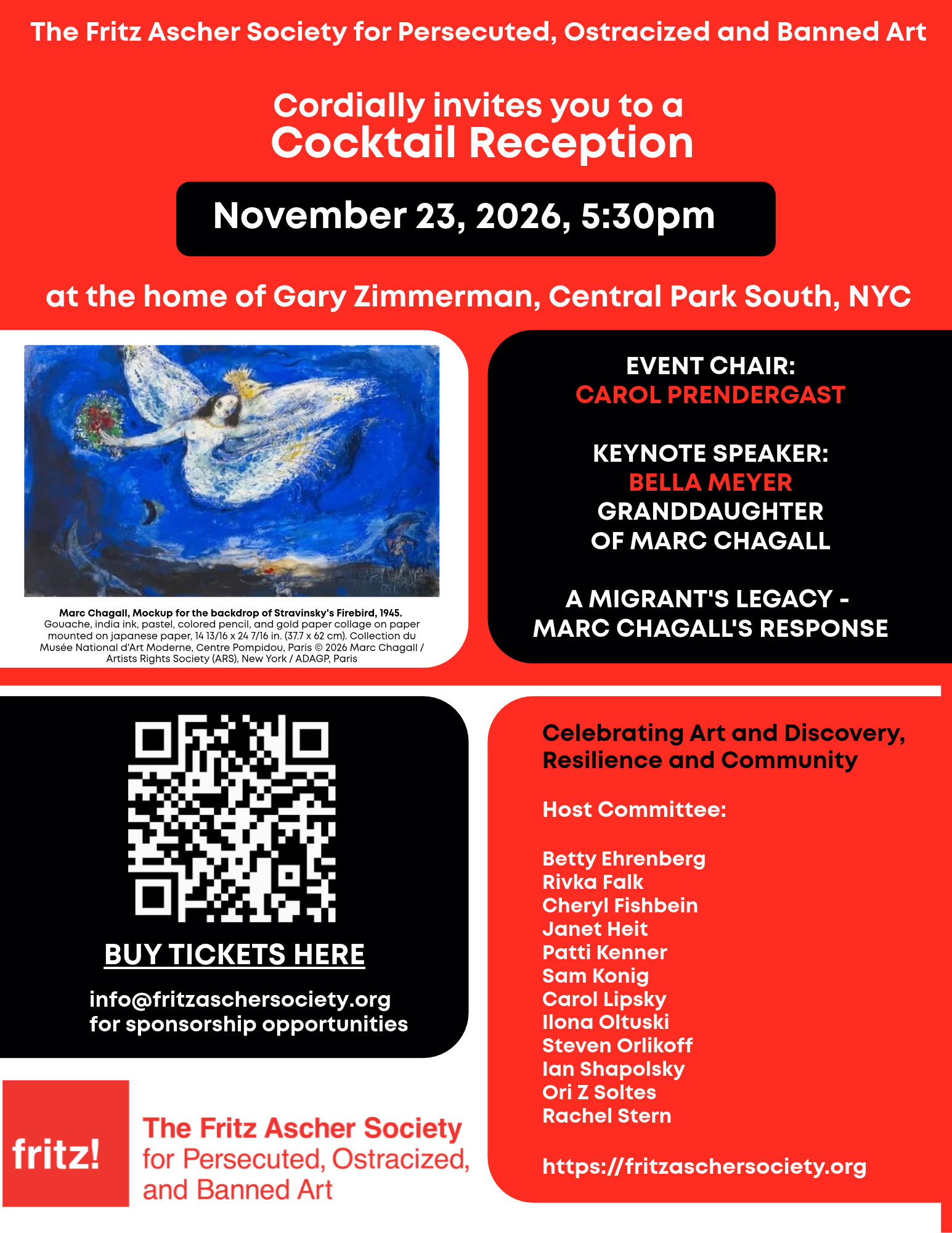
We cordially invite you to a cocktail reception at the home of Gary Zimmerman on Central Park South in NYC benefiting the Fritz Ascher Society for Persecuted, Ostracized and Banned Art.
Event Chair: Carol Prendergast
Keynote speaker Bella Meyer will share with us her insights about her grandfather Marc Chagall, and will speak about A Migrant’s Legacy – Marc Chagall’s Response.
Bella Meyer was born in Paris and raised in Basel, Switzerland. As Marc Chagall‘s granddaughter, she grew up immersed in art. She received her PhD in Medieval Art History from the Sorbonne in Paris.
Living in New York City since her late twenties, Bella pursued her love for art, and after teaching Medieval Art History, focused on the oeuvre of her grandfather’s. She has written and lectured on his work, while sharing responsibilities for his estate.
Her professional life also led her to create and design stage decorations of all types, from dance and theater costumes to puppetry, from masks and props, to her current passion for flowers founding fleursBELLA, a floral design studio in NYC, to share the ever–inspiring beauty of each flower’s fleeting story with the world around.
This event is on December 3, 9:30am EDT, but registration closes on November 15: We invite you to join us for a special early tour of the exhibition There Are No Words: Si Lewen’s Parade with curator Maria Castro at The Metropolitan Museum of Art, before the museum opens to the public. After the tour, we’ll gather for coffee and tea and continue the conversation.
THURSDAY, December 3, 9:30AM EDT
IN PERSON
There Are No Words: Si Lewen’s Parade
Private Tour by Curator Maria Castro
The Metropolitan Museum of Art, New York, NY 10028
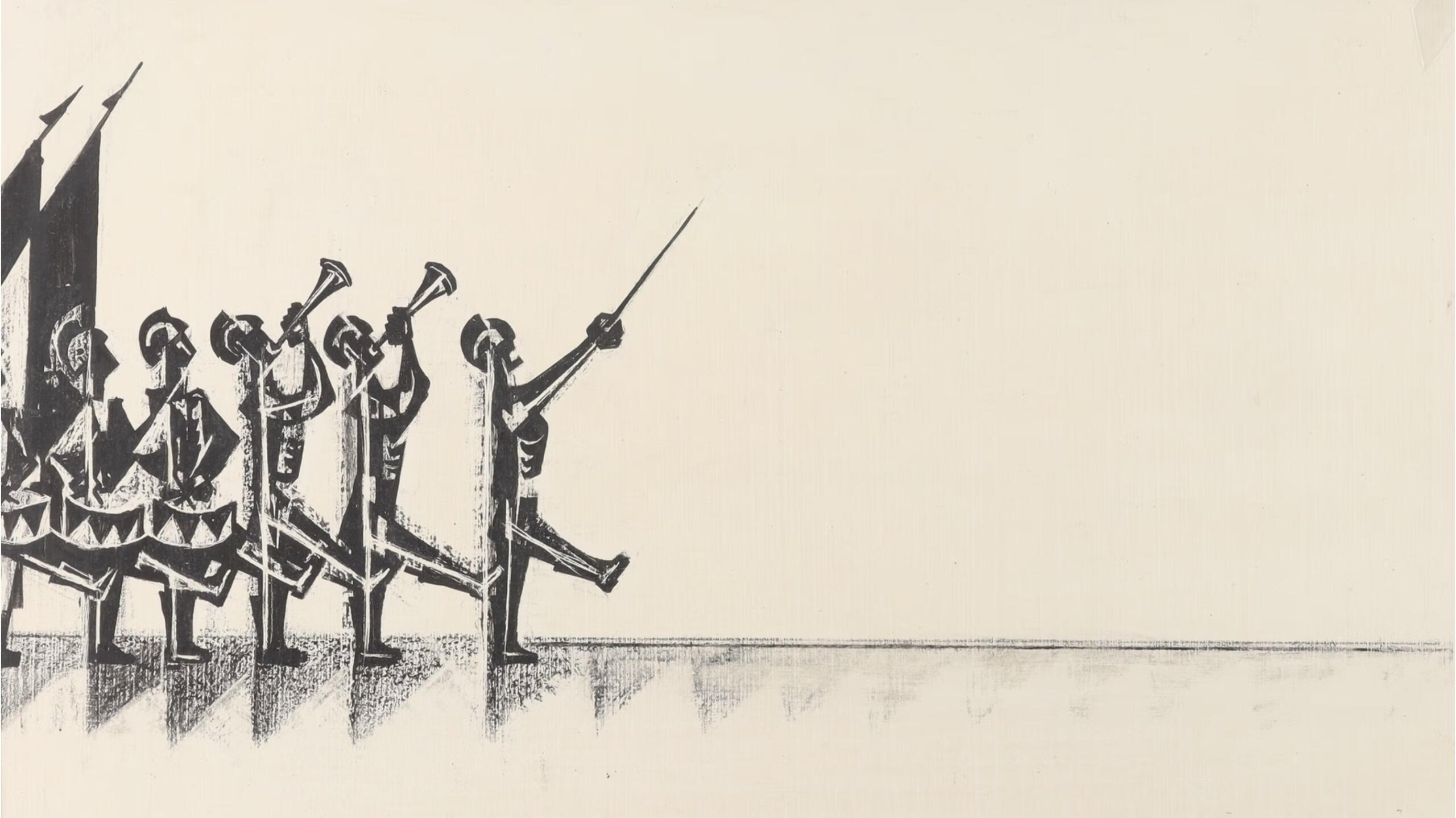
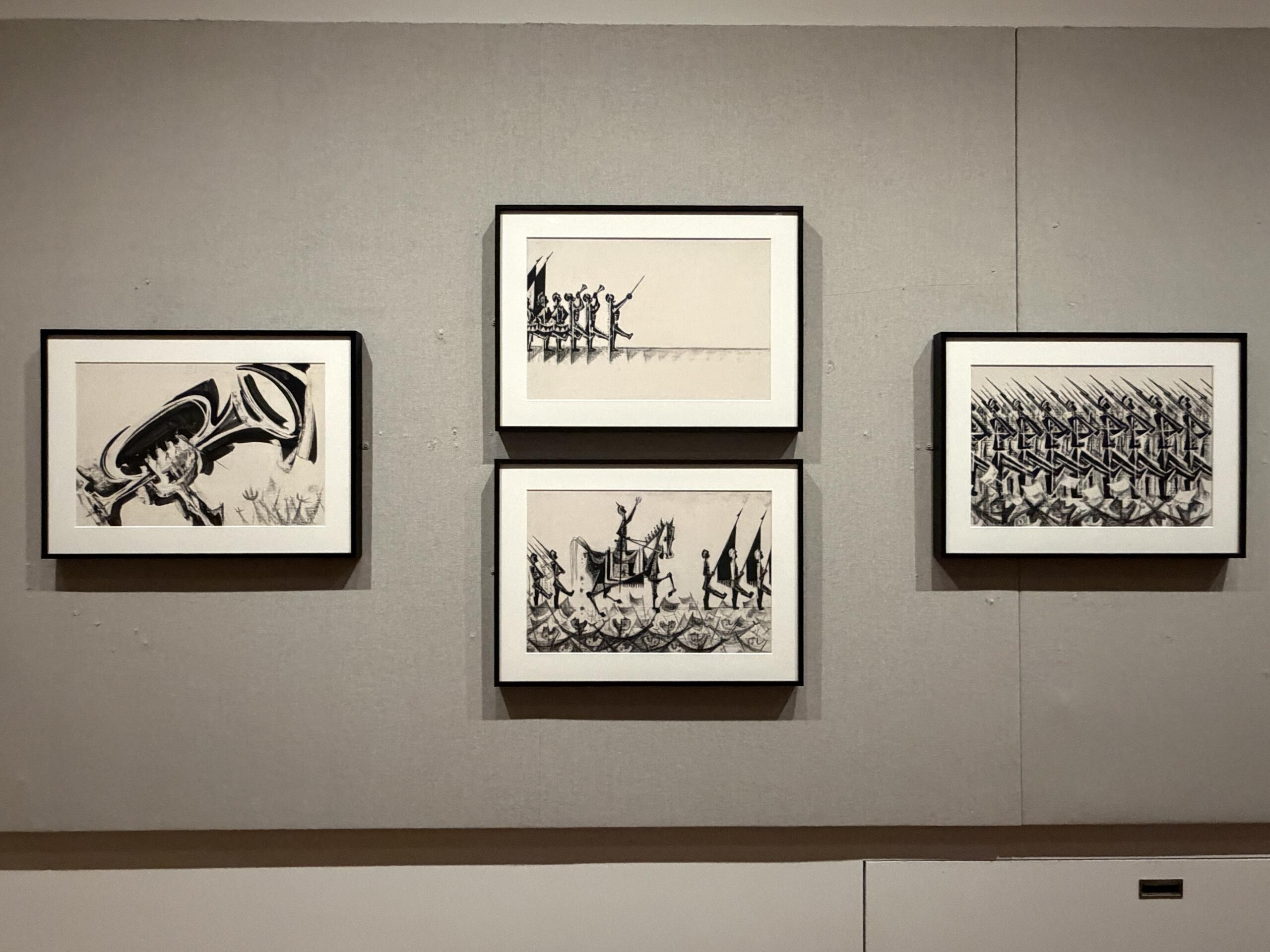
Si Lewen (American, Lublin, Poland 1918–2016), The Parade, ca 1950. Manufactured charcoal, pencil, crayon, ink, scratching, and hand applied gesso on paperboard, 13 7/8 × 19 3/4 × 1/16 in. (35.3 × 50.1 × 0.2 cm). The Metropolitan Museum of Art 2024.487.1–.63, Courtesy the Estate of Si Lewen and James Cohan, New York.
Join us for a special early tour of the exhibition with curator Maria Castro, before the museum opens to the public. After the tour, we’ll gather for coffee and tea and continue the conversation.
The Parade is an epic cycle of 63 charcoal, pencil, and ink drawings conceived by Si Lewen (1918–2016) in the aftermath of World War II. The work unfolds a visual narrative on war, memory, and the human condition that is informed by the artist’s extraordinary life. Born in Poland to Jewish parents and raised in Germany, Lewen fled Nazi persecution with his family in 1933 before immigrating to the United States. While serving in the U.S. Army as one of the Ritchie Boys, a specialized unit of German-speaking soldiers, Lewen arrived at the Buchenwald concentration camp shortly after its liberation in 1945. The Parade is rooted in the artist’s experience of these events as well as his coming of age during the tumultuous years when, as he reflected later, the parades after World War I gave way to the death marches of World War II.
Maria Castro is the Jacques & Natasha Gelman Associate Curator in the Department of Modern and Contemporary Art.
RECENT RECORDINGS
We invite you to watch, re-watch and pass on these most recent online event recordings.
CURRENT EXHIBITIONS
This month’s recommendations are focussed mainly on the fabulous exhibitions that are on view in New York – the only exception is the first:
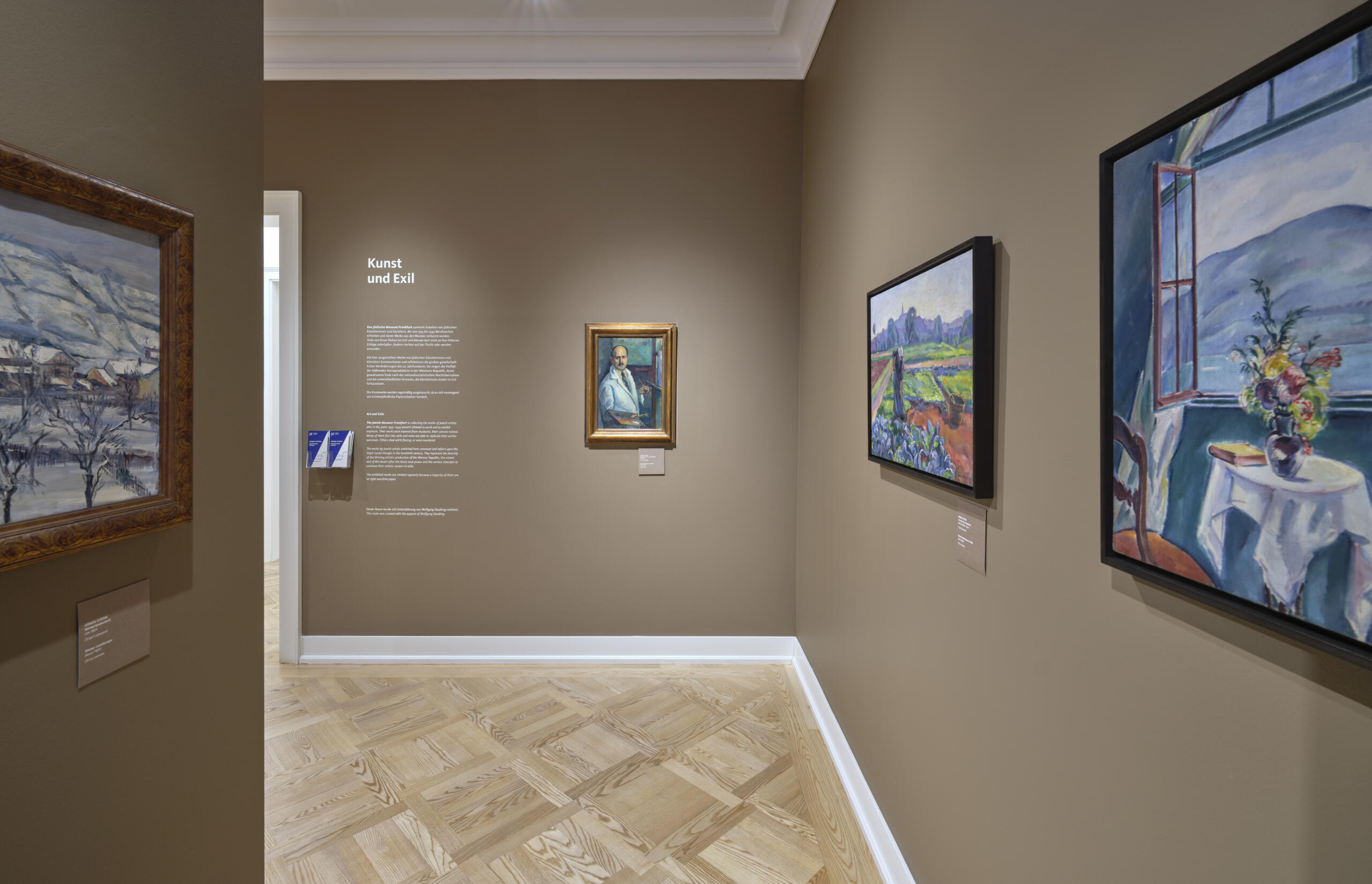
Armin Stern: Painter and Zionist is on view until January 3, 2027 at the Jewish Museum in Frankfurt a.M. (Germany).
Armin Stern had been a successful and popular landscape and portrait painter, who made a name for himself with social criticism- and Old Testament-related themes as well as landscapes and portraits, straddling the border between French impressionism and German expressionism.
The artist’s estate—gifted by his grandchildren—now enriches the art collection of the Jewish Museum Frankfurt.
The exhibition shows highlights from that collection.
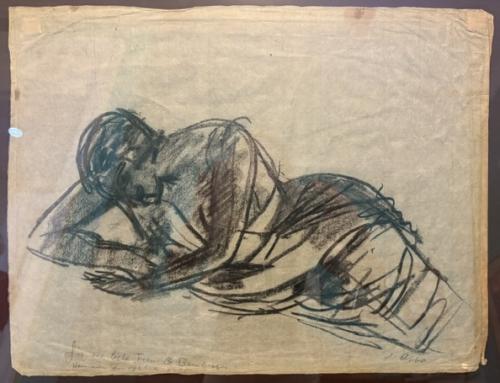
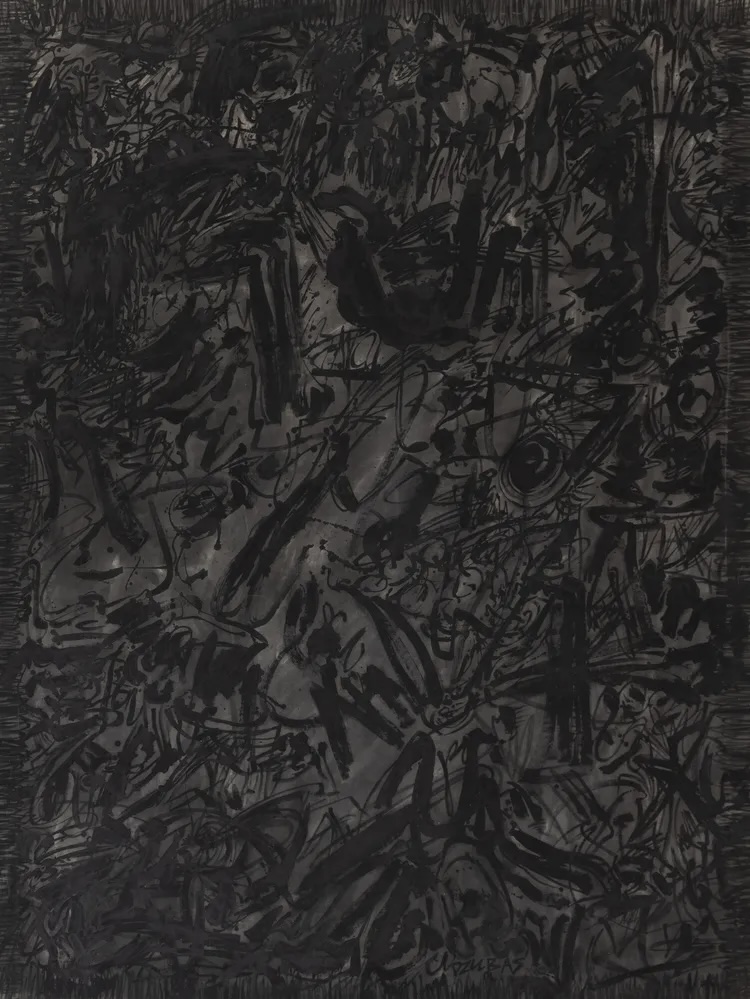
Friedel Dzubas: Black Drawings is on view until November 7, 2026 at Jules Lazare, 127 Elizabeth Street, New York, NY 10013.
“I became obsessed with the notion of how wonderful it would be if somebody in Europe, either in Spain or in Austria or in southern Germany, would give me a little chapel, a perfectly Baroque chapel (…) just whitewashed inside. And I would cover this whole Baroque architecture, inside, with those black drawings.”
Friedel Dzubas, interview with Charles Millard, 1982
There Are No Words: Si Lewen’s Parade is on view until January 5, 2027 at The Metropolitan Museum of Art, 1000 Fifth Avenue, New York, NN 10028.
The Parade is an epic cycle of 63 charcoal, pencil, and ink drawings conceived by Si Lewen (1918–2016) in the aftermath of World War II. The work unfolds a visual narrative on war, memory, and the human condition that is informed by the artist’s extraordinary life. Born in Poland to Jewish parents and raised in Germany, Lewen fled Nazi persecution with his family in 1933 before immigrating to the United States. While serving in the U.S. Army as one of the Ritchie Boys, a specialized unit of German-speaking soldiers, Lewen arrived at the Buchenwald concentration camp shortly after its liberation in 1945.
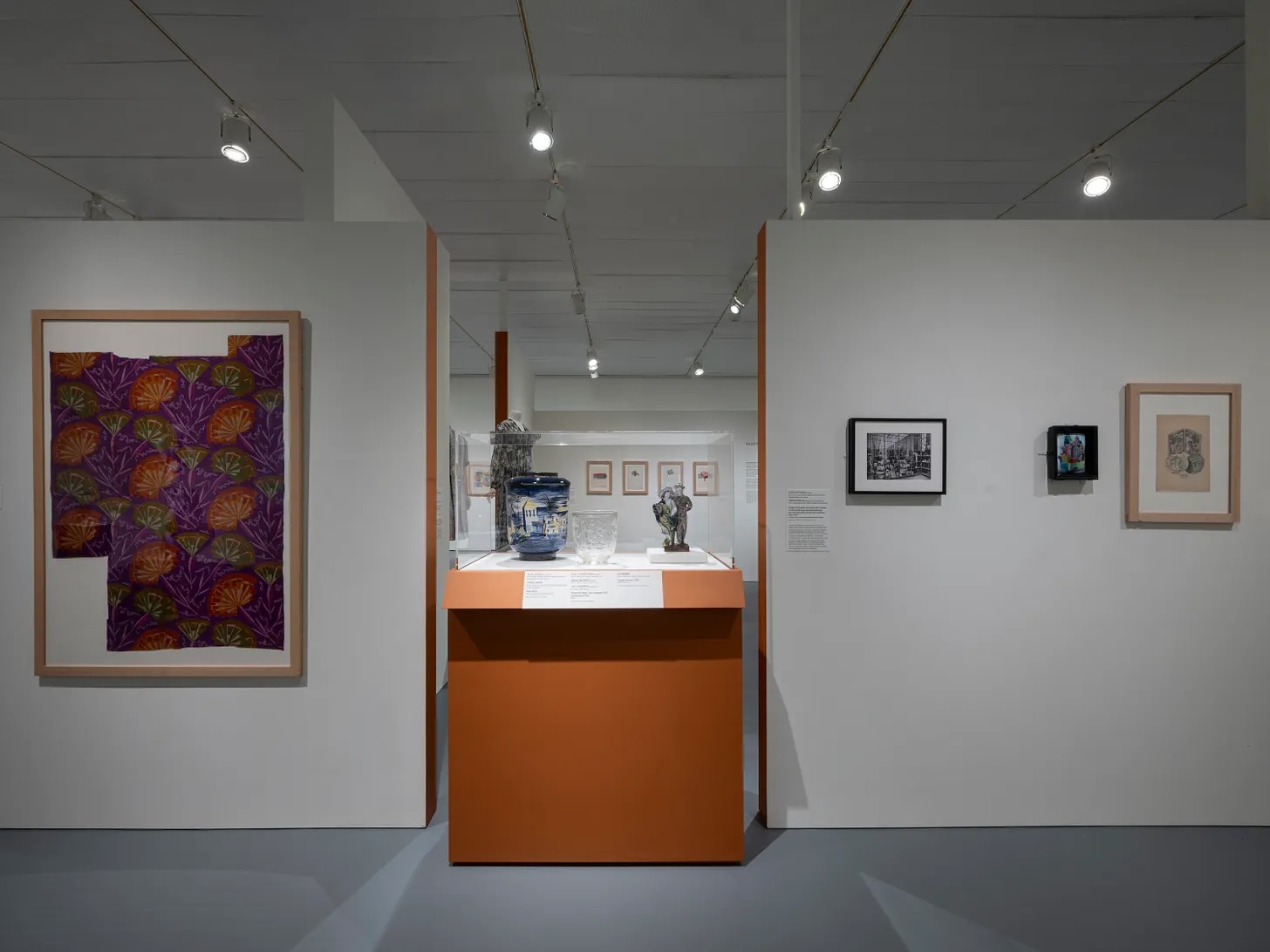
Modernity and Opulence: Women of the Wiener Werkstätte is on view until November 15 at the Jewish Museum New York.
The exhibition sheds new light on the role that Jewish women played as artists, designers, patrons, and tastemakers shaping modernist aesthetics in early 20th-century Vienna and beyond.
With more than 200 objects by some 30 Jewish women artists on view, the exhibition is organized thematically to reveal the extraordinary range and technical prowess of the women of the Wiener Werkstätte across mediums. A special emphasis is placed on Vally Wieselthier and Felice Rix-Ueno, whose prolific work, in ceramics and textile design respectively, has had lasting influence on these disciplines. The exhibition also provides a meaningful reintroduction to the work of artists whose work is less well-known today, and a platform for exploring their impact in the context of art and design histories.