Events
-
-
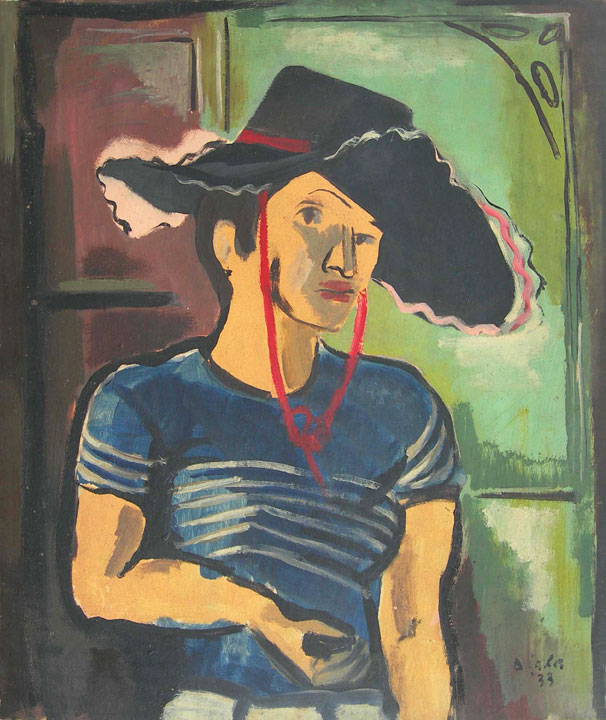
Biala (1903-2000):
The Rash Acts of Rescue and Escape
Jason Andrew, New York1014 - space for ideas 1014 5th Avenue, New York, New York, NY, United StatesWATCH THE RECORDING OF THIS EVENT HERE. More information about Janice Biala is available HERE. Lecture featuring Jason Andrew Independent Scholar, Curator and Producer in New York Introduced by Rachel Stern Executive Director of the Fritz Ascher Society in New York Biala (1903-2000) was a Polish born American painter whose career stretched over eight decades and spanned two continents. Through it all, she retained an intimacy in her art rooted in Old World Europe—sensibilities that began with memories of her childhood in a Polish village, shaped by School of Paris painters like Bonnard, Matisse and Braque, inspired by Velázquez and the Spanish Masters, and broadened by the community of loft-living artists in Post World War II Downtown New York. Her [...]
Free -

Live From
Museum of Jewish Heritage
Carolyn Enger’s
Mischlinge Exposé1014 - space for ideas 1014 5th Avenue, New York, New York, NY, United StatesJoin the Museum of Jewish Heritage — A Living Memorial to the Holocaust, the German Consulate General in New York, and the Fritz Ascher Society for Persecuted, Ostracized, and Banned Art for a stirring performance of Enger’s Mischlinge Exposé, Live from Edmond J. Safra Hall™. The performance will be followed by a discussion between Enger and Rachel Stern, Founding Director and CEO of the Fritz Ascher Society. Carolyn Enger is a pianist based in the greater New York City area, with roots reaching back to Breslau, now Wroclaw, Poland. Her Mischlinge Exposé brings to light the stories of Mischlinge—a derogatory term used by the Nazis to describe people with both Jewish and Aryan ancestry—like her [...]
Free -
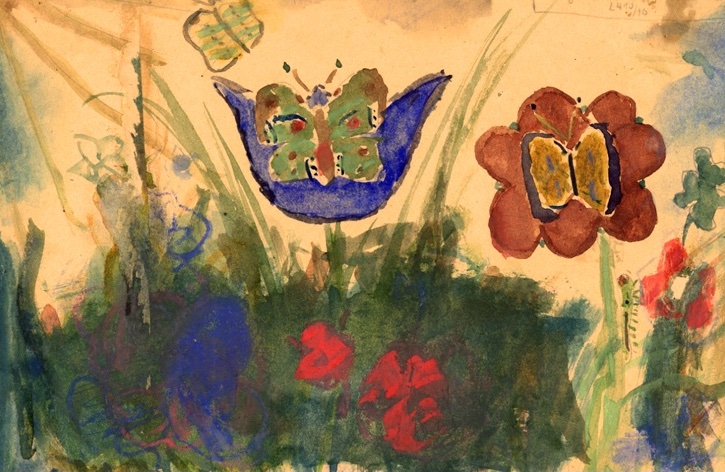
Between Art and Record Keeping –
Artistic Representations of the Holocaust
Ori Z Soltes, Washington DC1014 - space for ideas 1014 5th Avenue, New York, New York, NY, United StatesWATCH THE RECORDING OF THIS EVENT HERE. Visual art during and after the Holocaust, by victims and survivors eloquently contradicts the famous comment by Theodor Adorno that "after the Holocaust to make art is barbaric." On the contrary, it was and is necessary: as part of the record of events as they were transpiring, and as part of the human response to horror--to express anger, to raise questions, to offer healing--in the time after those events. Who creates the art and what kind of art is created? What role does it play in wrestling with the question of what God is and what we humans are? These issues have implications both from within the heart of the Holocaust and from well beyond its particular boundaries. [...]
Free -
-
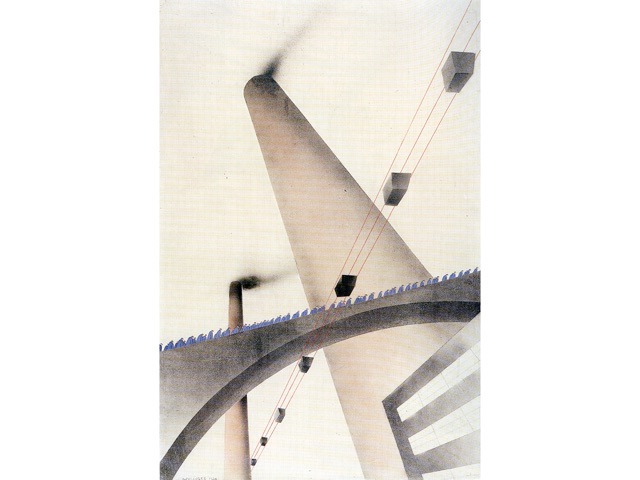
Excluded and yet entangled in two dictatorships:
The political constructivist Oskar Nerlinger
Eckhart Gillen, Berlin1014 - space for ideas 1014 5th Avenue, New York, New York, NY, United StatesOskar Nerlinger (1893-1969) was one of the most important artists of the committed art scene in the Weimar Republic. He was a member of the Association of Proletarian Revolutionary Art (ASSO for short), which was founded in 1928 and belonged to the KPD, which cooperated with the Soviet avant-garde artist group Oktober. At that time there was no conflict between positions of aesthetic modernism and KPD politics. In 1932 the political and artistic avant-garde in the Soviet Union fell apart, with serious consequences for left-wing artists in Germany. Almost at the same time, the Nazi system broke with all forms of modernity. With his idea of art suddenly doubly isolated within his own party, which followed Stalin's art verdict, [...]
Free