Events
-
-
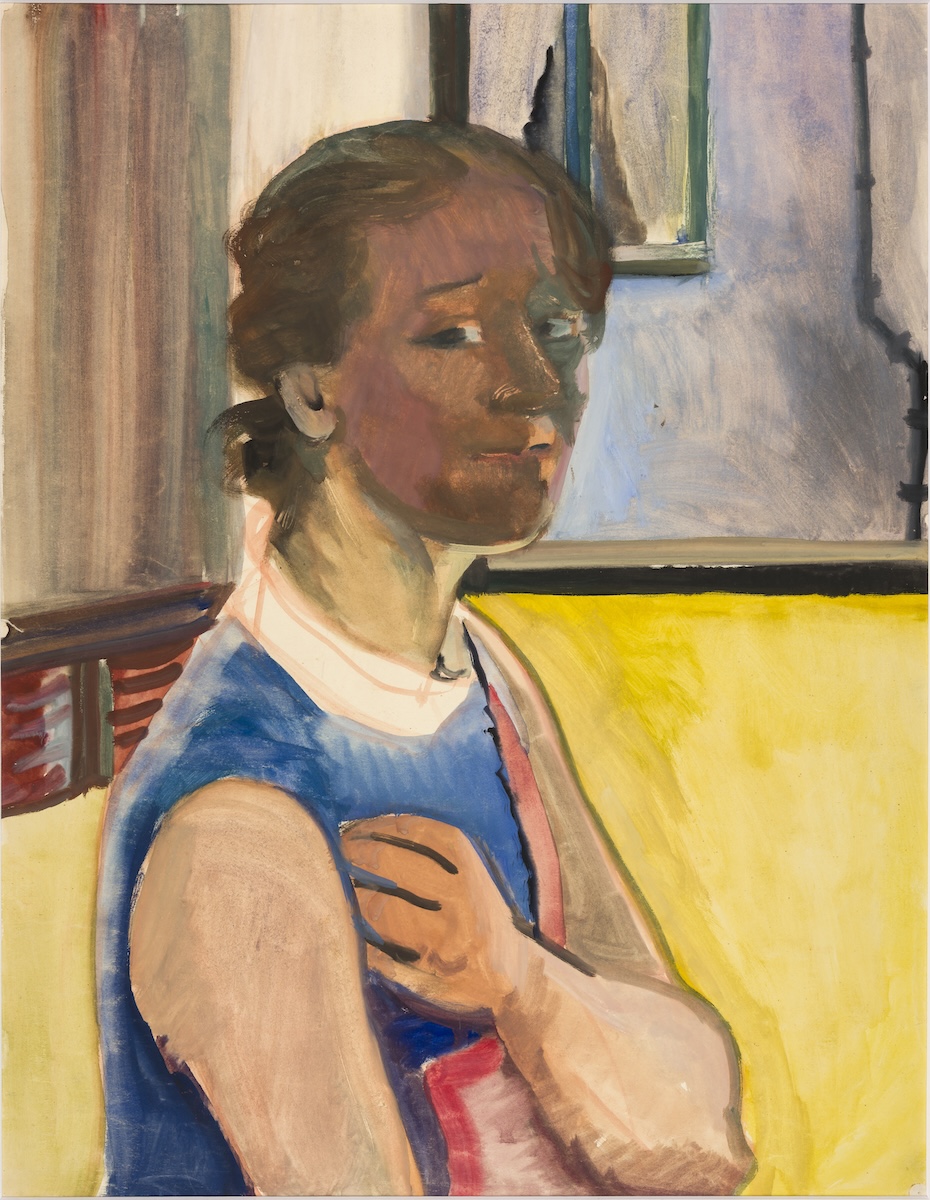
Felka Platek – Artist and Companion of the Painter Felix Nussbaum
Presentation by Anne Sibylle Schwetter, Osnabrück (Germany)ONLINE VA, United StatesFelka Platek (1899 Warsaw – 1944 Auschwitz) came to Berlin from Warsaw in the early 1920s to become a painter. In 1932 she followed her friend and later husband Felix Nussbaum (1904 Osnabrück – 1944 Auschwitz) to Italy. In 1935 they decided to go into exile in Belgium. However, neither of them could escape persecution by the Nazis. They were captured in their hiding place in Brussels on June 21, 1944 and murdered in Auschwitz shortly afterwards. Image above: Felka Platek, Self-portrait in front of an open window, around 1940. Gouache on drawing paper, 65 x 49.7 cm. Felix-Nussbaum-Haus at Museumsquartier Osnabrück, on permanent loan from the Felix Nussbaum Foundation, photo © Felix-Nussbaum-Haus Osnabrück Anne [...]
Free -
-
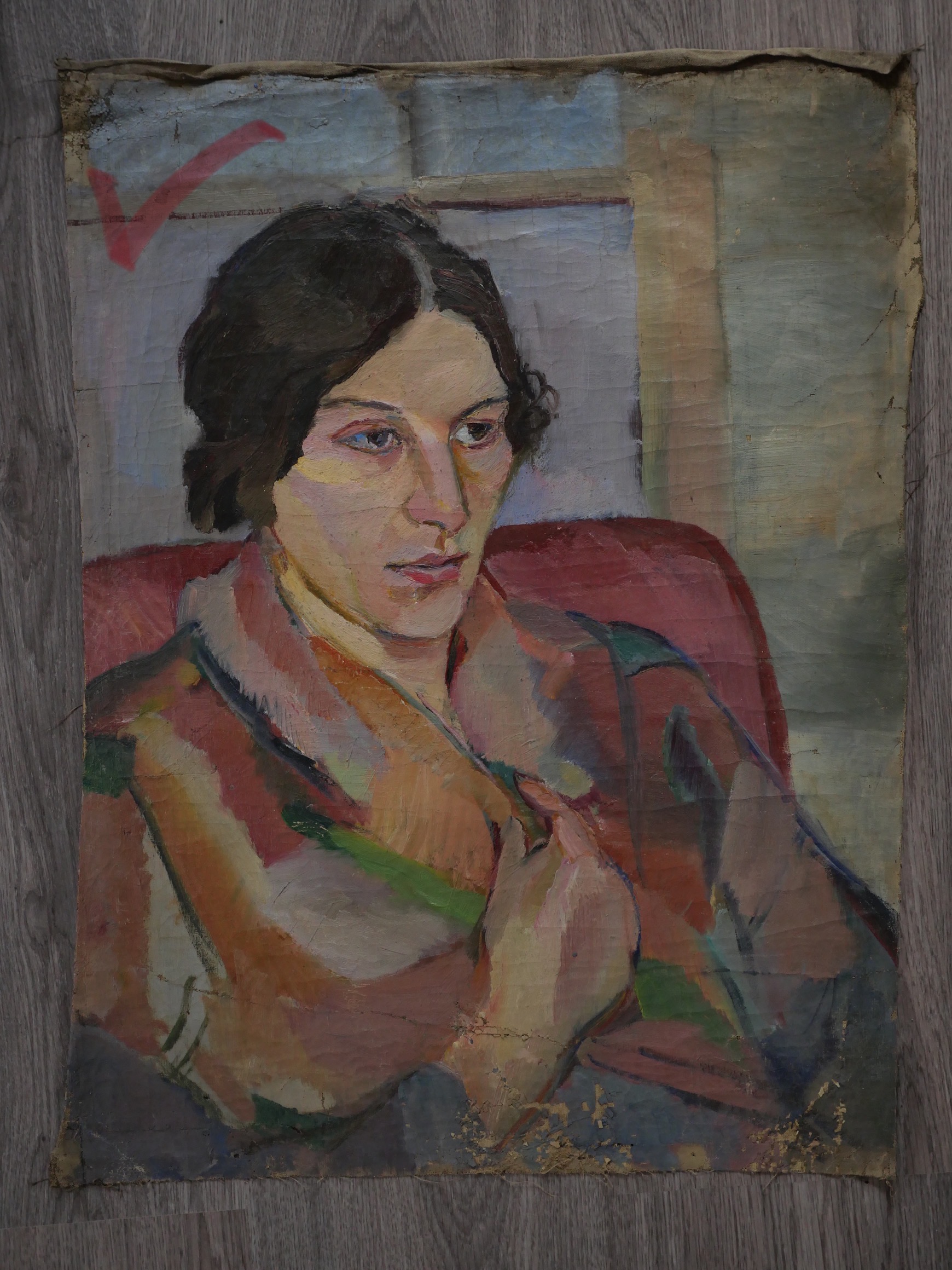
Gertrud Kauders, Jewish Artist from Prague (1883-1942):
Surprises, Enigmas, Opportunities
Presentation by Simon During, Brisbane (Australia)ONLINE VA, United StatesWhile workmen were demolishing a house on Prague’s outskirts in July 2018 they were astonished to be deluged by works of art falling from a ceiling. Nobody knew the works had been hidden there. The art turned out to be that of Gertrud Kauders who had hidden them in the house of a friend before being deported to Theresienstadt and then to Majdanek where she was murdered on arrival in May 1942. Kauders was a serious and inventive artist, quite well known in Prague’s art world of the time. She worked in oils, pencil, crayon, watercolour and gouache. Now her work is held by museums around the world. Image above: Gertrud Kauders © Kauders Family Estate [...]
Free -
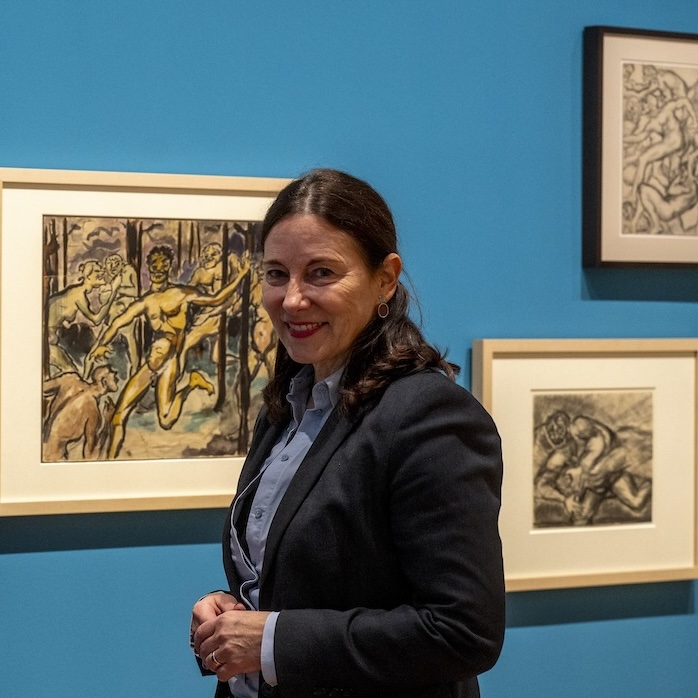
Love, Betrayal and Ascher’s Unpainted Pictures
Tour by Exhibition Curator Jutta Götzmann
Haus der Graphischen Sammlung, Freiburg (Germany)Haus der Graphischen Sammlung Salzstraße 34, Freiburg im Breisgau, GermanyJutta Götzmann, exhibition curator of "Love and Betrayal," presents the artist Fritz Ascher (1893-1970) during a tour. In addition to early charcoal, graphite and ink drawings, colorful gouaches are fascinating. Poems that are considered his "unpainted pictures" and were created in secret during the National Socialist era complement the exhibition. BUY TICKETS HERE The Fritz Ascher Society is a not-for-profit 501(c)3 organization. Your donation is fully tax deductible. YOUR SUPPORT MAKES OUR WORK POSSIBLE. THANK YOU. DONATE HERE
$2.50 -
-
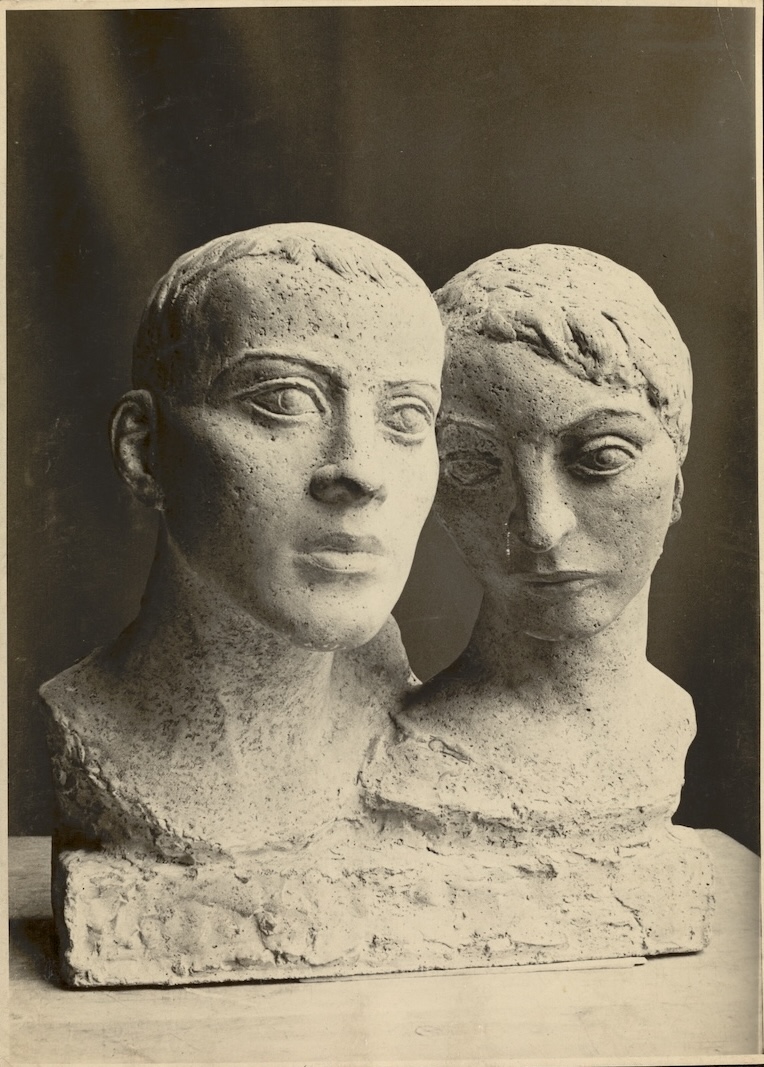
Fred Kormis – Sculpting the Twentieth Century
Presentation by Barbara Warnock, London (England)ONLINE VA, United StatesBorn in 1894 in Frankfurt into an Austrian and German Jewish family, Fred Kormis’ life and career were shaped and disrupted by some of the most significant events of the twentieth century. Kormis saw action and was wounded in the First World War as part of the Austrian army, before being held for four years as a prisoner of war in Siberia. Image above: Fred Kormis, Two Heads, c. 1930s © Wiener Holocaust Library Collections He worked as an artist during the politically and culturally tumultuous Weimar period, and during the Nazi era revealed himself to be Jewish, a decision that led to the removal of his art from galleries. Kormis and his wife Rachel Sender [...]
Free -
-

Signs and Wonders. Author Melvin Jules Bukiet in Conversation with Artist David Stern
ONLINE VA, United StatesThis presentation starts with Bukiet reading an excerpt from a novel he is currently working on, followed by an inspiring discussion with Stern about the daily reality and nature of being a writer. They continue with a broader conversation about the arts and their relationship to reality. As they delve into his books, they explore the direct or indirect presence of the Holocaust in his works and the way it still shakes the foundation of our civilization. Melvin Jules Bukiet has published eleven books, including After, Signs and Wonders and Strange Fire. His fiction has appeared in the Paris Review and other magazines, his non-fiction in the American Scholar and other magazines. He [...]
Free -
-
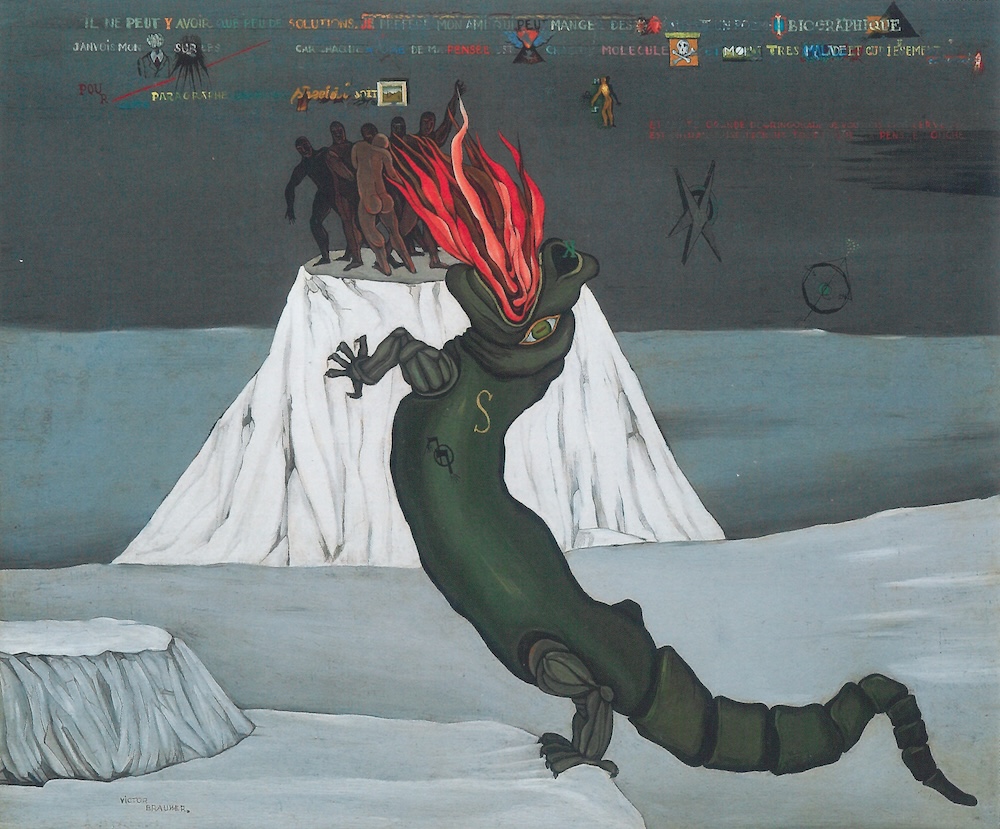
Victor Brauner’s Departures and Returns
Presentation by Irina Cărăbaș, Bucharest (Romania)
followed by a conversation with Nicola Baird, PhD, London (UK)ONLINE VA, United StatesThis presentation by Irina Cărăbaș from the National University of Arts in Bucharest focusses on several key artistic and political contexts relevant to Brauner’s work and biography, as well as his reception in Romania. It is followed by a conversation with Nicola Baird, PhD. Introductory remarks by Sorina Neagu, Director of DOR – Romanian Diaspora. Image above: Victor Brauner, Composition, not dated, oil on canvas, 53,5 x 64,5 cm, National Museum of Arts of Romania, Bucharest (INV. 73973/8502) © 2025 Artists Rights Society (ARS), New York / ADAGP, Paris Born in Piatra Neamț, Romania into a Jewish family, Victor Brauner (1903-1966) took part in shaping several avant-garde groups in Bucharest since his early twenties. [...]
Free -
-
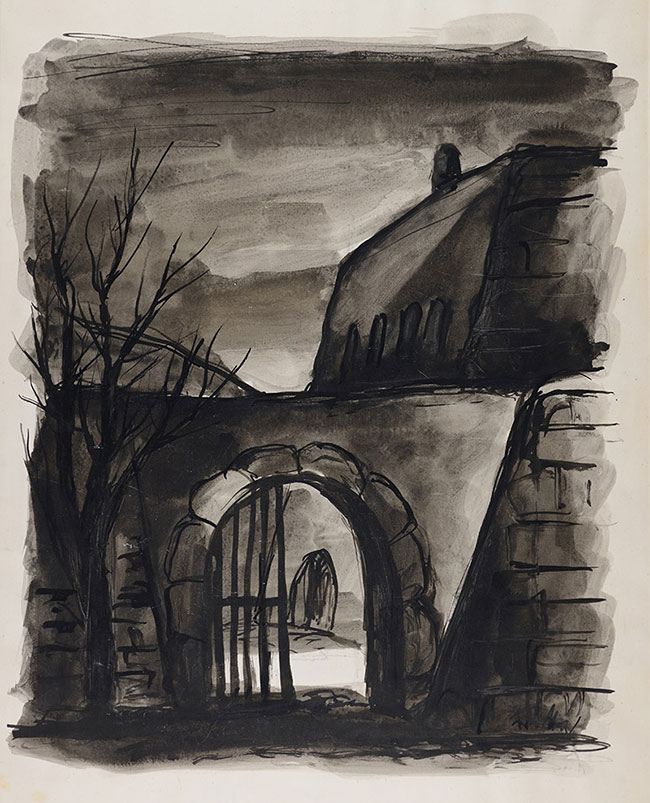
WHAT IF?
Presentation by Ori Z Soltes, PhD, Washington, DCONLINE VA, United StatesThis image-rich talk by Georgetown University professor Ori Z Soltes considers some of the many Jewish artists destroyed by the Holocaust who had either begun or were poised to add significant threads to the tapestry of twentieth century visual art. Some are now well-known and others remain obscure—but what if artists like Charlotte Salomon and Felix Nussbaum or like Erna Dem and Fritz Taussig had survived to do more art? What additional significant contributions might they have made? Image above: Bedřich Fritta (Friedrich Taussig), Rear Entrance, Theresienstadt Ghetto, 1941–1944. India ink and wash on paper, 51 x 36.5 cm Collection of the Yad Vashem Art Museum, Jerusalem. Gift of the Prague Committee for Documentation, courtesy of Ze'ev and Alisa Shek, [...]
Free -
-
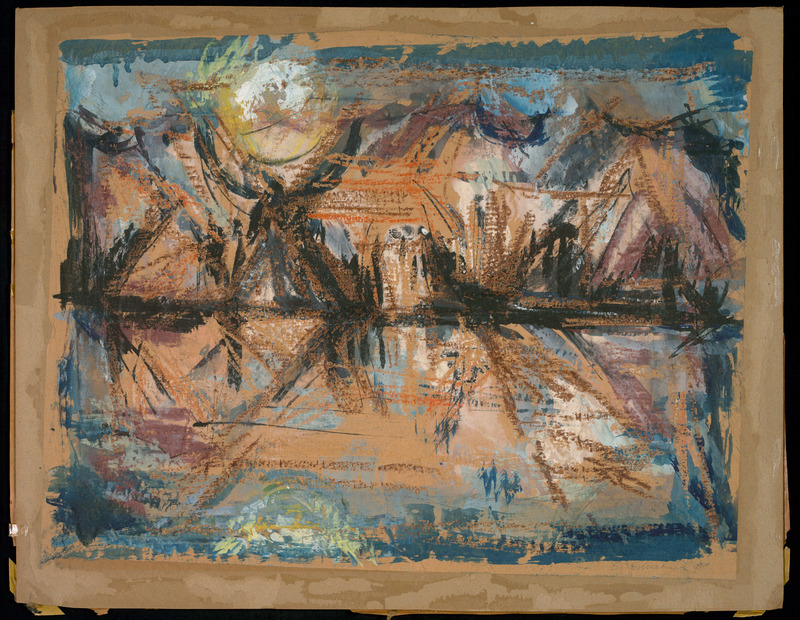
The Three Exiles of the German-born artist Samson Schames (1898-1967)
Conversation with Annika Friedman (Germany), Rachel Dickson, PhD (UK) and Ori Z Soltes, PhD (USA)ONLINE VA, United StatesIn this virtual event, a transatlantic panel discusses the artist Samson Schames. Annika Friedman (Germany) elaborates on the artist’s beginnings in Frankfurt, Rachel Dickson, PhD (UK) gives an insight into the work he made in British exile, and Ori Z. Soltes, PhD (USA) speaks about the work he created in his new home, New York. The presentations are followed by a moderated discussion and Q&A. Image above: Samson Schames, Granite Quarry No. 1, 1958. Casein on board, 20.75 in. x 26.25 in. Leo Baeck Institute New York 2007.97 Samson Schames was a German-Jewish artist born in 1898 in Frankfurt am Main, Germany, into a prominent Jewish family involved in the textile business. He initially trained [...]
Free -
-
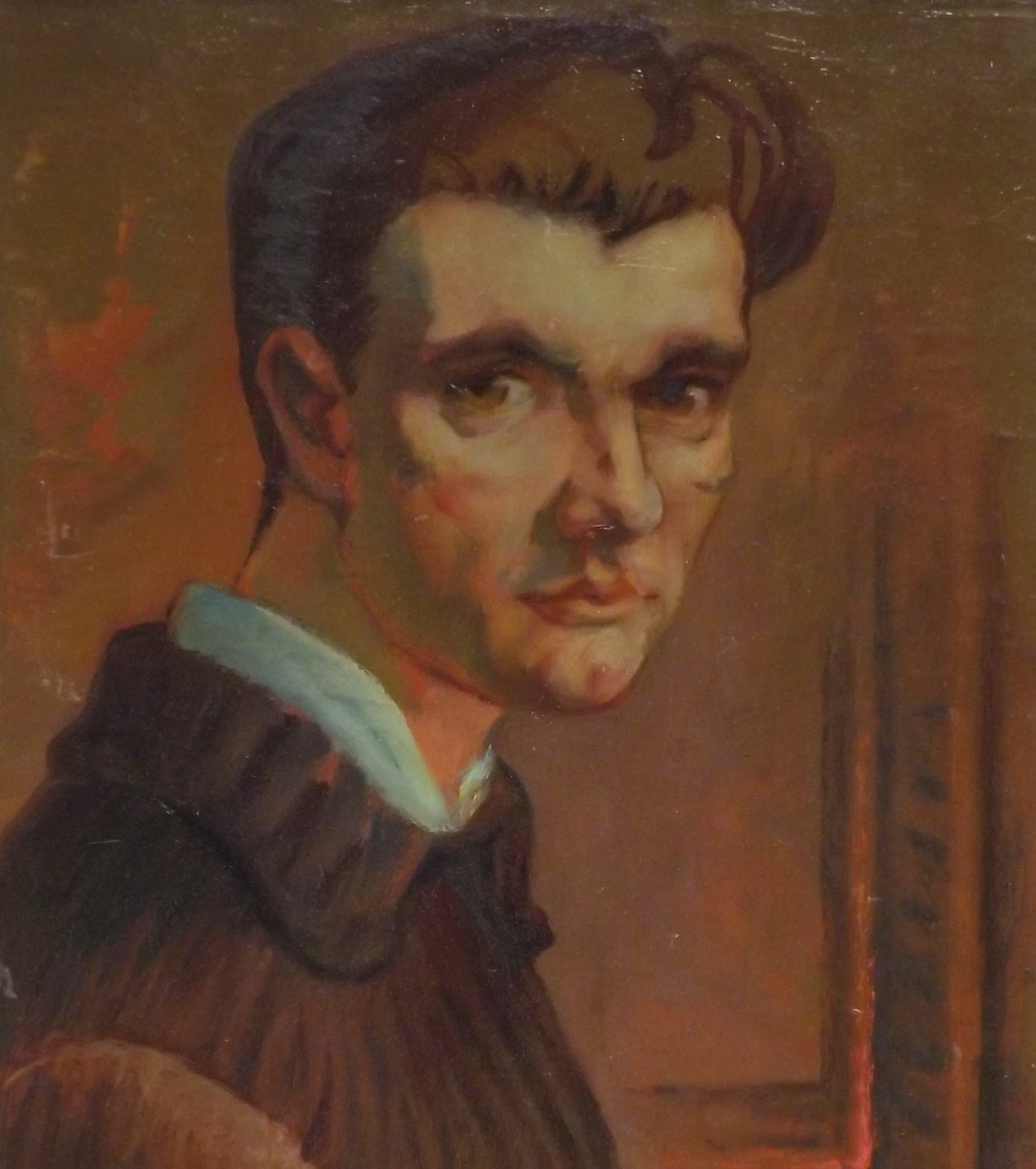
Theodore Fried (1902-1980): In Hiding and Beyond
Presentation by Sofia Thornblad, Tulsa (OK)ONLINE VA, United StatesThis presentation explores the historical background and creative works of Hungarian-born Jewish artist Theodore Fried (1902-1980). He was educated at the Budapest Academy of Fine Arts and moved to Vienna in 1924 and to Paris in 1925. He met and married his first wife Anna and his son Christopher was born in 1928. That same year, the artist had his first one-man show, and was included in important shows in Vienna, Prague, Berlin, and Paris. Image above: Detail of Theodore Fried, Self Portrait, 1938. Oil on canvas. Sherwin Miller Museum of Jewish Art, Tulsa (OK) When the Nazis came to power in 1933, Fried’s work was labeled as “degenerate”. He fled with [...]
Free -
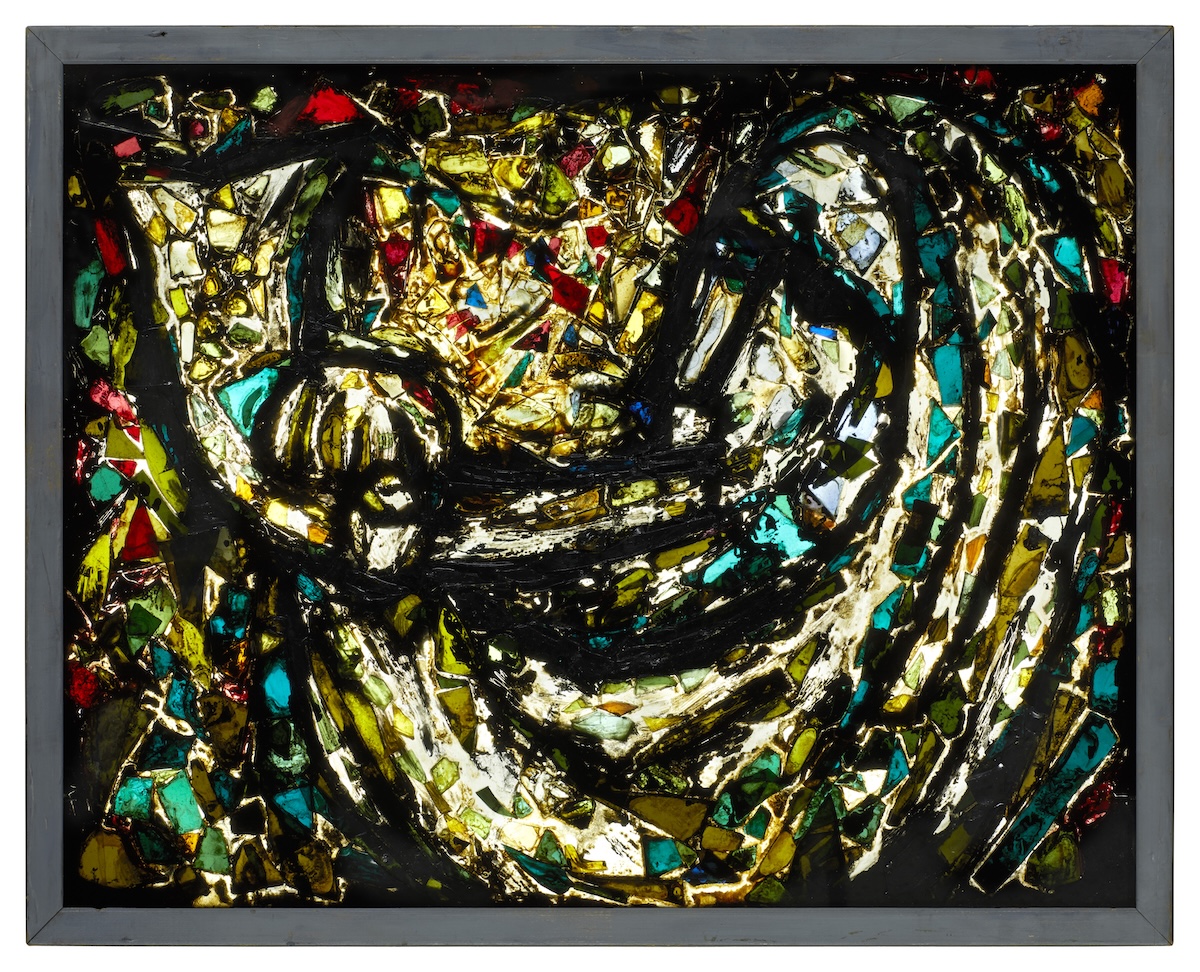
Samson Schames (1898-1967): Family and Friends
Conversation with Natalie Green Giles, James McCaffrey and Charlie Scheidt.
Moderated by William WeitzerONLINE VA, United StatesIn this virtual event, a distinguished panel comprising family members, friends, and their descendants from New York share memories of the German-born artist Samson Schames (1898-1967). His work, which blends modernist aesthetics with spiritual and historical depth, is recognized for its innovative technique and poignant reflections on exile, memory, and identity. Born in Frankfurt am Main, Germany, he fled Nazi persecution to England in 1939 and later emigrated to the United States with his future wife, Edith, in 1948 and 1947. Image above: Samson Schames, Blowing the Shofar, c. 1956. Shards of glass, polychrome, layered in relief, 25.4 x 29.7 in. (64.5 x 75.5 cm). Jewish Museum Frankfurt A short film created [...]
Free