
Reconciling Identities:
Marcel Janco and the Romanian Avant-Garde in the Interwar Years
Presentation by Amelia Miholca
followed by a conversation with Nicola Baird, PhD, London (UK)
September 16, 2026 @ 12:00 pm - 1:00 pm
| FreeIn her presentation, Dr. Miholca will spotlight the artistic and historical significance of Marcel Janco and the Romanian avant-garde group during a period of tremendous creative experimentation and productivity, when artists and writers merged their Jewish identity with the international identity they sought to foster through their network of dadaist and constructivist magazines. Janco, alongside other Romanian-Jewish artists like M. H. Maxy, Victor Brauner, Mattis Teutsch, and Benjamin Fondane, wished to capitalize on the Dada movement initiated by Janco and Tristan Tzara—alongside Hugo Ball, in Zurich, 1916—with their own avant-garde movement in Bucharest that mainly emerged through magazines such as Contimporanul (1922-1932), 75HP (1924) and Integral (1925-1928).
The presentation will be followed by a conversation with Nicola Baird, PhD. Introductory remarks by Sorina Stallard, Director of DOR – Romanian Diaspora.
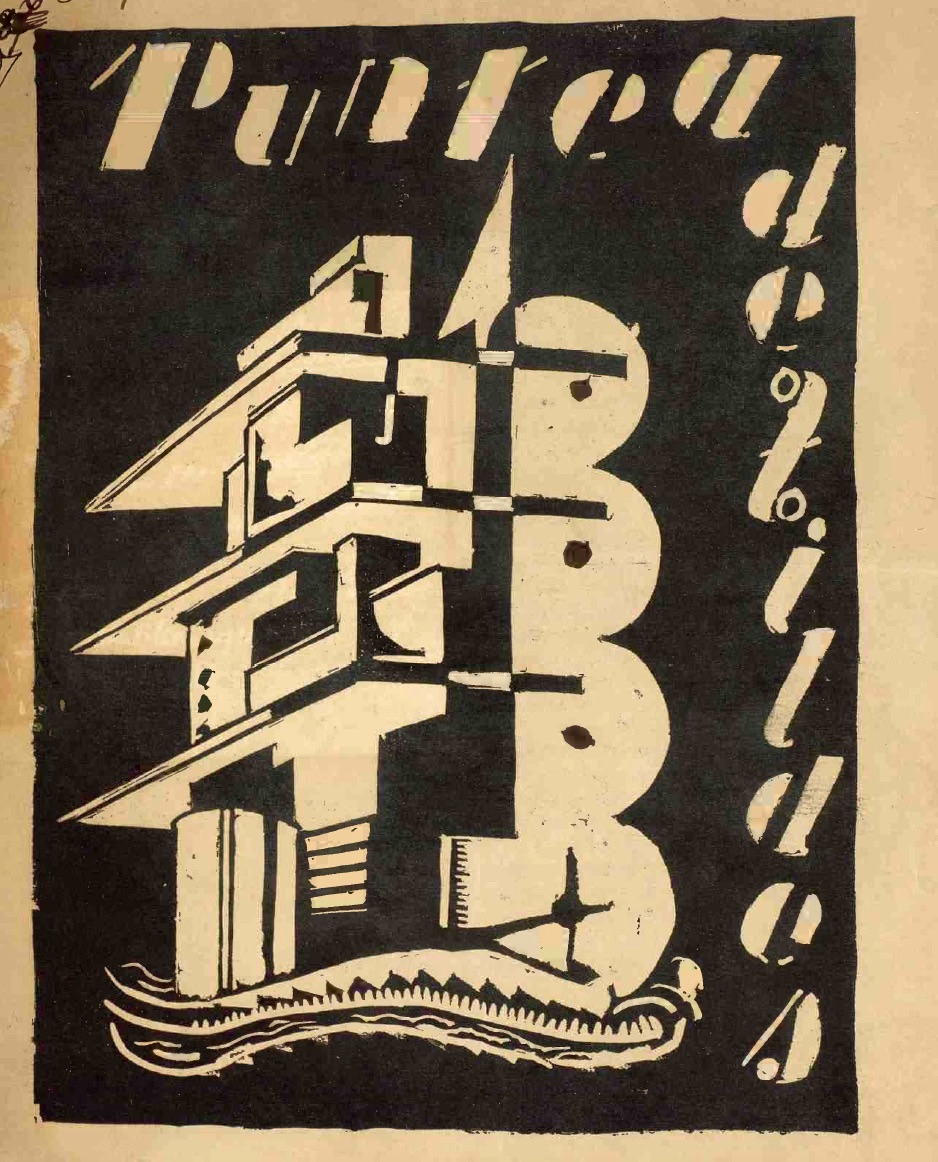
Image above: Marcel Janco, Cover of Puntea de Fildeş no. 1 (April 1925), Biblioteca Digitala a Bucurestilor, www.digibuc.ro
Unique to the Romanian avant-garde, several, including Janco, published in the magazine Puntea de Fildeş (1925-1926), which appeared in two issues in Romania on the occasion of the opening of the Jewish University in Jerusalem. The magazine comprises of poems, essays, and art by Romanian-Jewish writers and artists. Its first magazine cover features a constructivist print by Janco. The avant-garde artists’ work in Puntea de Fildeş demonstrates an aspiration to participate in Jewish intellectual communities in Romania and Palestine.
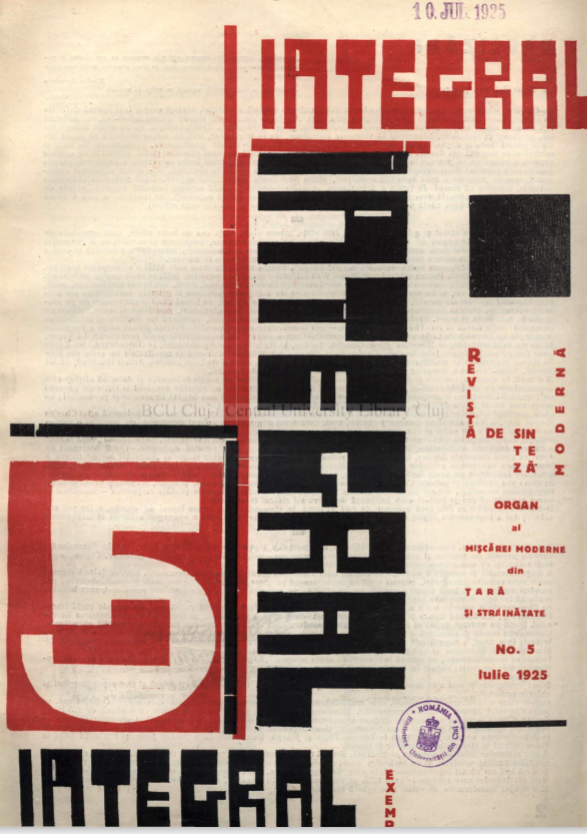
Marcel Janco, Integral. no. 5 cover (July 1925), Biblioteca Digitala a Bucurestilor, www.digibuc.ro
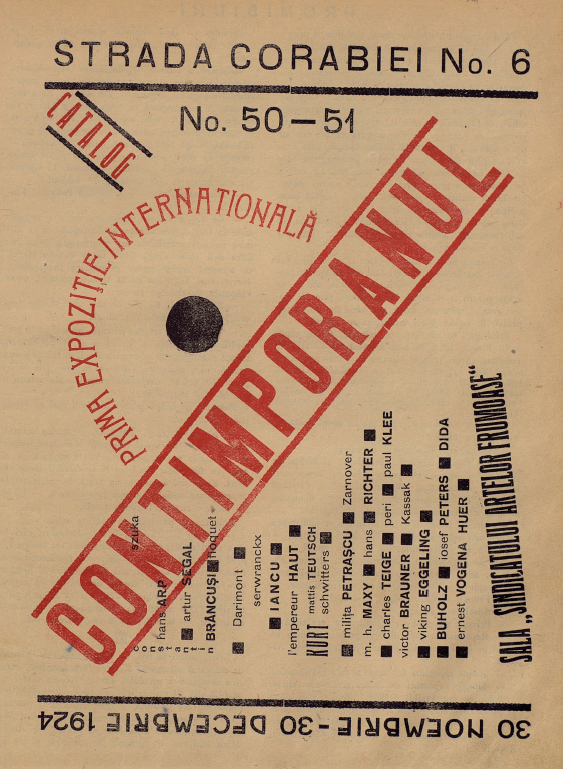
Marcel Janco, Cover of Contimporanul. no. 50-51 (December 1924), Biblioteca Digitala a Bucurestilor, www.digibuc.ro
Additionally, during the magazine Contimporanul’s decade-long run, articles and illustrations, including those representing oppressed figures, voiced the avant-garde’s outrage and condemnation of the Romanian government’s treatment of Jews. Jewish artists and writers within the avant-garde felt alienated from a society that considered them foreigners in their own country. Because of this, several avant-gardists, among them Fondane, went into exile in Paris in the 1920s. Janco remained in Bucharest until 1941, when he emigrated to Palestine, fleeing the impending Holocaust in Romania.
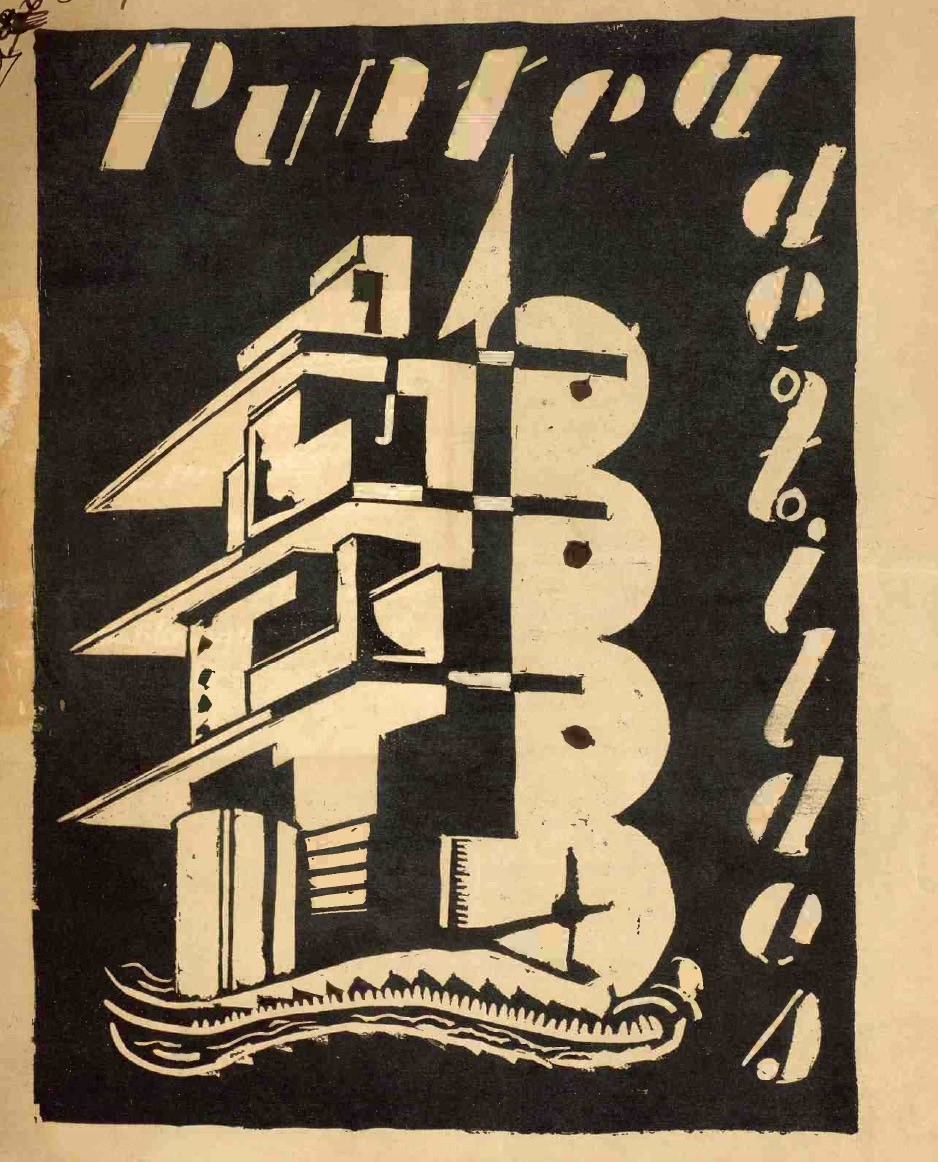
Marcel Janco, Cover of Puntea de Fildeş no. 1 (April 1925), Biblioteca Digitala a Bucurestilor, www.digibuc.ro
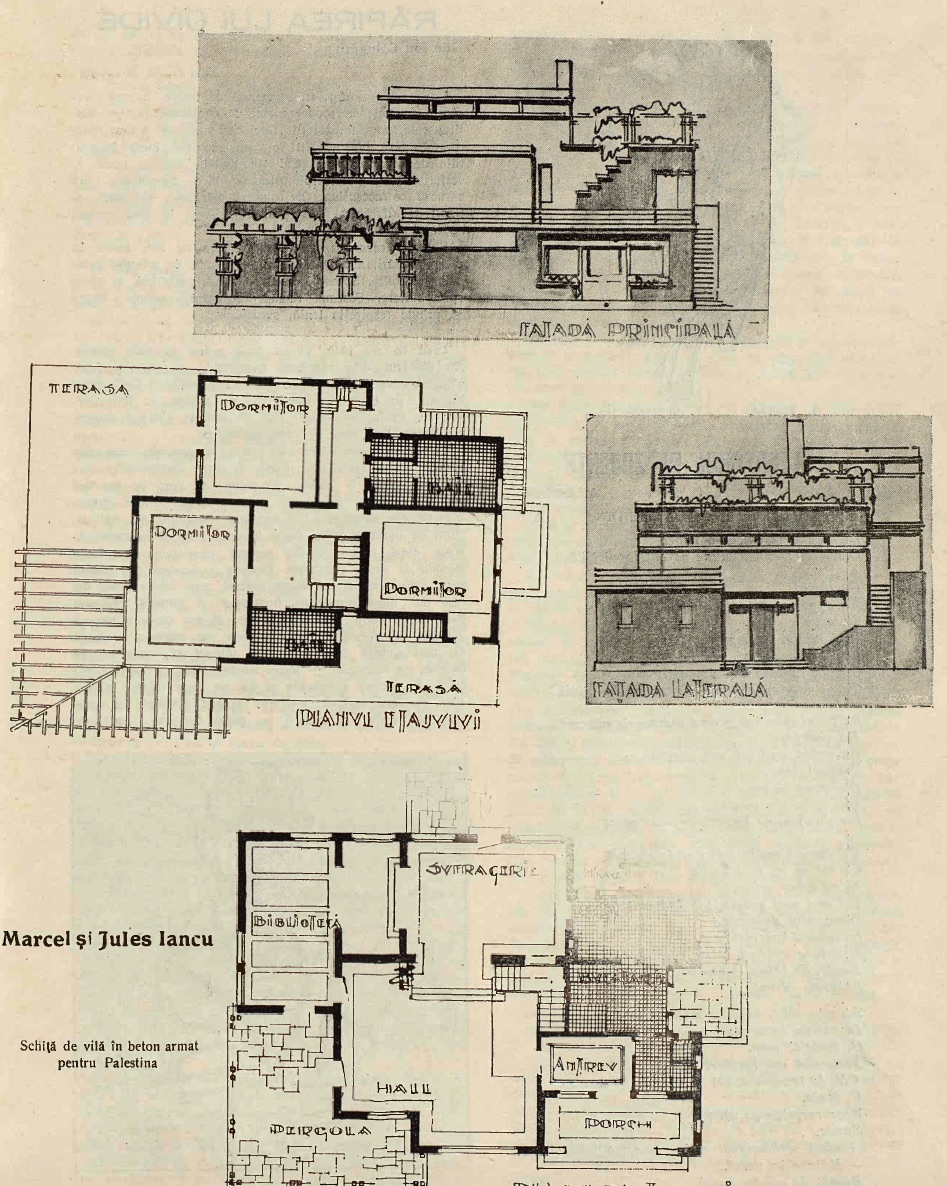
Marcel and Jules Janco, Villa Floorplans, Puntea de Fildes no. 2 (May 2, 1926), Biblioteca Digitala a Bucurestilor, www.digibuc.ro
Amelia Miholca is an art historian specializing in 20th-century art, with research interests in the production and reception of art from the periphery, as well as issues of immigration and exile in art of the United States and Eastern Europe. She teaches at Arizona State University and the University of Wisconsin-Eau Claire and currently splits her time between Charlotte, NC and Romania. Her publications include “Dada in Romania: How Romanian Avant-Garde Magazines Celebrated Dada” in the volume From Janco to the 21st Century: Dada and Its Legacy; “Between Zurich and Romania: A Dada Exchange” in the volume Narratives Crossing Borders: Transcultural Perspectives Anthology; “Re-envisioning Cubism in Romanian Avant-Garde Magazines” in the Journal of Romanian Studies 3:1 (May 2021). She has also worked on sculptures of Constantin Brancusi and their association with the concept of primitivism.
Dr Nicola Baird is an independent art historian and curator affiliated with the Centre for the Study of the Networked Image at London South Bank University. She specializes in twentieth century and contemporary British and European art and cultural history and is also passionate about European émigré histories and cultures. Previous exhibitions have included Fred Uhlman (Burgh House and Hatton Gallery, 2018), Czech Routes to Britain (Ben Uri Gallery, 2019), Becoming Gustav Metzger (Ben Uri Gallery, 2021), Knots: Jonny Briggs x Burgh House- Contemporary Interventions into an Historic House (Burgh House, 2021-2022) and ‘The line is an unreal thing’: Dorothy Mead and Edna Mann (LSBU, 2024). She is Section Editor for Open Cultural Studies and Editorial Assisant at The International Yearbook of Futurism Studies, both published by De Gruyter.
This event is part of the online series “Flight or Fight. stories of artists under repression.”
In collaboration with DOR – Romanian Diaspora and #CarteadeVineri (CDV).
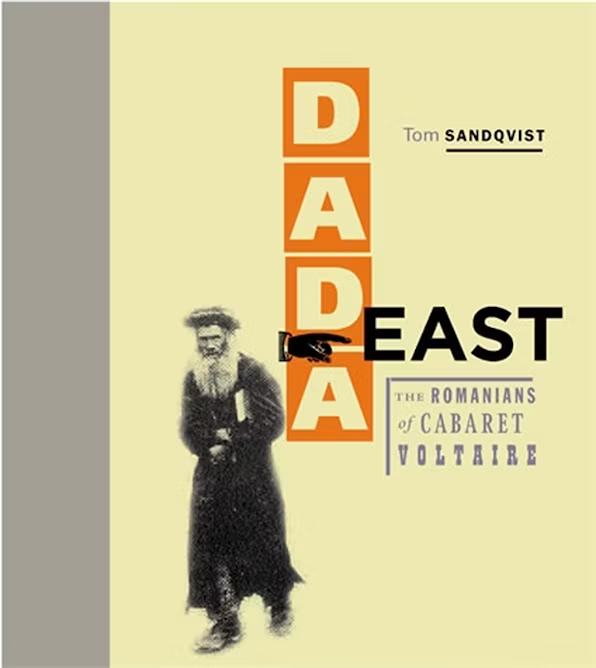
Further reading: Dada East. The Romanians of Cabaret Voltaire, by Tom Sandqvist. The MIT Press, 2006.
The secret history of Dada’s Romanian roots; how Tristan Tzara, Marcel, Jules, and Georges Janco, and Arthur Segal influenced the most famous and outrageous modernist movement. For years, the communist authorities in Romania disowned and disavowed Romania’s avant-garde movements. Now, as archives and libraries are opening to Western scholars, Tom Sandqvist tells the secret history of Dada’s Romanian roots.