

Jacob Pins (1917-2005): The Art of Laughter and Tears
Presentation by Ori Z. Soltes, Washington (DC)
February 11, 2026 @ 12:00 pm - 1:00 pm
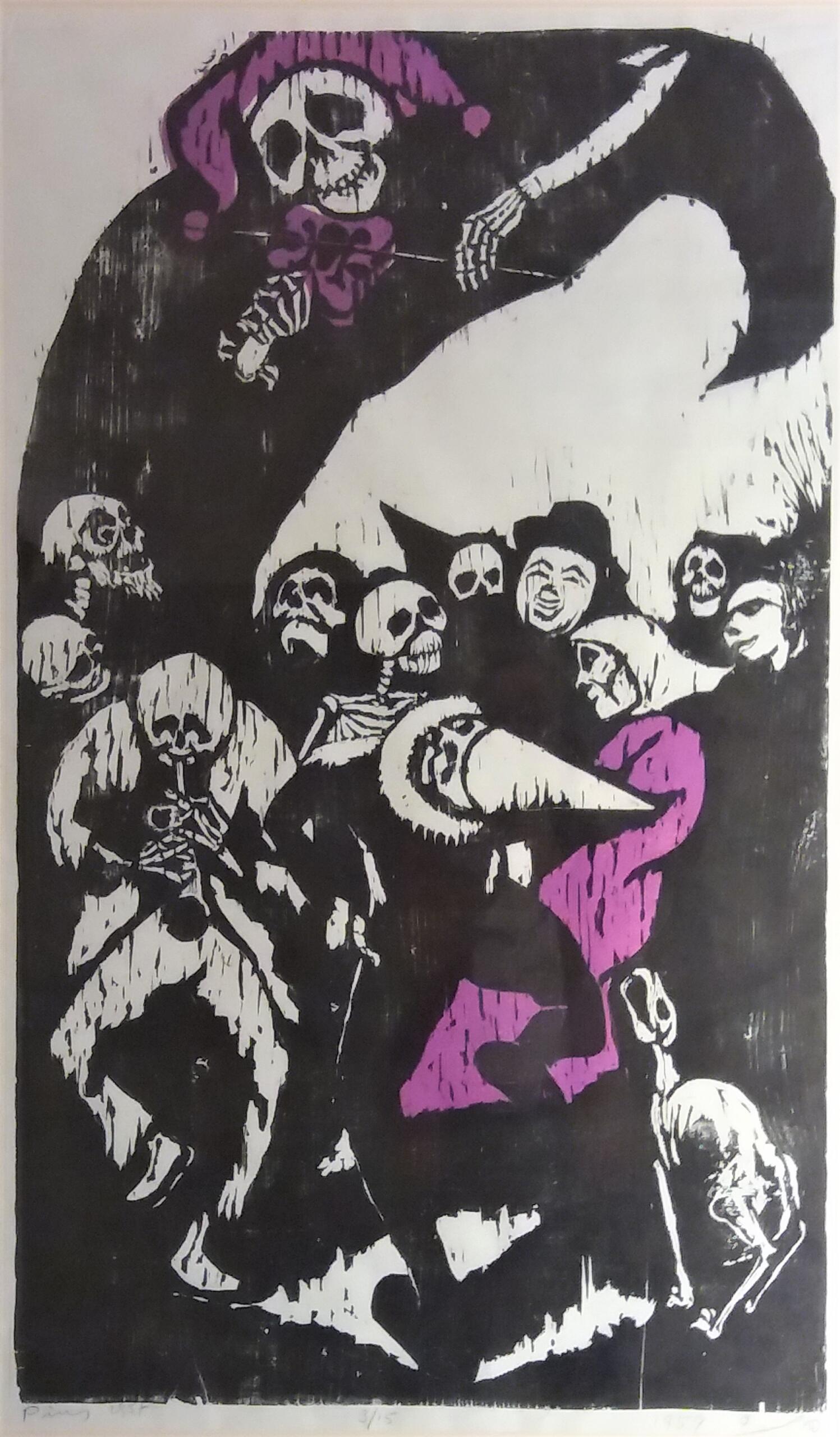
| FreeIn this image-rich talk, Ori Z. Soltes explores the pioneering Israeli printmaker Jacob Pins (1917-2005) and the unique place that he holds in the history of Israeli and modern Jewish art. Born into a Jewish family in Höxter, Germany, he immigrated to Palestine in 1936. He studied under German émigré Jacob Steinhardt (1941-45) and became a noted exponent of the woodcut as well as a noted collector. From 1956 to 1977, Pins also taught at Israel’s leading art schools, most notably Bezalel School of Arts and Design in Jerusalem.
Image above: Jacob Pins, Dance of Death, 1957. Color woodcut, 995 x 597 mm. Forum Jacob Pins, Höxter.
Jacob Pins (January 1917 – December 2005) was born into a Jewish family in Höxter, Germany, immigrating to Palestine in 1936. Both his parents were murdered in the Riga ghetto eight years later.
He first lived on a kibbutz and then in Jerusalem, where he studied woodcut and linocut under woodcut master and painter Jacob Steinhardt, also a German immigrant, at Steinhardt’s small private school, eventually continuing his studies at the new Bezalel Academy of Art and Design.
For years he lived in abject poverty.
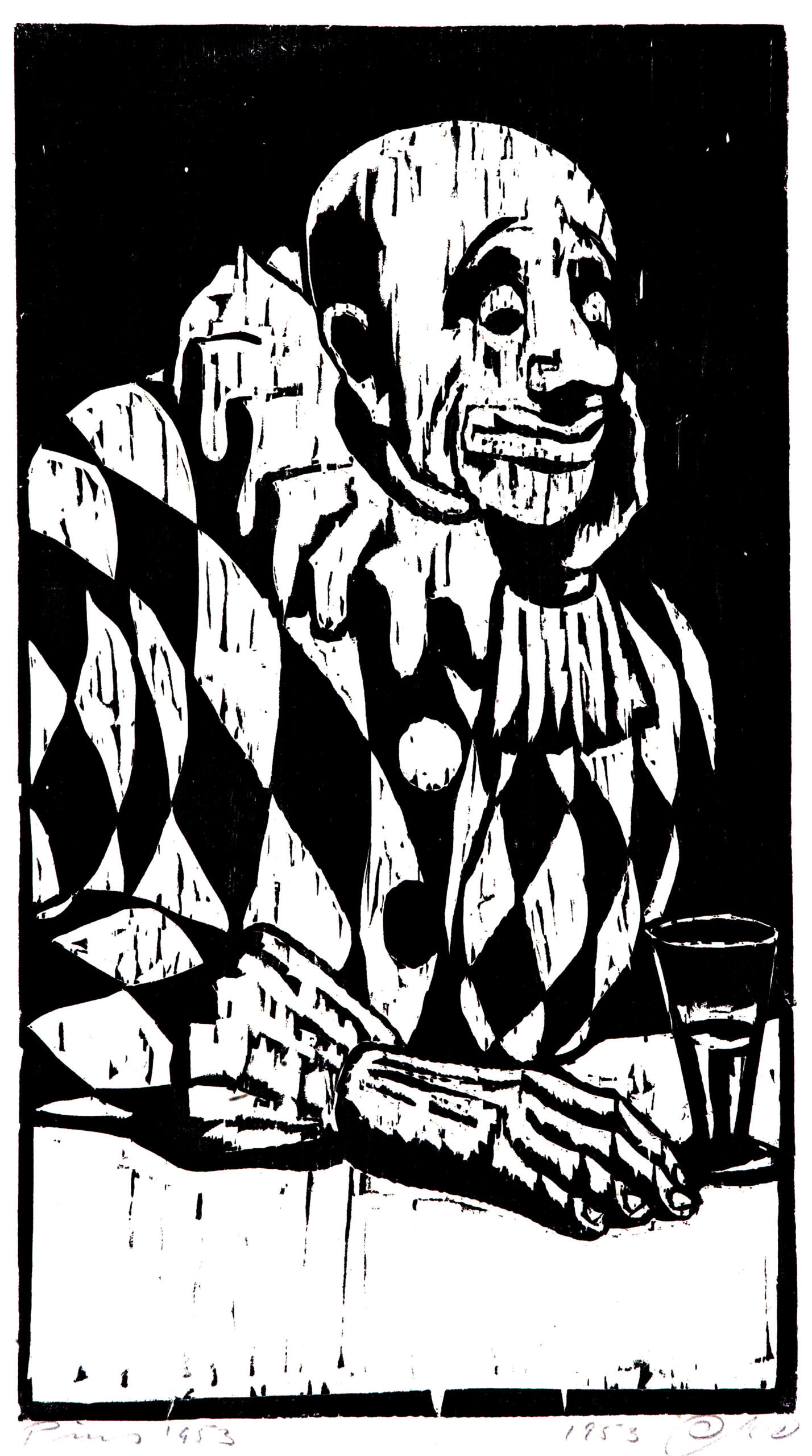
Jacob Pins, Clown with Glass, 1953. Woodcut, 453 x 255 mm. Forum Jacob Pins, Höxter (Germany)
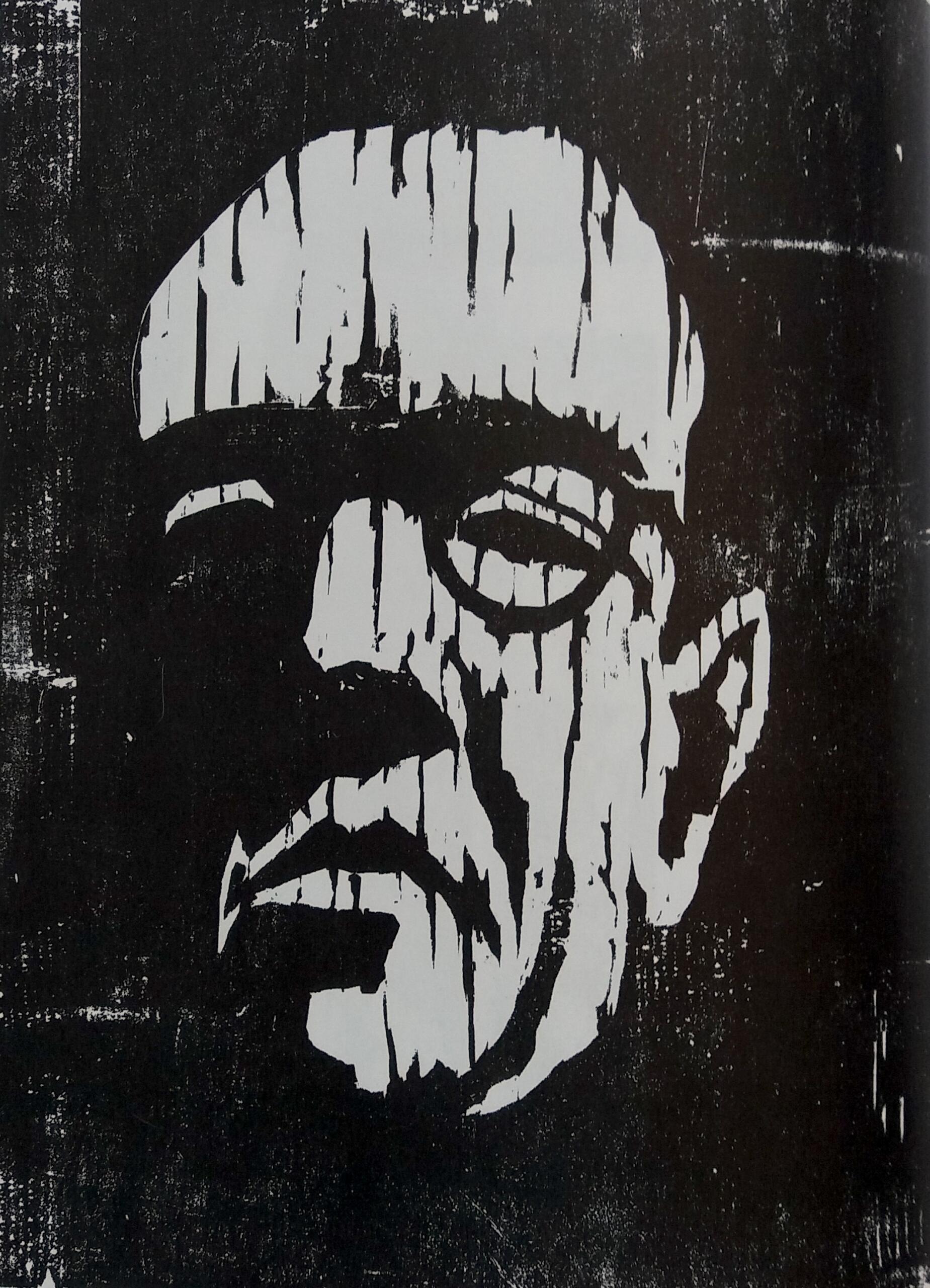
Jacob Pins, Self Portrait, 1957. Woodcut, 500 x 400 mm. Forum Jacob Pins, Höxter (Germany)
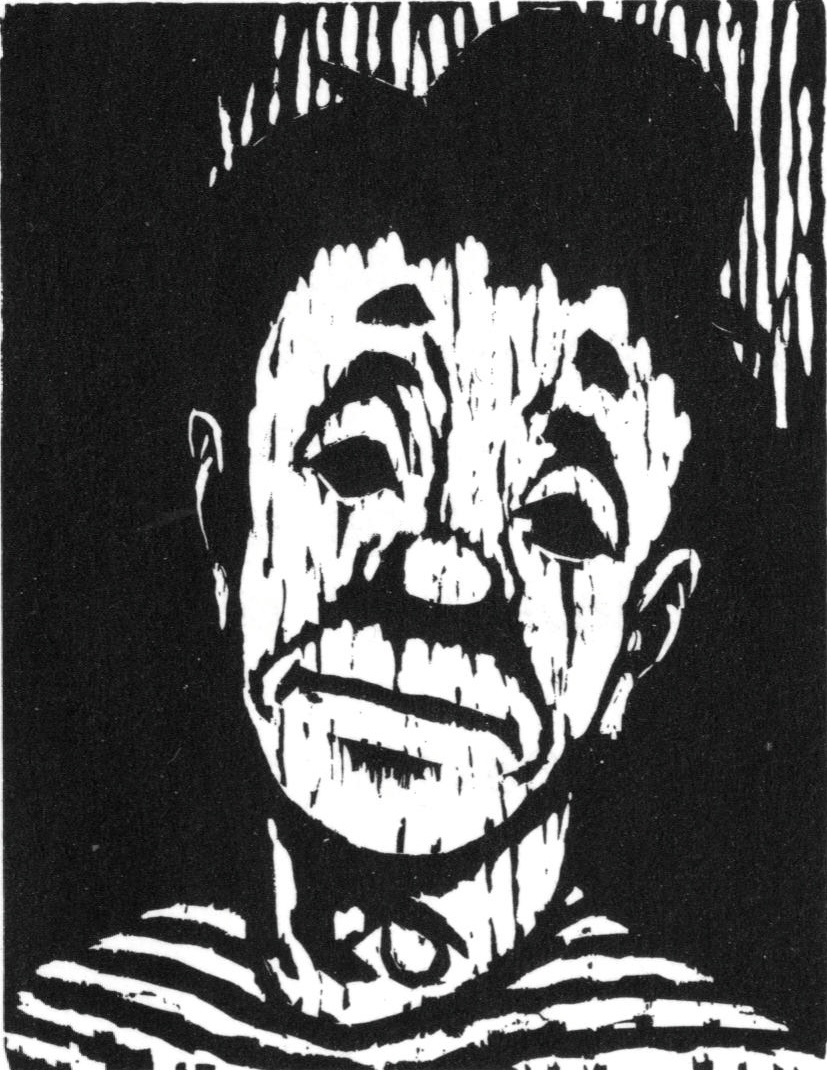
Jacob Pins, Portrait of a Clown, 1958. Woodcut, 450 x 350 mm. Forum Jacob Pins, Höxter (Germany)
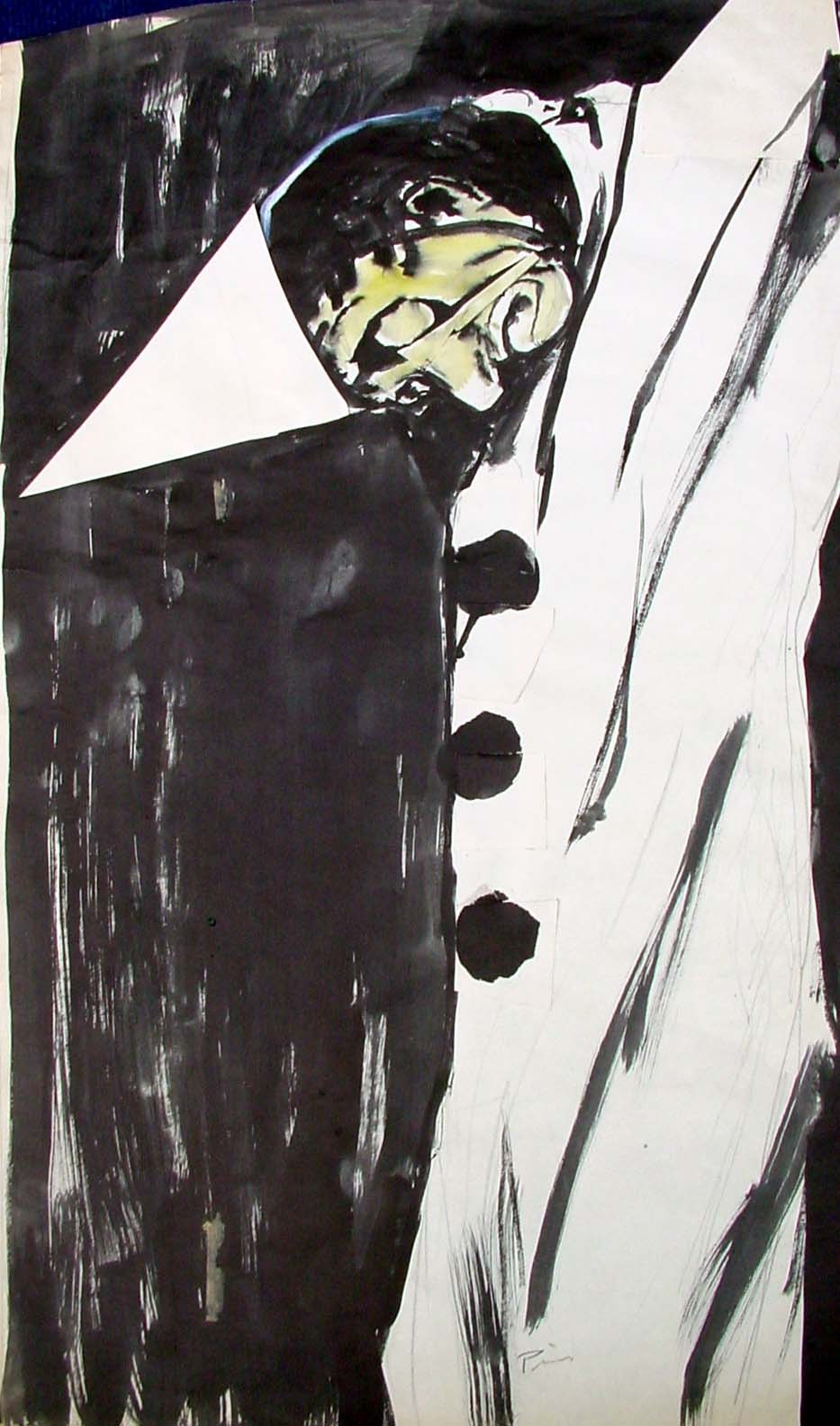
Jacob Pins, Crucified Clown, Study, 1961. Ink and watercolor on paper, 780 x 465 mm. Forum Jacob Pins, Höxter (Germany)
Gradually Pins became known, both as teacher, mainly at Bezalel, and as a consummate master of woodcuts, with subjects ranging from portraits of his wife to images of clowns to urban landscapes and historical subjects. His style was strongly influenced by German expressionism and also by traditional Japanese woodblock prints.
Indeed, acquiring his first Japanese Pillar print in 1945, he eventually amassed a renowned collection and authored a volume that is the definitive study of that subject. This image-rich talk will explore some of the range of Pins’ accomplishment and the unique place that he holds in the history of Israeli and modern Jewish art.
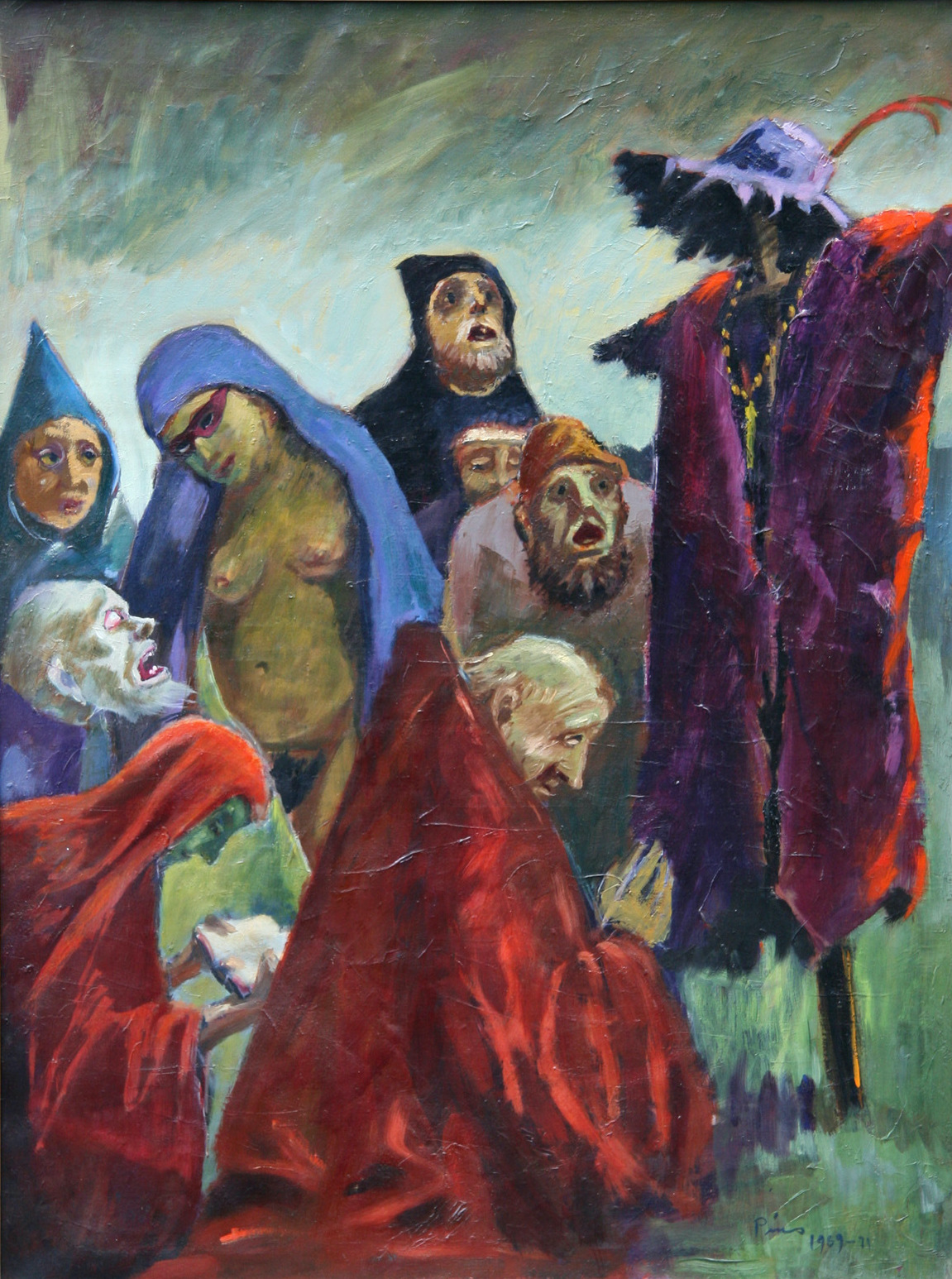
Jacob Pins, Worship of the Scarecrow, Triptych, 1967-71. Oil on canvas, 130 x 96 cm. Forum Jacob Pins, Höxter (Germany)
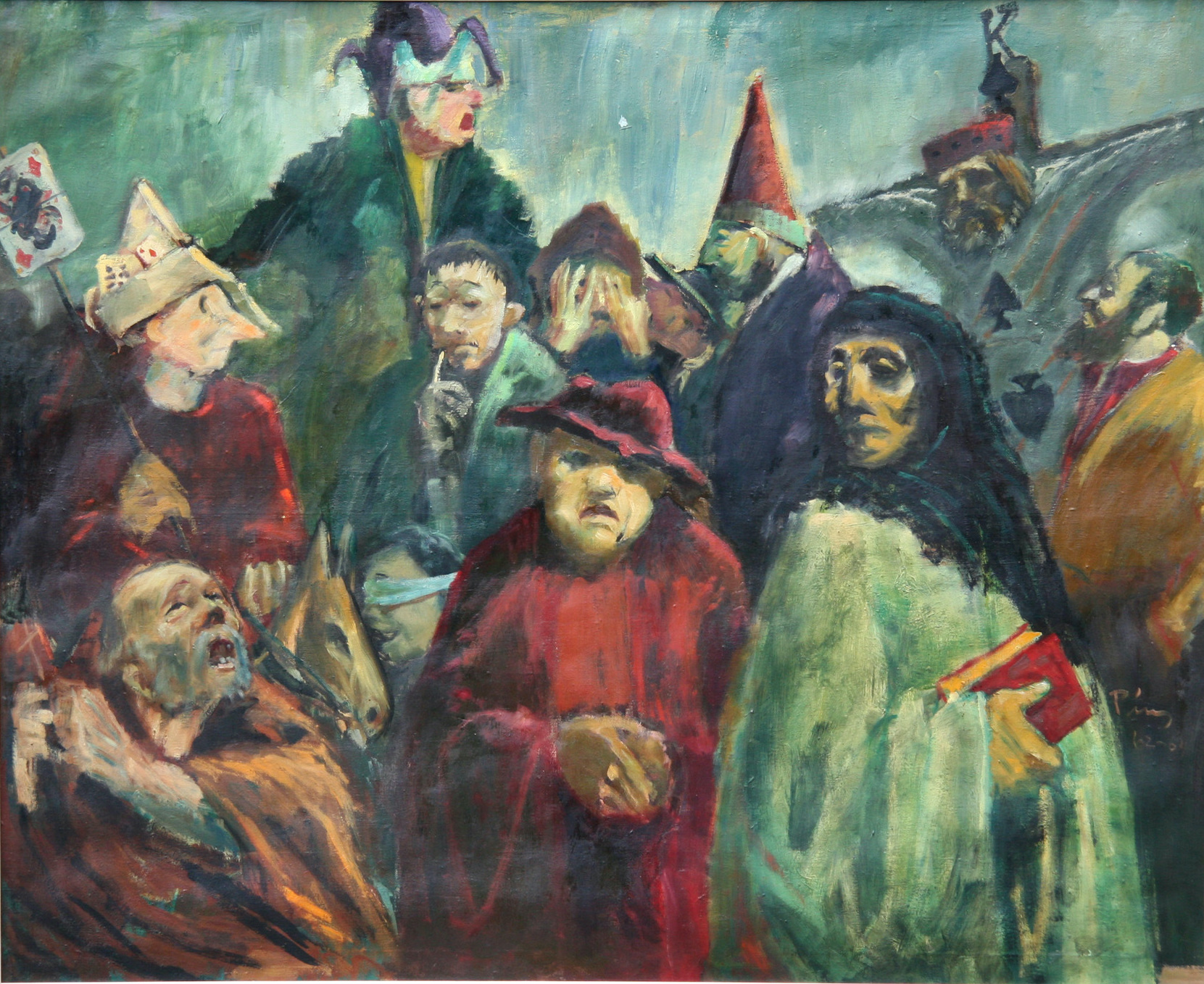
Jacob Pins, Saints and Fools, Triptych, 1967-71. Oil on canvas, 130 x 160 cm. Forum Jacob Pins, Höxter (Germany)
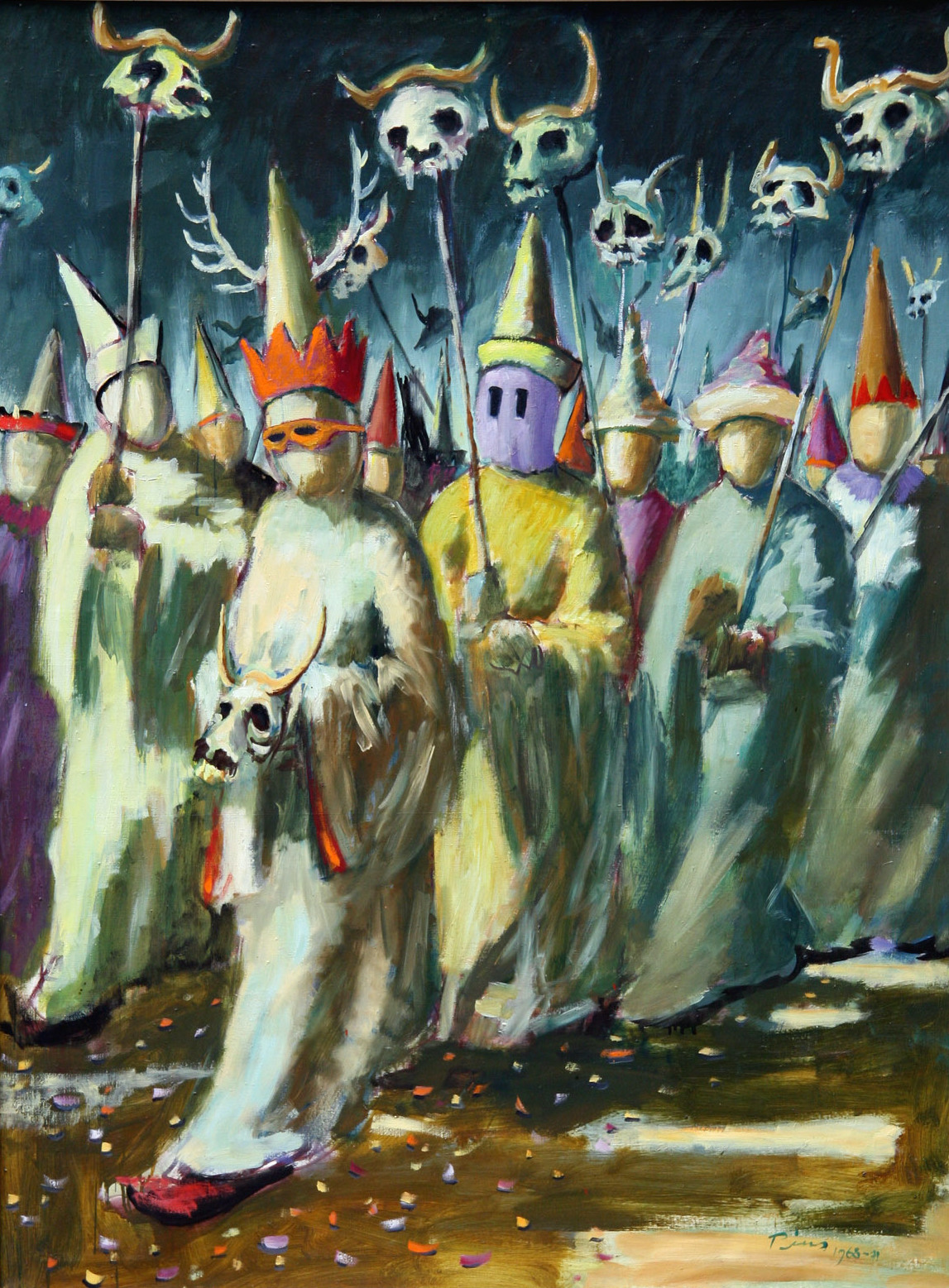
Jacob Pins, March of the Fools, Triptych, 1967-71. Oil on canvas, 130 x 96 cm. Forum Jacob Pins, Höxter (Germany)
Ori Z. Soltes teaches theology, art history, philosophy and political history at Georgetown University. He is former Director of the B’nai B’rith Klutznick National Jewish Museum. As co-founding Director of the Holocaust Art Restitution Project he has spent 25 years focused on the issue of Nazi-plundered art. Soltes has curated over 90 exhibitions, domestically and internationally, and has authored or edited 32 books and scores of articles and exhibition catalogue essays. Recent art-related volumes include Our Sacred Signs: How Jewish, Christian and Muslim Art Draw from the Same Source; The Ashen Rainbow: Essays on the Arts and the Holocaust; Tradition and Transformation: Three Millennia of Jewish art and Architecture; God and the Goalposts: A Brief History of Sports, Religion, Politics, War, and Art; Growing Up Jewish in India: Synagogues, Customs, and Celebrations: From the Bene Israel to the Art of Siona Benjamin; and Between Pasts and Future: A Conceptual History of Israeli Art.
This event is part of the online series Flight or Fight. stories of artists under repression.
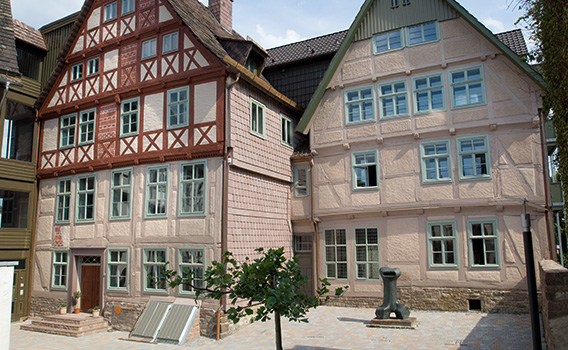
Forum Jacob Pins in Höxter (Germany)
The depiction of clowns was a lifelong interest of the Expressionist artist Fritz Ascher (Berlin, 1893-1970). The exhibition Der Vereinsamte. Clowns in der Kunst Fritz Aschers (1893-1970), on view September 6 – November 29, 2020 at Forum Jacob Pins in Höxter (Germany), investigated the meaning and importance of these works in the oeuvre of the artist.
The publication Der Vereinsamte. Clowns in der Kunst Fritz Aschers (1893-1970) [The Loner. Clowns in the Art of Fritz Ascher (1893-1970)] was edited by Julia Dieckmann and Rachel Stern and published by The Fritz Ascher Society for Persecuted, Ostracized and Banned Art and Forum Jacob Pins. Holzminden: Verlag Jörg Mitzkat 2020. ISBN: 978-3-95954-088-9
In this publication, Fritz Ascher’s clowns were put in historical and artistic context, including works by his younger colleague Jacob Pins (1917-2005).
You can download the book HERE.

