
Stolen Jewish Legacies:
The Fate of Eugen Spiro and His Looted Collection
Presentation by Anne Uhrlandt, Munich (Germany)
May 20, 2026 @ 12:00 pm - 1:00 pm
| FreeIn this online lecture Anne Uhrlandt will present the forgotten story of once prominent German Jewish artist and collector Eugen Spiro (April 18, 1874, Wrocław – September 26, 1972, New York City). During her two-year research project, Uhrlandt reconstructed the artist’s biography and the fate of his looted collection by bringing together evidence and sources from numerous international archives. Two case studies about specific stolen objects highlight the dramatic events following both s the Nazi government ‘s expulsion of Spiro from his profession, robbing him of his sources of income, and the theft of his art collection, which included both his own works of art and works of art by other artists. The case studies demonstrate the potential of provenance research to uncover and reconstruct the rich Jewish contribution to European cultural history before World War II.
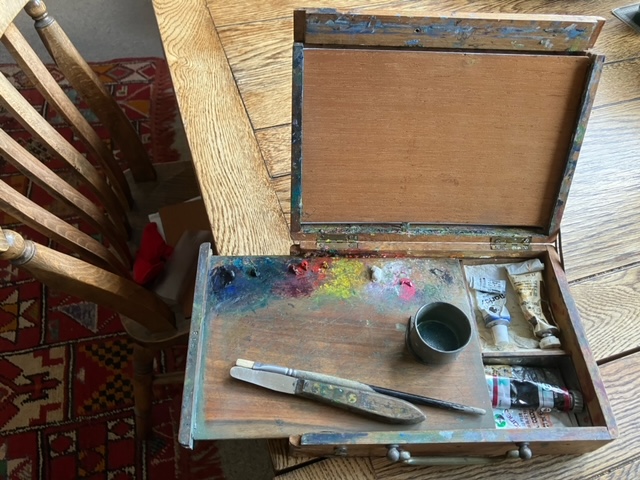
Image above: Painting utensils of Eugen Spiro, still in use by his granddaughter Elizabeth Spiro.
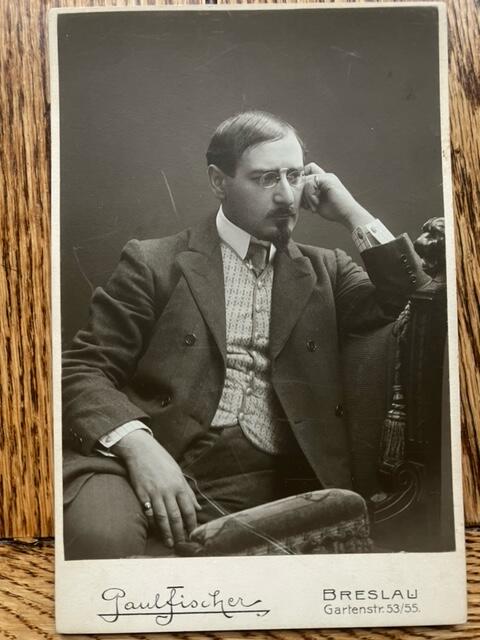
Paul Fischer, Eugen Spiro, Breslau, ca. 1903. Elizabeth Spiro private collection
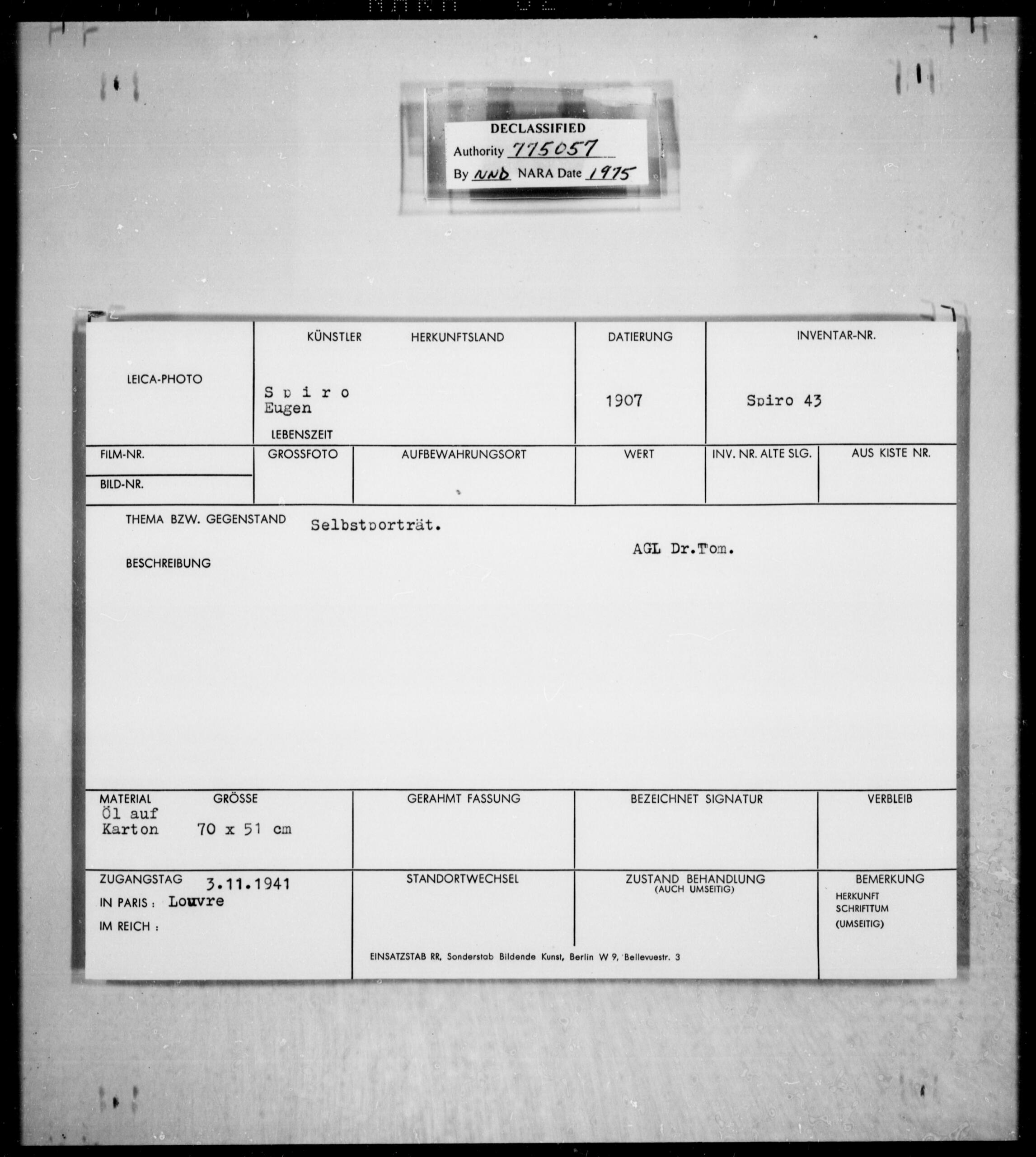
Index card of the Einsatzstab Reichsleiter Rosenberg on the confiscated artwork by Eugen Spiro, Selbstporträt (Self Portrait), 1907, Spiro 43. National Archives and Records Administration (NARA), Record Group 260: Records of U.S. Occupation Headquarters, World War II, Series: Einsatzstab Reichsleiter Rosenberg (ERR) Card Files, NARA ID: 72545076, Spiro 43, Eugen Spiro, Selbstporträt, 1907, https://catalog.archives.gov/id/72545076 (accessed December 30, 2025)
Eugen Spiro’s biography covers nearly the entire European continent: He was born to a Jewish family in Breslau (today Wrocław, Poland), studied art at the academies of Breslau and Munich, and experienced his first successes while living in Paris before World War I. He resided in Berlin for two decades, where he cultivated respect and influence as an artist, becoming president of the Berlin Secession and a member of the Acquisition Commission of the National Gallery. Nazi persecution forced him to flee to Paris with his family, where Spiro continued to work as a painter and teacher—until, yet again, Nazi persecution in France forced him to flee on a dramatic journey via Spain and Portugal, where he hoped to embark on a ship to the United States. Only intervention of prominent Jews in exile, including Thomas Mann, enabled Spiro and his family to board a ship to the U.S. His Parisian exile home was looted by the Einsatzstab Reichsleiter Rosenberg, the main Nazi looting agency. Spiro’s entire oeuvre, as well as his private art collection of works by other artists, was stolen.
After the war, Eugen Spiro recovered parts of his looted collection with the help of French authorities. One of these recovered artworks is Self-Portrait of Eugen Spiro wearing a Bowler Hat, which is today part of the collection of the Jewish Museum Berlin. Other artworks in Spiro’s collection were lost forever: due to their Jewish origin and modern style, the Nazis deemed them “worthless” and burned them in Paris.
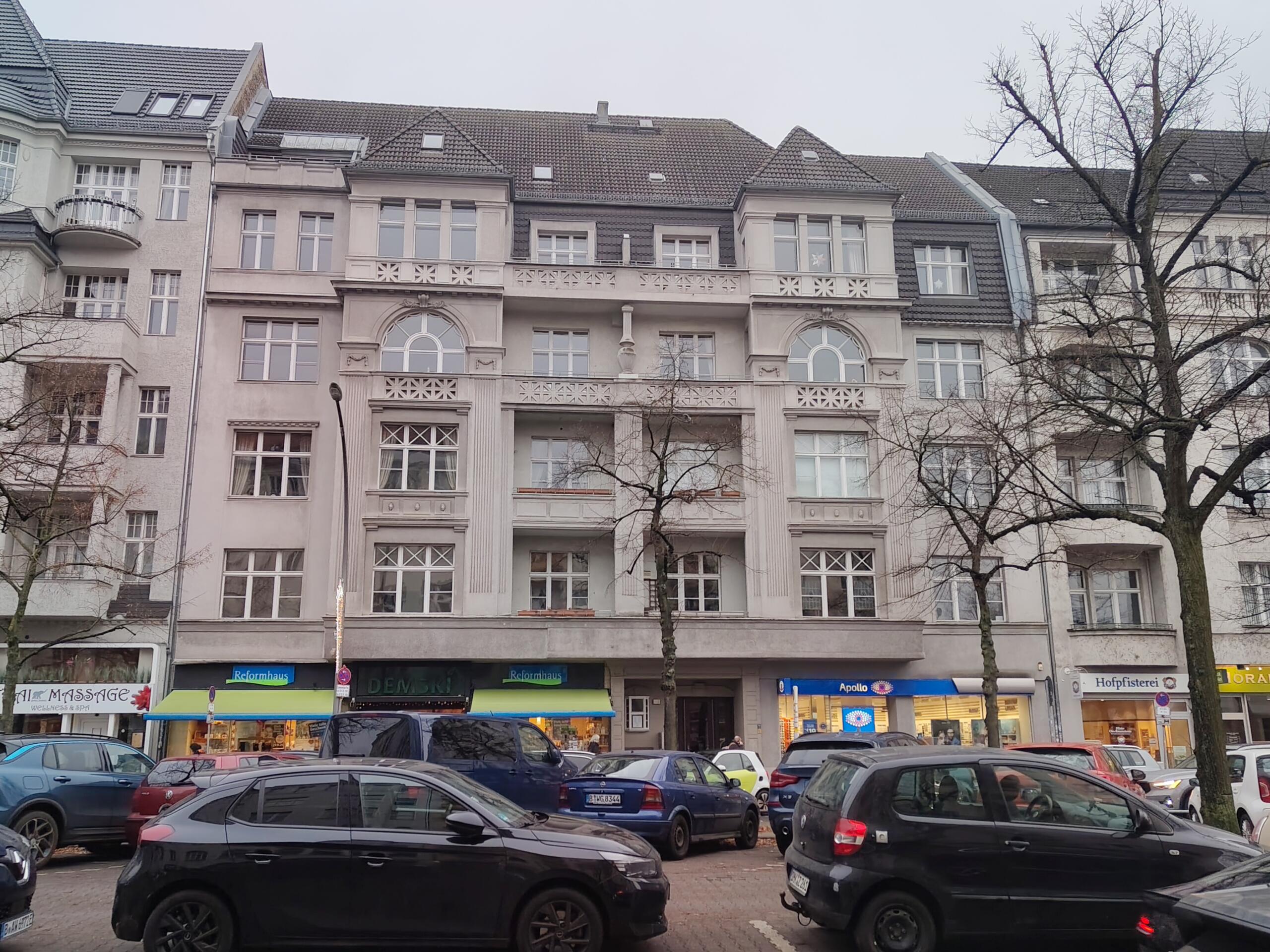
The building at Reichsstraße 106 in Berlin Charlottenburg where Eugen Spiro lived with his second wife and son on the fourth floor, maintaining a studio with roof terrace on the fifth floor. Photo: Anne Uhrlandt
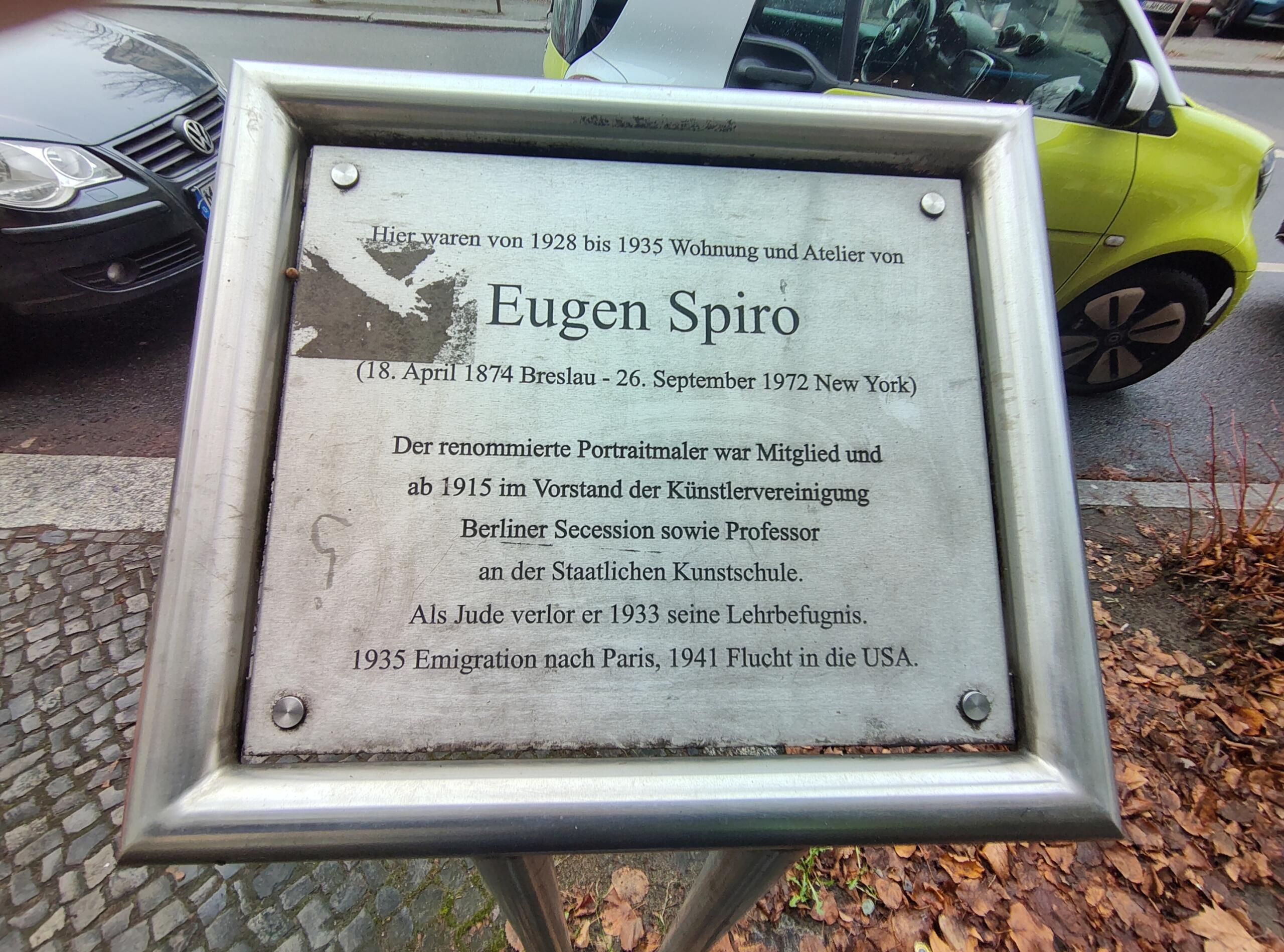
The memorial plaque for Eugen Spiro at Reichsstraße 106 in Berlin Charlottenburg where Eugen Spiro lived with his second wife and son on the fourth floor, maintaining a studio with roof terrace on the fifth floor. Photo: Anne Uhrlandt
Following the Holocaust, Eugen Spiro was unable to regain the prominence he obtained prior to the Nazi rise to power, despite occasional exhibitions in the U.S. and a solo retrospective in Berlin. Although Eugen Spiro’s artworks are found today in museum’ collections around the globe, his onetime artistic prominence and the Nazi-era persecution that ended much of his career are relatively unknown. With her research, Uhrlandt’s has achieved her goal to reconstruct for us the outstanding career and life story of the unjustly forgotten artist Eugen Spiro.
Anne Uhrlandt is a doctoral candidate with more than 20 years of experience working as a provenance researcher specialized in Nazi-looted cultural property. Prior to her job at JDCRP as Senior Research and Documentation Officer, she was project coordinator at the Zentralinstitut für Kunstgeschichte in Munich, working as well for the Art Loss Register. She worked previously for the Jewish Museum of Munich.
This event is part of the online series Flight or Fight. stories of artists under repression.
During the talk, the resistance hero Rose Vallant (1898–1980) was mentioned, an art historian and curator who worked at the Jeu de Paume when it became headquarters for the Einsatzstab Reichsleiter Rosenberg (ERR)—the chief Nazi art-looting task force. The ERR used the museum as a giant sorting center and warehouse to process thousands of artworks stolen from French museums and private Jewish collections, and Rose Vallant collected and passed on information, and saved some of the world’s most treasured artworks.
She wrote her biography, which was published in French in 1961, and in English in 2024, as The Art Front: The Defense of French Collections 1939-1945 (ISBN 9780977434930). It seems out of print, but Michelle Young’s book The Art Spy isn’t. You can watch Michelle Young’s book talk here: